Achieving perfectly clear, streak-free windows can often feel like an impossible task. Smudges, lint, and stubborn water spots seem to reappear moments after you have finished, leaving you frustrated and questioning your technique. What if the secret to a flawless finish isn't found in expensive, specialised products, but in clever, time-tested methods? This guide reveals seven surprising yet highly effective window cleaning hacks that professionals and savvy homeowners use to get that coveted invisible-glass look.
From common kitchen staples like cornstarch to unconventional tools such as coffee filters, these methods are designed to cut through grime, save you time, and deliver brilliant, long-lasting results. We will explore each hack in detail, providing clear step-by-step instructions, practical tips for implementation, and the simple science behind why they work so well. By mastering these techniques, you can finally conquer streaks and smudges for good.
This article is your definitive resource for transforming a tedious chore into a simple, satisfying task. Forget the frustration and get ready to enjoy crystal-clear views that let the sunshine in like never before. Each tip is actionable, easy to follow, and leverages items you likely already have around the house.
1. Coffee Filter Window Cleaning
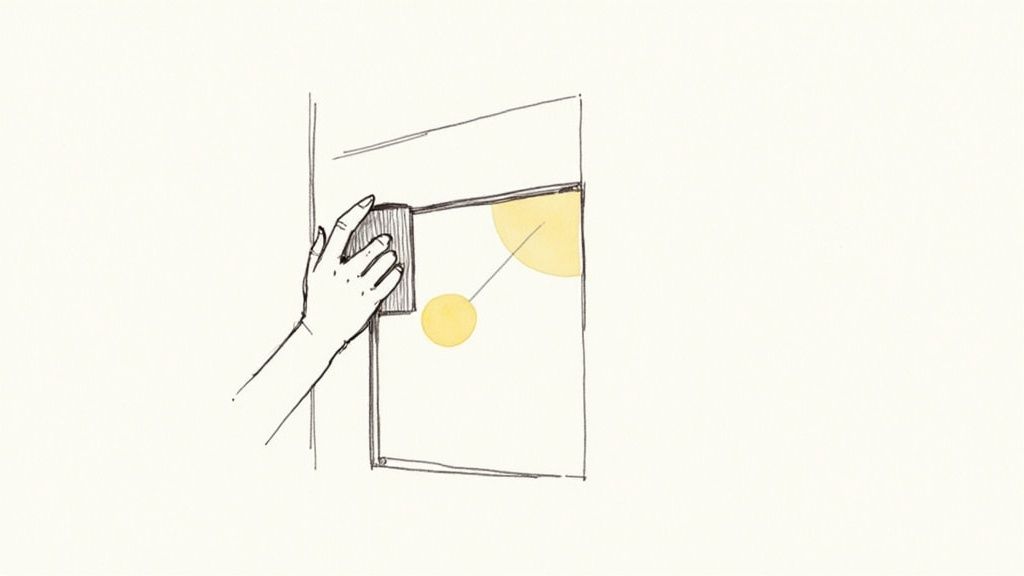
While paper towels or old newspapers are common choices for wiping windows, they often leave behind lint and streaks. For a truly professional, lint-free shine, one of the most effective window cleaning hacks involves an everyday item from your kitchen cupboard: the humble coffee filter. Their tightly woven paper fibres are designed to be highly absorbent without disintegrating, making them perfect for wiping glass surfaces clean without leaving any residue behind.
This method’s strength lies in the material itself. Unlike paper towels, which can shed tiny fibres, coffee filters are manufactured to be lint-free. This ensures that as you wipe, you are only removing dirt and cleaning solution, not depositing a new layer of fuzzy particles onto the glass.
Why It Works and Where It Shines
This technique has been popularised by professional cleaners and car detailers who demand a flawless finish on glass. Car detailers, for instance, frequently use coffee filters on windscreens to ensure perfect clarity without any distracting lint. At home, this hack is especially useful for large picture windows, glass doors, and mirrors where streaks and fibres are most noticeable. The result is a crystal-clear finish that rivals professional services.
Key Insight: The secret to a streak-free window is not just the cleaning solution but the material used for the final wipe. Coffee filters provide a lint-free, absorbent surface that buffs glass to a perfect shine.
How to Implement This Hack
For the best results, follow a simple but specific process. First, clean the window with your preferred solution, perhaps a homemade mix of equal parts white vinegar and water, using a squeegee or a microfibre cloth to remove the initial layer of grime. The coffee filter comes in for the final, crucial step.
- Final Polish: Use a dry coffee filter to buff the glass after the main cleaning. This will remove any remaining moisture and prevent streaks from forming as the window dries.
- Application Technique: For optimal results, use a circular motion to polish the main surface of the window, then finish with straight vertical and horizontal strokes to catch any final drips or lines.
- Choose Wisely: Opt for unbleached coffee filters to avoid transferring any trace chemicals from the bleaching process onto your windows.
- More Than Windows: This hack is also excellent for cleaning other glass surfaces around the home, including television screens, shower doors, and glass tabletops.
2. Newspaper and Vinegar Method
Before microfibre cloths became a household staple, one of the most trusted window cleaning hacks relied on two simple, low-cost items: newspaper and vinegar. This traditional technique, passed down through generations, is celebrated for its ability to deliver a streak-free shine using materials you likely already have. The unique composition of newsprint, combined with the acidic cleaning power of vinegar, makes for a surprisingly effective duo.
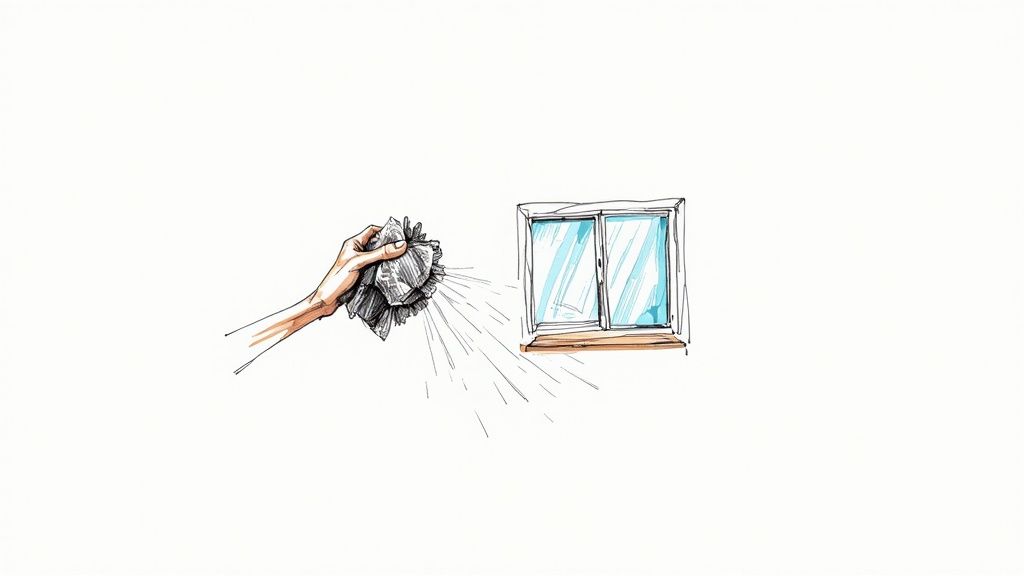
The logic behind this old-school method is sound. The dense fibres of newspaper are highly absorbent and don't leave lint behind like paper towels can. Furthermore, the ink used in traditional black-and-white print has a mild abrasive quality that helps to scrub away stubborn grime and buff the glass to a brilliant finish without scratching it.
Why It Works and Where It Shines
This hack’s enduring popularity stems from its frugal roots during the Depression era and its perfection by traditional European window cleaners. It’s an economical and environmentally friendly alternative to chemical-laden sprays and disposable wipes. The method is particularly effective for cutting through the greasy film that can build up on kitchen windows or the hazy residue on the inside of car windscreens, leaving behind nothing but crystal-clear glass.
Key Insight: The combination of vinegar's natural degreasing properties and the newspaper's lint-free, slightly abrasive texture creates a powerful cleaning system that dissolves dirt and polishes the glass simultaneously.
How to Implement This Hack
To get the most out of this classic technique, a few specific steps should be followed. The key is in the preparation of both the solution and the newspaper itself. Start by mixing a simple cleaning solution of one part white vinegar to four parts water in a spray bottle.
- Choose the Right Paper: Only use traditional black-and-white newsprint. The glossy, coloured sections or magazine-style inserts often use different inks and paper that can smear or leave residue.
- Application Technique: Crumple the newspaper into loose balls, which are easier to grip and provide a good surface area for wiping. Spray the vinegar solution directly onto the glass and use one ball of newspaper to scrub away the dirt.
- The Final Buff: Use a second, dry ball of crumpled newspaper to wipe the window dry, polishing it to a streak-free shine. Work in a shaded area to prevent the solution from evaporating too quickly and causing spots.
- Protect Your Hands: The ink can transfer to your hands, so it's a good idea to wear gloves while you work.
3. Squeegee with Dish Soap Technique
To achieve the truly flawless, streak-free finish seen on commercial buildings and high-rise flats, you need to adopt the methods of the professionals. One of the most effective window cleaning hacks relies on two simple tools: a quality squeegee and a few drops of washing-up liquid. This combination creates a powerful cleaning solution that allows the squeegee to glide smoothly across the glass, lifting dirt and grime without leaving any streaks behind.
The magic of this technique lies in its simplicity and efficiency. The washing-up liquid acts as a surfactant, breaking the surface tension of the water and helping to dissolve dirt, while the squeegee blade pulls the dirty water away in a single, clean motion. This method is far superior to using cloths or paper towels alone, which often just push dirty water around the pane.
The following infographic illustrates the simple yet crucial process for mastering this professional technique.
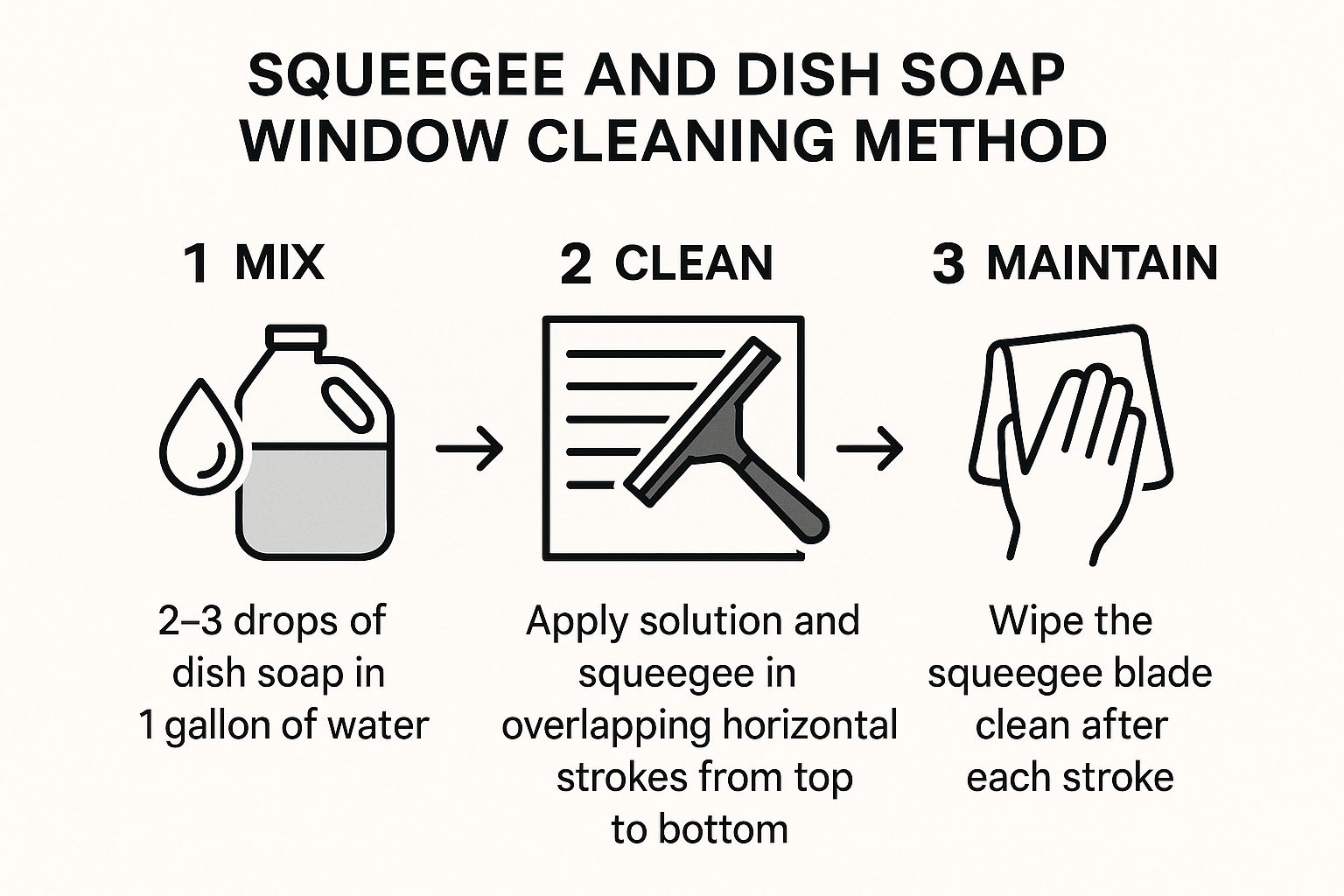
As the diagram shows, success depends on the correct solution ratio and a methodical, clean-wiping process.
Why It Works and Where It Shines
This method has long been the industry standard for professional window cleaners, popularised by companies like Ettore who perfected the modern squeegee. Its effectiveness is most apparent on large glass surfaces like sliding patio doors, picture windows, and glass conservatories, where streaks and smears are highly visible. By mimicking the professionals, you can achieve a superior level of clarity that is difficult to replicate with other household methods.
Key Insight: A professional finish comes from technique, not complex solutions. A squeegee combined with a minimal amount of washing-up liquid provides the perfect slip, allowing you to remove water and dirt completely before streaks can form.
How to Implement This Hack
Proper execution is vital for streak-free results. Start by preparing your cleaning solution and ensuring your squeegee blade is clean and sharp. Apply the soapy water to the window with a sponge or microfibre cloth, covering the entire surface.
- Start at the Top: Place your squeegee at the top corner of the pane, angled slightly downwards, and pull it across horizontally. Overlap each stroke by about an inch.
- Wipe the Blade: After every single stroke, use a clean, lint-free cloth to wipe the rubber blade. This crucial step prevents you from transferring dirt back onto the clean glass.
- Less Is More: Use only two to three drops of washing-up liquid per gallon of water. Too much soap will create excess suds and leave a film on the glass, leading to streaks.
- Maintain Pressure: Apply light, even pressure as you pull the squeegee. Let the tool do the work to avoid pressing too hard, which can cause the blade to skip or leave lines.
4. Cornstarch Glass Cleaner
For a powerful, eco-friendly window cleaner made from simple pantry staples, cornstarch offers a surprisingly effective solution. When mixed with water and vinegar, this common kitchen ingredient creates a homemade cleaner that cuts through grime and leaves a streak-free shine. The cornstarch acts as a very gentle abrasive, helping to lift stubborn dirt and film without scratching the glass.
The strength of this method lies in its dual-action formula. The vinegar works to dissolve dirt and hard water stains, while the fine cornstarch particles provide a gentle scrubbing power. This combination is particularly effective for windows with a hazy film or built-up residue that regular cleaners might struggle with, making it one of the most resourceful window cleaning hacks available.
Why It Works and Where It Shines
Popularised by the green cleaning movement and DIY home care communities, this hack is a favourite among eco-conscious homeowners and those with sensitivities to harsh chemicals. The formula’s gentle abrasive quality makes it ideal for tackling grime on kitchen windows that are prone to greasy film, or for cleaning glass that hasn't been washed in a long time. It’s also a cost-effective and accessible option for anyone looking to reduce their reliance on commercial cleaning products.
Key Insight: Cornstarch provides a mild abrasive action that lifts stubborn grime and film from glass, while its fine particles help to absorb oils and prevent streaks as the window dries, resulting in a superior clean.
How to Implement This Hack
Creating and using this cleaner is straightforward, but correct preparation is key to avoiding a lumpy mixture. Start by gathering your ingredients: cornstarch, white vinegar, and warm water. For particularly tough marks, understanding how to tackle different types of blemishes can be beneficial; you can learn more about how to remove stubborn stains for advanced techniques.
- Create the Solution: In a spray bottle, combine one tablespoon of cornstarch, 1/4 cup of white vinegar, and two cups of warm water.
- Mix Thoroughly: Shake the bottle vigorously until the cornstarch is completely dissolved. To prevent lumps, you can first make a paste with the cornstarch and a small amount of water before adding the rest of the ingredients.
- Shake Before Use: The cornstarch will settle at the bottom, so it is essential to shake the bottle well before each use to ensure the mixture is properly combined.
- Application Method: Spray the solution onto the window, wipe clean with a microfibre cloth, and then buff to a streak-free shine with a dry cloth or squeegee.
5. Rain-X and Water Repellent Treatment
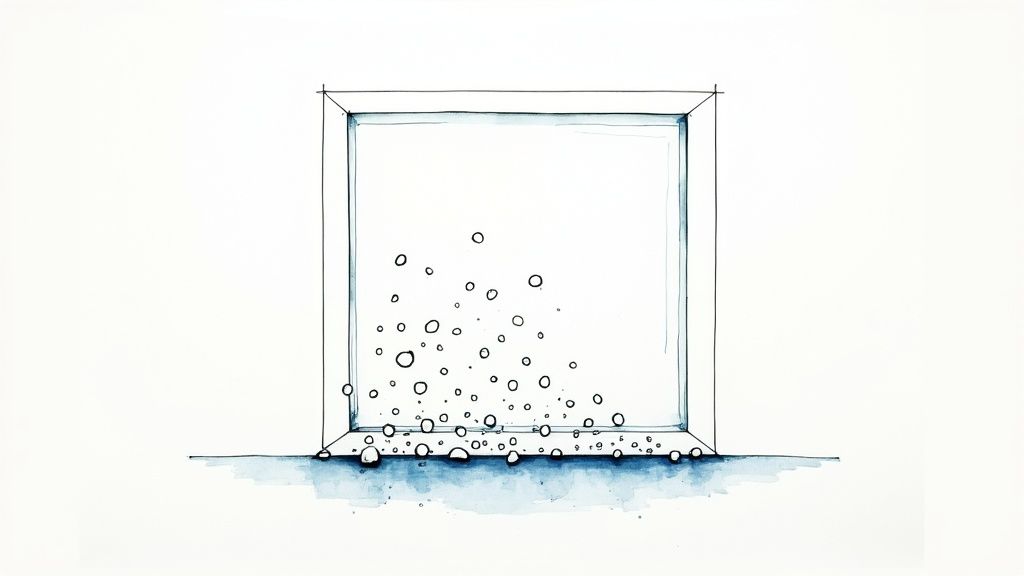
To keep windows cleaner for longer, one of the most proactive window cleaning hacks involves borrowing a trick from the automotive world: applying a water repellent treatment. Products like Rain-X create an invisible, super-slick hydrophobic coating on the glass. This technology causes rain, sleet, and grime to bead up and roll right off, drastically reducing the build-up of water spots and dirt between cleans.
This method’s power lies in its preventative nature. Instead of just cleaning your windows, you are actively treating them to resist future soiling. The polymer-based formula bonds with the glass, creating a non-stick surface that makes subsequent cleaning significantly easier and less frequent, saving you time and effort in the long run.
Why It Works and Where It Shines
Originally popularised by car enthusiasts for perfect windscreen visibility, this hack has been adopted by homeowners and commercial property managers for its impressive results. It is especially beneficial for hard-to-reach windows, such as those on upper floors, where reducing cleaning frequency is a major advantage. Coastal homeowners also find it invaluable for combating the constant build-up of salt spray, while commercial buildings use it to lower maintenance costs and maintain a pristine appearance.
Key Insight: Treating your windows with a hydrophobic coating is a preventative measure that transforms glass into a self-cleaning surface, minimising the adhesion of water and dirt.
How to Implement This Hack
Proper application is essential to achieve a clear, durable, and streak-free finish. Start with a window that is immaculately clean and completely dry, as the treatment needs to bond directly with the glass, not with any lingering dirt or residue.
- Thorough Preparation: Ensure the window is spotless before you begin. Any trapped dirt will be sealed under the coating.
- Application Technique: Apply a small amount of the product to a clean, dry microfibre cloth. Wipe it onto the glass using firm, circular, overlapping motions to ensure even coverage.
- Haze and Buff: Allow the treatment to dry to a light haze, which usually takes a few minutes. Then, use a separate clean, dry cloth to buff the haze away until the glass is crystal clear.
- Maintenance: You will know it is time to reapply when you notice water is no longer beading up and rolling off the glass effectively. Depending on weather exposure, a single application can last for several months.
6. Dryer Sheet Window Cleaning
While commonly used for laundry, fabric dryer sheets offer a surprisingly effective solution for cleaning glass, going beyond a simple wipe-down. This is one of the more ingenious window cleaning hacks because dryer sheets not only clean but also leave behind an anti-static coating. This invisible barrier actively repels dust, lint, and pet hair, helping your windows stay cleaner for much longer.
The magic lies in the fabric softener agents embedded in the sheets. When lightly dampened, these agents help break down grime and smudges. More importantly, they neutralise the static charge on the glass surface that naturally attracts airborne particles, making this method a preventative measure as well as a cleaning one.
Why It Works and Where It Shines
This hack has gained popularity on cleaning blogs and social media for its dual-action benefit. It is particularly valuable for pet owners struggling with dander and hair clinging to glass doors and low windows. Similarly, homes in dusty environments or near busy roads will see a noticeable difference, as the anti-static properties keep grime from settling as quickly. For allergy sufferers, reducing the amount of dust and pollen that collects on windows can be a significant advantage.
Key Insight: The true value of using a dryer sheet is its preventative power. By creating an anti-static surface, it tackles the root cause of dirty windows – the attraction of dust and debris – keeping them pristine for longer.
How to Implement This Hack
To get the most out of this method, the dryer sheet should be used as a final cleaning or touch-up tool. It is not designed to handle heavy, caked-on dirt but excels at removing light films of dust and preventing future build-up.
- Prep the Sheet: Lightly dampen a new dryer sheet with a small amount of water. It should be moist, not saturated, to activate the cleaning agents without leaving excess residue.
- Application Technique: Wipe the glass using broad, circular motions to lift dust and grime. Finish with straight vertical and horizontal strokes to ensure even coverage and a streak-free finish.
- Final Buff: After wiping with the damp dryer sheet, use a clean, dry microfibre cloth to buff away any faint residue, revealing a clear, polished surface.
- Choose Wisely: For households with sensitivities to fragrances, opt for unscented dryer sheets to avoid leaving a strong smell in the room.
7. Microfibre and Distilled Water Method
For those seeking an effective, chemical-free cleaning solution, one of the most powerful window cleaning hacks pairs a high-quality microfibre cloth with simple distilled water. This minimalist approach leverages advanced textile technology and pure water to deliver a streak-free shine without a single drop of cleaner, making it ideal for households with children, pets, or chemical sensitivities.
The method’s effectiveness comes from two key components. First, the ultra-fine fibres of a microfibre cloth are designed to mechanically scrub and trap dust, grime, and oils. Second, using distilled water, which is free from the minerals found in tap water, ensures that no residue or hard water spots are left behind as the surface dries. This combination cleans and polishes simultaneously.
Why It Works and Where It Shines
This technique is a cornerstone of the green cleaning movement and is frequently used by professional services and facilities that prioritise a non-toxic environment, such as hospitals and schools. Companies like Norwex have popularised the concept, demonstrating that a superior clean can be achieved without harsh chemicals. It is particularly effective for interior windows, mirrors, and glass doors where heavy-duty cleaning is not required but a perfect, fingerprint-free finish is desired.
Key Insight: A truly flawless window doesn't always require chemicals. The physical cleaning power of microfibre combined with the purity of distilled water can remove dirt and prevent mineral deposits for an impeccably clear result.
How to Implement This Hack
Success with this method depends on using the right materials and a specific two-cloth technique. You will need one microfibre cloth for cleaning and a second, separate one for polishing. This ensures you are not simply moving dirty water around the glass but are actively removing it.
- The Two-Cloth System: Lightly dampen the first microfibre cloth with distilled water, ensuring it is moist but not dripping wet. Use this to wipe down the window and lift away all the dirt.
- Immediate Polishing: Immediately follow with the second, completely dry microfibre cloth. Use this polishing cloth to buff the glass until it is dry and streak-free.
- Maintain Your Tools: To preserve their effectiveness, wash your microfibre cloths separately without fabric softener, which clogs the fibres and reduces their cleaning power.
- Pure Water is Key: In areas with hard water, using distilled water is non-negotiable. It is the secret to preventing the frustrating mineral spots that tap water leaves behind.
7 Window Cleaning Hacks Comparison
| Method | Implementation Complexity 🔄 | Resource Requirements ⚡ | Expected Outcomes 📊 | Ideal Use Cases 💡 | Key Advantages ⭐ |
|---|---|---|---|---|---|
| Coffee Filter Window Cleaning | Low – Simple to use, minimal skill | Low – Coffee filters, vinegar | Streak-free, lint-free windows | Final polishing, small to medium windows | Cost-effective, lint-free, reusable multiple times |
| Newspaper and Vinegar Method | Medium – Requires technique mastery | Very low – Newspaper, vinegar | Streak-free, effective on grime | Heavily soiled windows, traditional cleaning | Cost-effective, natural ingredients, no lint |
| Squeegee with Dish Soap | Medium to High – Skill and practice required | Medium – Squeegee, dish soap, cloth | Professional-grade streak-free finish | Large windows, commercial or frequent cleaning | Fast, efficient, reusable tools |
| Cornstarch Glass Cleaner | Medium – Requires mixing & prep | Low – Cornstarch, vinegar, water | Removes stubborn film, leaves protective film | Eco-conscious users, safe for kids and pets | Natural, environmentally friendly, protective coating |
| Rain-X and Water Repellent | Medium – Clean prep & careful application | Medium to High – Rain repellent products | Hydrophobic coating, reduces water spots | Automotive glass, coastal homes, commercial buildings | Long-lasting, reduces cleaning frequency |
| Dryer Sheet Window Cleaning | Low – Easy to use | Low – Dryer sheets | Anti-static, reduces dust and pet hair | Pet owners, dusty environments, allergy-friendly spaces | Reduces static, leaves pleasant scent |
| Microfiber and Distilled Water | Low to Medium – Simple but needs proper cloths | Medium – Microfiber cloths, distilled water | Chemical-free, streak-free cleaning | Chemical-sensitive environments, hospitals, green cleaning | Safe, reusable cloths, no chemicals needed |
From Hazy to Heavenly: Your Next Step to Sparkling Windows
You've now explored a full spectrum of clever and effective window cleaning hacks, moving far beyond the simple spray-and-wipe routine. We’ve journeyed from the surprisingly effective, lint-free magic of coffee filters to the tried-and-true combination of vinegar and newspaper. Each method offers a unique solution to the common problem of dirty, streaky glass, proving that a professional finish is well within your reach without resorting to expensive, chemical-laden products.
The true value of these techniques lies in their adaptability. By understanding the principles behind them, you can arm yourself with the right approach for any situation. Whether you're tackling greasy kitchen window smudges with the cornstarch solution or preparing your exterior glass for a rainy spell with a water-repellent treatment, you are now equipped with the knowledge to achieve a crystal-clear view. The days of frustrating streaks and hazy films are officially over.
Key Takeaways for a Streak-Free Finish
Mastering these window cleaning hacks is not just about cleanliness; it's about reclaiming the natural light in your home and enhancing your living space. Let’s recap the most crucial insights:
- The Right Tool is Half the Battle: The success of any cleaning task often depends on the tools you use. From a high-quality squeegee to a simple microfiber cloth or even a humble coffee filter, choosing the appropriate applicator is essential for avoiding lint and streaks.
- DIY Solutions are Powerful: You don't need a cupboard full of commercial cleaners. Simple, household ingredients like white vinegar, cornstarch, and even dish soap can be combined to create potent cleaning solutions that cut through grime effectively and economically.
- Technique Matters Most: Whether you're using an ‘S’ pattern with your squeegee or wiping in a consistent direction, your technique is paramount. Methodical, deliberate movements prevent the redistribution of dirt and ensure a uniform, streak-free shine across the entire pane.
Embracing these principles will transform window cleaning from a dreaded chore into a satisfying task. The impact of immaculately clean windows is immediate and profound. It brightens your rooms, makes your home feel more spacious and organised, and offers an unobstructed view of the world outside. You've learned not just how to clean, but how to clean intelligently. This newfound expertise allows you to maintain a pristine home with less effort and more pride, letting the sunshine pour in and illuminate your space. Now, it's time to choose your favourite hack, gather your supplies, and let there be light.
For those times when your schedule is simply too demanding, or for large-scale jobs that require a professional touch, consider letting the experts handle it. Signal Cleaning offers exceptional window cleaning services across Oxfordshire, delivering guaranteed, streak-free results with the convenience of an easy online booking system. Let us bring the sparkle to your windows so you can focus on enjoying the view.