Moving out is a hectic time, there’s no doubt about it. But amidst the chaos of packing boxes, there's one final task that's absolutely vital for getting your full deposit back: the end of tenancy clean. This isn’t your average weekend tidy-up. It's a top-to-bottom, deep-down clean intended to leave the property looking exactly as it did the day you moved in.
Think of it as hitting the reset button for the next person and, just as importantly, ticking a crucial box in your rental contract.
Why Your Tenancy Deposit Depends on a Deep Clean
Getting your deposit back isn't luck; it's about meeting the standards laid out in your tenancy agreement. When your landlord or letting agent does their final inspection, they'll have the original inventory report in hand, comparing the property's current state to how it was at the start. A proper end of tenancy clean is your best defence against any nit-picking.
This is a whole different ball game from your regular cleaning routine. Your weekly once-over keeps things pleasant to live in, but a move-out clean is almost forensic. It tackles the grime that builds up over months or years in all the forgotten nooks and crannies.
Let's put it into perspective:
- Regular Cleaning: You wipe the counters, run the hoover over the carpets, and give the loo a quick scrub.
- End of Tenancy Cleaning: The oven is cleaned until it gleams inside and out, taps and showerheads are descaled, skirting boards are washed, and even the insides of cupboards are wiped down.
It’s this meticulous attention to detail that property managers are trained to look for.
The Financial Risk of an Inadequate Clean
Cutting corners on the final clean can hit you right in the wallet. In fact, according to the housing charity Shelter UK, issues related to cleaning are one of the top reasons tenants in the UK lose some or all of their deposit. It's a stark reminder of just how seriously this is taken. You can find more stats on tenancy deposit disputes over on checkatrade.com.
At its core, your tenancy agreement is a legal contract. It will almost certainly include a clause stating the property must be returned in its original condition, save for fair wear and tear. If you don't meet that standard, the landlord has every right to use your deposit to pay for professional cleaners to finish the job.
Your security deposit isn't just a down payment; it's a financial guarantee that you'll meet your obligations. A professional-standard clean is the strongest proof you can offer that you've held up your end of the bargain, leaving no grey areas for dispute.
More Than Just a Clean It's Proof
Ultimately, a thorough end of tenancy clean is about protecting your money. It creates a clear, documented finish line for your tenancy. The receipt from a professional cleaning company is solid proof that you’ve done the right thing.
This paperwork can be invaluable if a disagreement pops up, demonstrating you made a genuine effort to meet the required standard. Skipping this step leaves your deposit exposed and invites deductions that can often cost far more than the clean itself would have.
Your Essential Room-by-Room Cleaning Checklist
Getting a property up to a professional standard isn't just about a quick wipe-down. It’s a meticulous, top-to-bottom process. Inventory clerks have seen it all, and they know exactly where to look for missed spots. This guide will walk you through the essential tasks, room by room, so you know what to focus on.
Whether you're brave enough to tackle the end of tenancy cleaning yourself or you're bringing in the pros, this checklist is your game plan. It covers everything from the obvious high-traffic areas to those sneaky corners where dust loves to hide.
This image breaks down the core actions that are the foundation of any successful move-out clean.
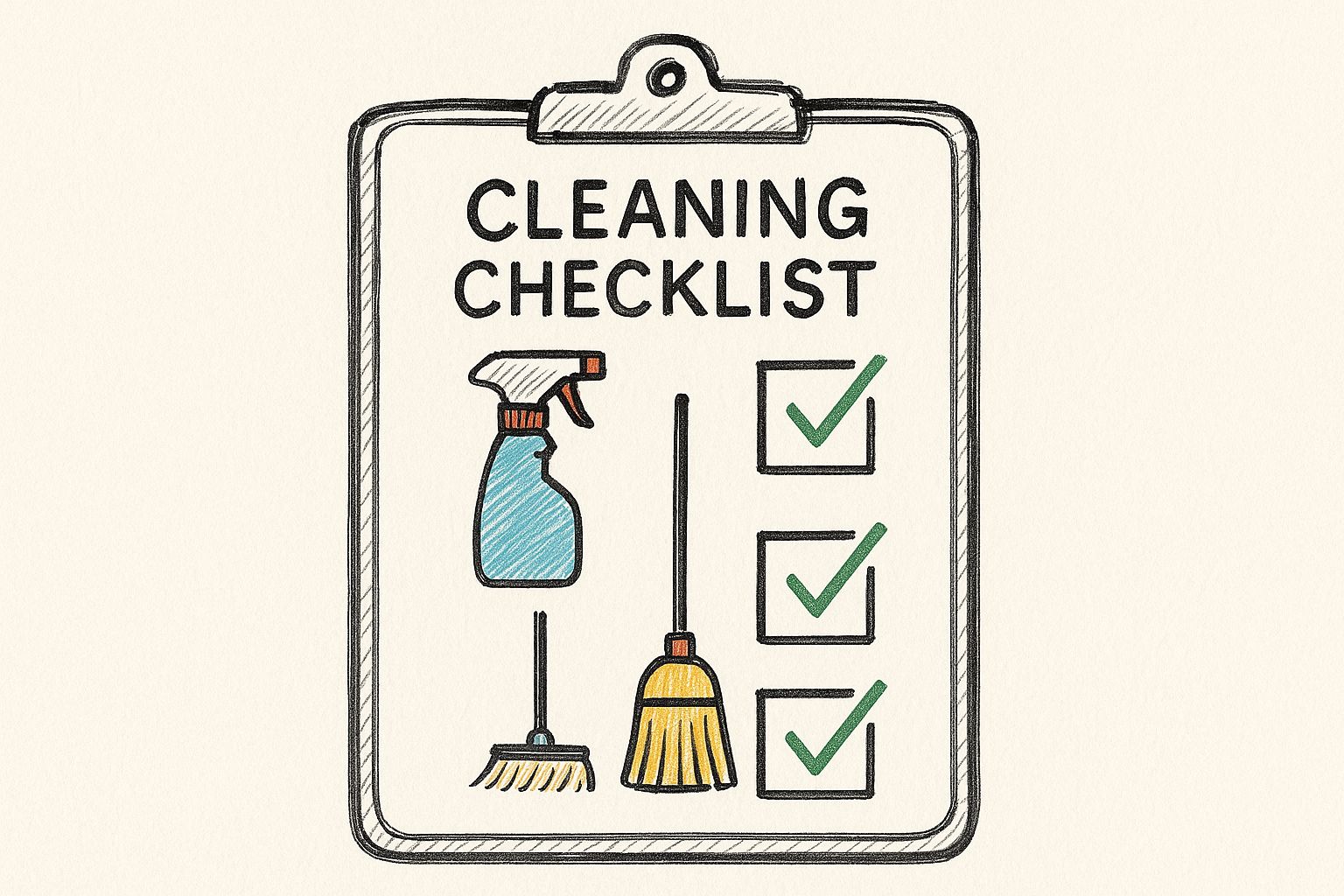
From here, we can dive into the specifics for each part of your home. To truly get it right, a systematic approach is your best friend.
The Heart of the Home: The Kitchen
If there’s one room that gets put under the microscope during an inventory check, it’s the kitchen. It’s the hub of the home, which means it’s a magnet for grease, food splatters, and limescale. A deep clean here is absolutely non-negotiable.
Appliances are always the first port of call. The oven, especially, needs to be spotless inside and out. That means taking out all the racks and trays and scrubbing away every last bit of burnt-on grime. It’s a tough job, but it has to be done.
Once the oven is gleaming, it’s time to move on to the other appliances:
- The Hob: Get rid of all cooked-on food. For gas hobs, this means cleaning the burners; for ceramic, it's about polishing the surface until it shines.
- The Extractor Fan: Don't forget this one! The filters need a proper degreasing, and the hood itself needs a good wipe-down.
- The Fridge and Freezer: It needs to be fully defrosted first. Then, clean every shelf, drawer, and rubber seal.
- The Dishwasher: Pull out the filter and clean it, run a hot empty cycle with a proper dishwasher cleaner, and then wipe down the inside and the door seals.
- The Microwave: Clean it inside and out until it's completely free of food splatters.
With the appliances sorted, you can tackle the rest of the kitchen. Empty every cupboard and drawer and give them a thorough wipe, inside and out. Clean and disinfect all worktops, and don't forget the sink and taps—a bit of descaler around the base of the taps makes a huge difference.
Bathrooms and Toilets
Just like kitchens, bathrooms are prime territory for limescale, soap scum, and mould. The aim here is to make every surface sparkle and leave it hygienically clean.
Start with the big jobs. The toilet needs a thorough scrub—bowl, seat, lid, and cistern—until it's completely sanitised. Next, tackle the bath, shower screen, and tiles. Pay very close attention to the grout, as that’s where mould loves to grow.
A Quick Tip from Experience: It's the little details that often get missed. Inventory clerks will check shower heads for limescale, plug holes for hair, and extractor fans for dust. A sparkling bathroom is often seen as a sign that the rest of the property has been cleaned just as well.
Then, zero in on the finishing touches that pull the room together:
- Clean the basin and taps, polishing them until they are free of watermarks.
- Wipe down mirrors and any other glass so they are completely streak-free.
- Clean the inside and outside of all cabinets or vanity units.
- Mop the floor properly, making sure you get behind the toilet and under any freestanding furniture.
Bedrooms and Living Areas
These rooms might seem easier, but they have their own set of pitfalls that can lead to deposit deductions. The secret is to work methodically from top to bottom.
Always start by getting rid of any cobwebs from the ceilings and corners. After that, dust and wipe down every surface: shelves, wardrobes, chests of drawers—the lot. Remember to clean both the inside and outside of any furniture that was part of the tenancy.
The "forgotten spots" are what really make the difference between an amateur job and a professional one. Give some extra love to these areas:
- Skirting Boards: You’d be surprised how much dust and how many scuff marks they collect.
- Light Switches and Sockets: A quick wipe removes all those fingerprints and grime.
- Door Frames and Handles: Clean every door, including the top edge of the frame.
- Light Fittings: Dust and wipe down lampshades and other fittings.
- Behind Radiators: A long-handled duster is perfect for getting out all the trapped dust.
Finally, give all the carpets a thorough vacuum, making sure to move furniture so you can clean underneath. If you’ve got some stubborn marks on the carpet, you’ll need to deal with them directly. Our guide on how to remove stubborn stains has some great tips that can help. For any hard floors, a good sweep and mop is essential.
Windows and General Tasks for All Rooms
Some jobs apply to the entire property and are crucial for ticking all the boxes. Windows are a big one. They need to be cleaned from the inside, and that includes the frames and the sills.
The key is consistency. Make sure every single room gets the same detailed treatment. A final check throughout the property ensures no small detail has been overlooked and gives you the best chance of passing that final inspection with flying colours.
What Does a Professional Clean Actually Cost?
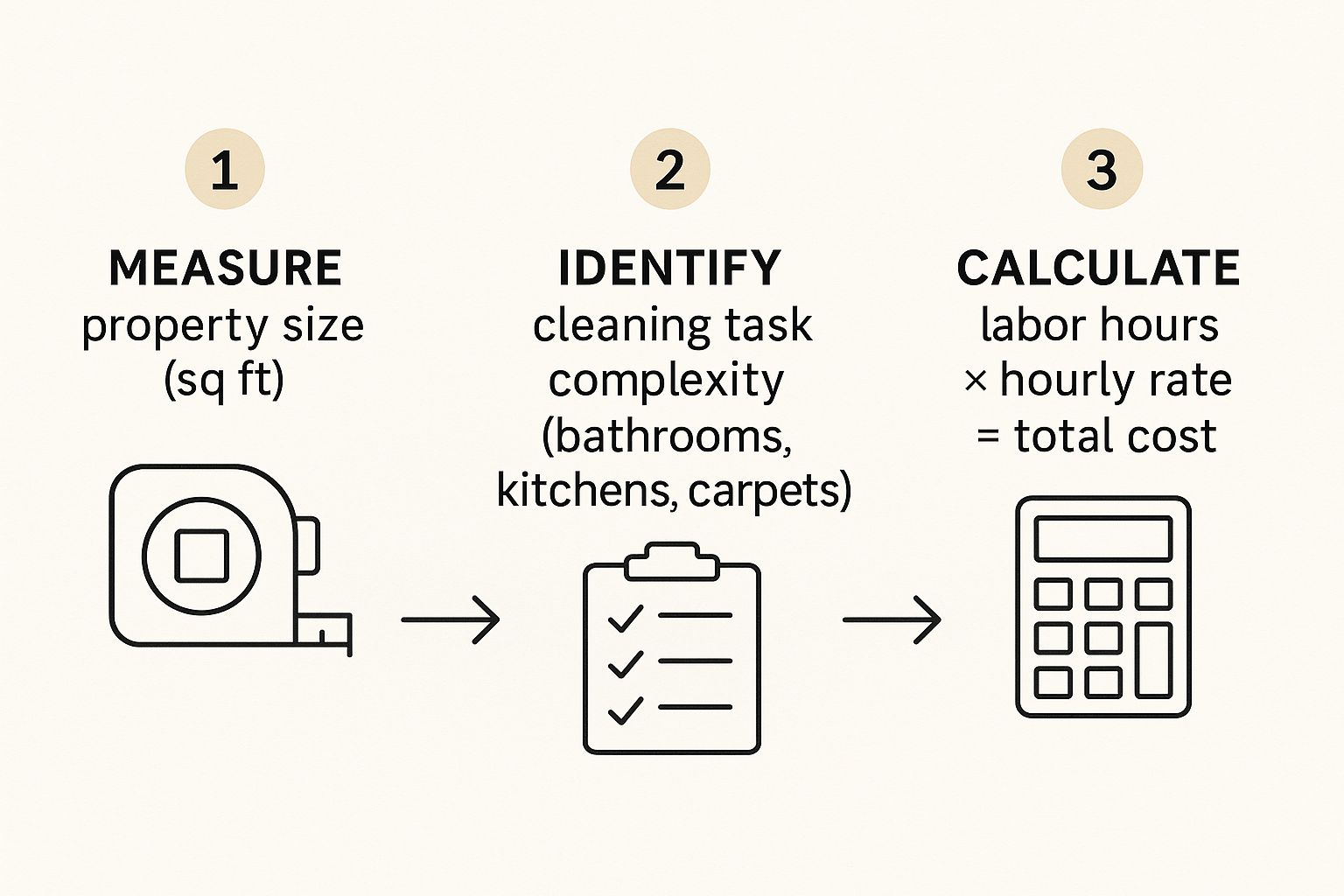
Trying to figure out the price for a professional end of tenancy clean can feel a bit like guesswork. But once you know what goes into the quote, it all starts to make sense. It’s a lot like ordering a custom-built piece of furniture – a small, simple bookshelf will have a different price tag than a large, ornate wardrobe. The same logic applies here.
The biggest factor, hands down, is the size of your property. It takes far less time and effort to clean a studio flat than it does a four-bedroom house, so the price will reflect that. The general condition of the place is just as important. A well-looked-after home is a much quicker job than one with serious grime, limescale build-up, or stubborn stains that need a lot of elbow grease.
Key Factors That Determine Your Quote
Beyond the size and condition, a few other things will influence the final number. Where you are in the UK makes a difference, as companies in big cities like London have higher running costs than those in smaller towns. Any extra services you need will also be added on top of the base price.
So, let's break down the main pricing components:
- Property Size: The number of bedrooms and bathrooms is the primary driver of the cost.
- Property Condition: A property that needs a serious deep clean will cost more than one that's just a bit dusty.
- Geographic Location: You'll likely pay a bit more in London and the South East, where the cost of living is higher.
- Additional Services: Things like professional carpet steam cleaning, giving the upholstery a refresh, or washing the exterior windows are usually priced separately.
A good, reputable cleaning company will almost always give you a fixed price for the job, not an hourly rate. This is a huge plus for you because you know exactly what you’re paying from the outset. Hourly rates can be a real gamble – if the clean takes longer than you thought, the bill can quickly spiral.
A fixed quote shows that the company knows its stuff. They've sized up the job and are confident they can get it done to the required standard for a set price, no matter how many hours it takes. This protects you from surprise costs and keeps the focus firmly on the quality of the clean, not on watching the clock.
Average Price Ranges in the UK
To give you a rough idea for your budget, it helps to know the ballpark figures. The cost for an end of tenancy clean varies across the UK, but national averages can give you a solid starting point. You could be looking at anything from around £170 for a smaller flat to over £415 for a larger family home.
To get a bit more specific, a studio or one-bedroom flat often falls between £80 and £220, while a two-bed property is typically in the £120 to £280 range. For a three-bedroom house, you can expect to budget between £220 and £390. These prices reflect the time, labour, and professional-grade materials needed to do the job right.
What Should a Standard Quote Include?
A proper quote for an end of tenancy clean should cover every essential task needed to get your deposit back. That means a deep clean of the kitchen (oven included!), sanitising every bathroom, and a top-to-bottom clean of all bedrooms and living areas. All the cleaning supplies and equipment should be part of the price, too.
What it often won't include are the more specialised services. Think of these as optional extras you can add if you need them:
- Professional Carpet Cleaning: Hoovering is always standard, but a deep steam clean is an add-on.
- Upholstery Cleaning: For refreshing sofas, armchairs, or mattresses.
- External Window Cleaning: They'll do the insides as standard, but the outside is extra.
- Garden or Balcony Tidying: Outdoor spaces aren't typically covered in a standard interior clean.
It’s so important to clarify what is and isn't included before you agree to anything. A transparent company will lay this all out for you from the very beginning, so there are no nasty surprises.
If you’re ready to see what it would cost for your property, you can get a clear, fixed price tailored to your exact needs through our online booking system.
Why You'll Pay More for a Clean in London
When you start budgeting for an **end of tenancy clean**, it’s vital to remember one thing: London is its own beast. The prices you might see for other parts of the UK simply don’t hold up once you’re inside the M25. This isn’t just companies hiking up prices for the sake of it; it’s a direct result of the capital’s unique, high-stakes rental market.
Think about it like buying a coffee. A flat white in a quiet village might set you back £2.80, but that exact same drink from a café in Covent Garden could easily cost £4.50. The beans are the same, but the costs to run the business—rent, staff wages, and even just getting supplies delivered—are worlds apart. Professional cleaning services in London operate under the same pressures.
Higher running costs are the biggest factor. Cleaning companies in the capital have to cover everything from the London living wage for their staff to higher vehicle insurance and the daily Congestion Charge. These aren't optional extras; they're the basic costs of doing business, and they have to be reflected in the final price.
It's All About Supply and Demand
The sheer scale of London's rental market also plays a huge part. The demand for top-notch end of tenancy cleaning is massive and never-ending, driven by a city where renting is the default for millions.
In fact, over 50% of Londoners rent their homes, a figure that's been climbing for years and is expected to hit 60% soon. This creates a constant, powerful demand for move-out cleaning, which naturally pushes up prices. It's why the average cost often settles above £250, mirroring the city’s higher cost of living. For a detailed breakdown, you can read more about London end of tenancy cleaning prices on samyxcleaning.com.
This intense demand goes hand-in-hand with incredibly high standards. London letting agents and landlords are notoriously exacting when it comes to final inspections. They're managing incredibly valuable properties and need a perfect finish to protect their investment and get new tenants in the door without a hitch.
In London, a professional clean isn't just about making a place look tidy. It's a non-negotiable step in the high-speed machinery of property management. The standard is often far higher than elsewhere because inventory clerks are trained to spot the tiniest flaw in one of the planet's most competitive property markets.
How to Budget for a London Clean
So, what does this actually mean for your wallet? A good rule of thumb is to expect to pay 20-30% more for an end of tenancy clean in London compared to the rest of the country. A two-bedroom flat that might cost £250 to clean in Manchester could easily be £320 or more in a central London borough.
While it's always tempting to go for the cheapest quote you can find, this often turns out to be a false economy, especially in London. A price that seems too good to be true might mean you’re dealing with an inexperienced team or a company that cuts corners, which is a surefire way to risk your deposit.
Your best bet is to work with an established, professional company that truly understands the local demands. You can see the areas we cover in Oxfordshire and beyond to get a sense of how a professional service is structured. Ultimately, investing in a quality clean is the smartest move for a stress-free handover and getting your full deposit back.
How to Choose the Right Cleaning Company
Picking the right professionals for your end of tenancy cleaning is probably the most critical decision you'll make in this whole process. It's not just about getting the place clean; it’s about finding a reliable partner whose work will get your deposit back. A great company is basically your insurance policy against any cleaning-related arguments with your landlord.
Think of it like choosing a mechanic before a big road trip. You wouldn’t just go for the cheapest garage you could find. You’d want someone reputable, who guarantees their work and knows exactly what to check to make sure your car doesn't break down halfway to your destination. It's the same principle here.

Check Their Reviews and Reputation
First things first, do your homework. Don't be swayed by the glowing testimonials plastered all over a company's own website. You need to dig a bit deeper for the real story. Head over to independent review sites like Google Reviews or Trustpilot to see what actual customers are saying.
A string of positive feedback across different platforms is a brilliant sign. Look for comments that specifically mention things like punctuality, how thorough the cleaners were, and most importantly, a successful deposit return. A couple of bad reviews aren't necessarily a deal-breaker—nobody's perfect—but have a look at how the company responded. A professional response shows they care; radio silence is a bad sign.
Confirm Their Insurance and Guarantees
This part is completely non-negotiable. Any cleaning company worth its salt must have Public Liability Insurance. This is what protects you and the property if something accidentally gets damaged during the clean—say, a window gets cracked or an appliance stops working.
Just as crucial is the service guarantee. A reputable firm will always stand by the quality of its work.
The gold standard here is a 'deposit return guarantee' or a free re-clean promise, usually valid for 48 to 72 hours after they've finished. This means if your check-out report flags any cleaning issues, they'll come back and sort it out for free. Make sure you get this in writing.
This guarantee is your safety net. It proves the company is confident it can meet the incredibly high standards set by letting agents and is committed to helping you pass that final inspection with flying colours.
Ask the Right Questions Before You Book
Right, so you've got a shortlist. Now it's time to get in touch. How a company handles a few simple questions can tell you everything you need to know about their level of professionalism. Have a list ready so you don’t forget anything important.
Here are the key things you absolutely need to ask:
- Do you follow a detailed checklist? A proper end of tenancy clean isn't just a quick wipe-down. Professionals use an extensive checklist approved by letting agencies. Ask them to send you a copy.
- Is your quote a fixed price? Steer clear of companies that only offer hourly rates. A fixed quote means the price is the price, no matter how long the job actually takes.
- Are all cleaning supplies and equipment included? The price you're given should be all-inclusive. You don't want any nasty surprises or hidden fees for materials.
- What's the notice period for your guarantee? You need to know if it's 48 or 72 hours. This helps you schedule the clean for just before the inventory clerk is due to arrive.
- Do you have experience with local letting agents? A company that knows the standards of the major agents in your area is always a good bet.
Spotting the Red Flags
Knowing what to look for is only half the battle; you also need to know what to avoid. There are a few tell-tale signs that should have alarm bells ringing.
Be wary of:
- Suspiciously low quotes: If a price seems too good to be true, it almost certainly is. A rock-bottom price usually means they'll be cutting corners somewhere.
- A shoddy online presence: A legitimate business will have a professional website and clear contact details. If they're hard to find or look unprofessional online, be cautious.
- Vague answers to your questions: If they get cagey when you ask about insurance or their guarantee, it’s time to walk away.
- Requests for full payment upfront: A small deposit is standard practice, but demanding the entire fee before any work has been done is a massive red flag.
Taking the time to make an informed choice is the single best thing you can do for a stress-free move and a full deposit return.
Your End of Tenancy Cleaning Questions Answered
Moving out can feel like navigating a minefield of small print and hidden expectations, especially when it comes to the final clean. It's completely normal to have questions about what's actually required of you. Here, we’ll tackle the most common queries tenants have about end of tenancy cleaning, giving you clear, no-nonsense answers to help you get your deposit back in full.
We'll clear up the confusion, from whether you really need to hire professionals to what to do if your landlord still isn't happy. Think of this as your practical guide to getting it right.
Is a Professional End of Tenancy Clean Mandatory?
This is the big one, and the answer is a classic "it depends". While the law itself doesn't typically mandate a professional clean, your tenancy agreement is what really matters here. Most modern agreements include a clause stating the property must be returned cleaned to a "professional standard"—a phrase that causes more headaches than almost any other.
So, what does that actually mean? It means a level of cleanliness an inventory clerk will sign off on. They're trained to spot the little things an amateur clean often misses, like dust lingering on skirting boards or limescale buildup around taps. Hiring a pro service gives you a proper invoice, and that piece of paper is your proof.
That invoice is your best line of defence if a deposit dispute arises. It shows you've met your contractual obligations and shifts the burden of proof from your own elbow grease to a documented, professional service.
How Long Does the Cleaning Process Take?
There's no magic number here; it really comes down to the size of the property and its condition before the team arrives. But to give you a rough idea for planning your move-out day, we can look at some typical timeframes.
A professional company will usually send a team of two or three cleaners to work through their checklist efficiently. Here are some general estimates:
- Studio Flat: A team of two might take 3-4 hours.
- Two-Bedroom Flat: You're probably looking at 4-6 hours for a team.
- Three-Bedroom House: Expect the job to take 6-8 hours or even longer.
Remember, these estimates cover a deep clean of everything on their list, from scrubbing the oven back to a shine to washing every internal window. If you've added on extras like professional carpet steam cleaning or having the upholstery washed, that will naturally add more time to the job.
What if My Landlord Is Still Not Satisfied?
This is exactly why choosing a reputable company that offers a solid guarantee is non-negotiable. Any trustworthy cleaning firm will provide a service guarantee, which usually lasts for 48 to 72 hours after they've finished.
This means if the final check-out report flags any cleaning-related issues, the company will return to fix them for free. It’s absolutely critical that you get this guarantee in writing before you book.
For extra peace of mind, it’s also a brilliant idea to take your own photos and videos of the property right after the cleaners have left. This visual evidence, along with your professional invoice, becomes your trump card if you need to challenge an unfair deduction through one of the UK's tenancy deposit schemes.
Do I Need to Be Present During the Clean?
Nope, you don't need to hang around while the cleaners work their magic. In fact, it’s much better if you don't. The ideal time to schedule the clean is after you've moved all your belongings out. An empty property is a blank canvas for a cleaning team, making their job faster and more effective.
You will, of course, need to arrange for them to get in. This is usually pretty simple:
- You can meet the team at the property to hand over the keys in person.
- Leave the keys in a secure key safe and give them the code.
- Arrange for the letting agent or landlord to let them in.
Once they're finished, the team will make sure the property is locked up securely. This frees you up to focus on the million other things you have to do when moving, knowing the cleaning is being handled properly. Honestly, this hands-off convenience is one of the biggest perks of hiring a pro.
At Signal Cleaning, we provide a guaranteed, professional service designed to meet the strictest letting agent standards and help you get your deposit back. Book your end of tenancy clean in minutes with our easy online system. Find out more at https://signalcleaning.co.uk.