Tag: eco-friendly cleaning

  • UK Steam Clean Services Your Ultimate Guide

    UK Steam Clean Services Your Ultimate Guide

    When you need a truly deep clean for your home, professional steam clean services offer a powerful, chemical-free solution. It’s a method that goes far beyond a surface wipe-down, using high-temperature water vapour to dissolve stubborn grime, kill germs, and lift out the embedded dirt that normal cleaning just can't reach.

    What Exactly Are Professional Steam Clean Services?
    A professional steam cleaner working on a light-coloured sofa in a living room

    The term "steam cleaning" often brings carpets to mind, but the professional service is so much more versatile. It's less like cleaning and more like a deep, restorative treatment for all sorts of surfaces in your home. Instead of relying on harsh soaps and chemicals, this technique harnesses the pure, natural power of superheated water.

    The concept behind it is brilliantly simple yet incredibly effective. Water is heated well past its boiling point—often over 100°C—to create a "dry" steam with very little moisture. This pressurised vapour is then applied directly to a surface, where it works its magic on a microscopic level. The intense heat breaks the bonds holding dirt and grime to fibres, and the tiny bit of moisture lifts it all away.

    More Than Just A Surface-Level Clean

    Think about wiping your kitchen counter with a sponge versus truly sanitising it. That’s the difference here. Steam gets into the tiny, invisible pores of a surface, reaching dirt and bacteria that would otherwise be missed. This deep-cleaning action is what makes it such a fantastic choice for creating a genuinely healthier home.

    Here's what sets professional steam cleaning apart:

    • Serious Sanitisation: The high temperature is hot enough to kill up to 99.9% of bacteria, germs, mould spores, and even pesky dust mites, all without a single drop of chemical disinfectant.
    • Eco-Friendly Power: Because the process uses just water, it's a completely green cleaning solution. This makes it perfectly safe for homes with children, pets, or anyone who suffers from allergies.
    • A Residue-Free Finish: No soaps or detergents means no sticky residue is left behind. This is a huge plus because that residue can actually attract more dirt, forcing you to clean again sooner. With steam, surfaces stay cleaner for longer.

    A professional steam clean doesn’t just remove the dirt you can see. It purifies your living space by eliminating hidden allergens and pathogens, which can make a real difference to your home's indoor air quality.

    At the end of the day, opting for professional steam clean services means you're choosing a method that cleans, sanitises, and deodorises all in one go. It’s a modern, highly effective approach to home hygiene that protects both your family's health and the lifespan of your furniture and flooring.

    How Steam Delivers a Deeper Clean

    A close-up shot of a steam cleaner nozzle releasing a plume of steam onto a fabric surface

    So, what makes steam such a powerful cleaning agent? Think of it as a microscopic army of super-heated power-washers. Traditional methods often involve sponges that just push dirt around or chemicals that leave a sticky film behind. Steam works on a completely different level, using nothing more than heat and water to achieve a truly deep clean.

    Professional steam clean services use commercial-grade machines that heat water to well over 100°C. This creates a high-pressure, low-moisture vapour that, when applied to a surface, gets right into the fibres of your carpet or upholstery. The intense heat instantly breaks down the bonds holding dirt and grime, effectively melting them away from the inside out.

    The Science of Sanitisation

    But the real magic of steam isn't just about cleaning; it's about sanitising. That blast of intense heat is a natural disinfectant, killing up to 99.9% of common household bacteria, viruses, and germs on contact. It’s a game-changer for dealing with the invisible threats hiding in your home.

    Here's a quick look at what that steam is wiping out:

    • Dust Mites: These pesky allergens love to hide in carpets and mattresses, but they simply can't survive the extreme temperatures.
    • Mould Spores: Steam kills mould spores on contact, which helps stop them from spreading and improves your home's air quality.
    • Bacteria and Germs: Nasty pathogens like E. coli and Salmonella are neutralised instantly, making your kitchen and bathroom surfaces much safer.

    Because it sanitises without any harsh chemicals, steam cleaning is a fantastic option for households with young children, pets, or anyone who suffers from allergies or asthma.

    By using high-temperature vapour, professional steam cleaning achieves true sterilisation. It doesn’t just move dirt around; it destroys the microorganisms that cause odours and illness, leaving surfaces hygienically clean.

    Why It Leaves No Residue

    Another huge plus is the finish. Since the cleaning agent is just water vapour, there are no soaps or sticky detergents left behind to attract more dirt. What does that mean for you? Your carpets, floors, and upholstery stay cleaner for much longer after a professional treatment.

    It’s no surprise that people are turning to this highly effective and eco-friendly method. The global demand for steam cleaners was valued at USD 3.86 billion in 2024 and is expected to keep growing as more of us prioritise health and hygiene. For a deeper dive into these figures, you can explore the steam cleaners market analysis on Business Research Insights.

    At the end of the day, a steam clean service delivers a deep, restorative clean you can both see and feel, creating a fresher, healthier home.

    The Real Benefits of Professional Steam Cleaning

    A family with a child and a pet playing on a freshly steam-cleaned carpet in a bright, clean living room.

    When you hire a professional steam cleaner, you’re getting so much more than just a tidy-looking home. Yes, the immediate visual results are fantastic, but the real magic lies in the benefits you can't see – a healthier living space and genuine long-term savings. It’s about transforming your home from just surface-clean to deeply sanitised.

    This isn't just about appearances. A professional treatment really does elevate the standard of cleanliness, turning your home into a proper sanctuary for your family.

    A Healthier Home Environment

    Think about this for a moment: your carpets, sofas, and mattresses are like giant filters, constantly trapping dust mites, allergens, pet dander, and all sorts of pollutants. Your weekly hoover only scratches the surface, leaving those microscopic nasties to build up deep within the fibres.

    That's where steam cleaning comes in. It uses high-temperature vapour to get right down into the fabric, killing 99.9% of bacteria and neutralising allergens instantly. It’s an absolute game-changer for anyone with allergies, asthma, young children, or pets. By getting rid of those hidden triggers, you’re literally helping your family breathe easier.

    Professional steam cleaning is a proactive step towards better health. It doesn't just clean; it purifies your living space by removing the unseen allergens and germs that compromise indoor air quality.

    Eco-Friendly and Safe for Everyone

    With everyone becoming more environmentally conscious, it’s good to know steam cleaning is one of the greenest solutions out there. The whole process relies on one simple ingredient: heated water. There are no harsh chemicals, no detergents, and no synthetic fragrances like you find in so many off-the-shelf cleaning products.

    This chemical-free approach is a growing trend here in the UK, as people rightly expect more sustainable options. You can find out more about this shift by reading the 2025 UK cleaning statistics on Janiking.co.uk.

    What this means for you is a home that's completely safe for your loved ones.

    • Child-Safe: Little ones can play on the floor without you worrying about them coming into contact with chemical residues.
    • Pet-Friendly: You won't have to stress about your pets licking their paws and ingesting something harmful from a freshly cleaned rug.
    • Planet-Conscious: With no chemicals being rinsed down the drain, you’re also making a much better choice for the environment.

    Long-Term Financial Savings

    Bringing in the professionals is also a surprisingly savvy financial move. Every time you walk on your carpet or sit on your sofa, the trapped dirt and grit act like sandpaper, slowly grinding away at the fibres. Over time, this causes colours to fade and the material to wear thin.

    A professional clean removes all that embedded grime, protecting the very structure of your furnishings. Not only does this keep everything looking fresh and vibrant for longer, but it also massively extends its lifespan. Regular steam cleaning can genuinely put off the need for expensive replacements, saving you hundreds, if not thousands, of pounds. It's the kind of maintenance that truly pays for itself.

    What to Expect During a Professional Steam Clean

    Ever wondered what actually happens when the professionals turn up with all their gear? It can seem a bit like a magic trick, but the reality is a methodical, step-by-step process designed to get incredible results. Knowing what goes on from start to finish helps you see exactly why a professional clean is leagues ahead of a DIY job.

    From the moment our technicians walk through your door, their focus is on a careful and thorough job. It's not a case of just switching on a machine; it's a skilled service that's adapted to your home and its specific needs.

    Getting Started: Assessment and Prep

    The first thing a skilled technician does is a proper walk-through of the area with you. They’ll be looking to pinpoint high-traffic zones, identify any stubborn stains, and get a feel for your main concerns. This isn't just a quick look-see; they're analysing the material—whether it's carpet fibre or upholstery fabric—to dial in the perfect temperature and pressure settings.

    Once the assessment is done, the prep work begins. This usually involves:

    • Clearing the space: They’ll move smaller items of furniture like coffee tables and chairs to get unobstructed access to the entire surface.
    • A serious hoovering: Using a powerful, commercial-grade vacuum, they'll pull up all the loose dirt, dust, and pet hair. This is a vital step—it stops the steam from pushing surface grit deeper into the fibres.
    • Targeting tough spots: Any stubborn stains from things like wine, coffee, or mud get some special attention. A gentle but effective pre-treatment solution is applied to start breaking the stain down before the main clean even starts.

    The Deep Clean Itself

    Now for the main event. The technician will bring in a professional hot water extraction machine, which is a world away from the units you can hire. This machine injects incredibly hot water and a specialised cleaning solution deep into the fabric's fibres. Almost instantly, a powerful vacuum sucks it all back out, pulling with it all the dirt, grime, and allergens that were trapped deep down.

    Think of it less as 'cleaning' and more as a deep 'rinse and extract' cycle for your carpets and furniture. It flushes out years of built-up grime that hoovering alone can't touch, leaving the material properly sanitised right from the base.

    After the entire area has been cleaned, the technician often does some final grooming. For carpets, this means using a special rake to lift the pile, which not only helps it dry faster but also leaves it looking beautifully uniform and plush. They’ll then put your furniture back, placing protective pads under the legs to avoid leaving any marks while the carpet is drying.

    Ready to see the difference for yourself? You can explore our services and get a quick quote with our simple online booking system.

    More Than Just Carpets: The Surprising Versatility of Steam Cleaning

    When you hear "professional steam cleaning," your mind probably jumps straight to carpets. And while it does an absolutely fantastic job of bringing tired carpets back to life, that’s only scratching the surface of what this technology can do. Think of steam cleaning as the Swiss Army knife of home deep cleaning—it’s a powerful, versatile tool that tackles grime in places you might never have considered.

    Forget the old notion that steam is just for soft furnishings. This method can work its magic throughout your entire home, delivering a deep, sanitised clean to everything from your living room sofa to the stubborn grout lines in your shower. It’s not just about appearances; it’s about a healthier, truly refreshed home.

    From Sofas to Ovens and Everything In Between

    The sheer range of applications for professional steam cleaning is what makes it so brilliant. The high-temperature vapour penetrates deep into surfaces to safely lift dirt, kill germs, and neutralise odours, all without resorting to harsh chemicals or abrasive scrubbing. It’s a game-changer for so many household cleaning headaches.

    Here’s just a glimpse of where it really shines:

    • Upholstery Revival: Steam gently coaxes out ingrained dirt, body oils, and allergens from your sofas and armchairs. The result? Colours look brighter, fabrics feel softer, and there's no sticky chemical residue left behind.
    • Mattress Sanitisation: We spend a third of our lives in bed, but mattresses can harbour dust mites and bacteria. Steam provides a deep, hygienic clean, creating a much healthier place to sleep.
    • Curtain and Drape Refresh: Taking down heavy curtains is a chore nobody enjoys. Steam cleaning allows them to be refreshed and deodorised right where they hang, effortlessly removing trapped dust and lingering smells.
    • Tile and Grout Restoration: Tired of scrubbing your bathroom tiles to no avail? Pressurised steam blasts away built-up soap scum, mould, and grime from grout lines, making your kitchen and bathroom surfaces look brand new.

    Tackling Hard Surfaces and Tough Kitchen Jobs

    And it doesn't stop there. Professional-grade steam equipment is just as effective on hard surfaces. It’s perfect for sanitising sealed floors like ceramic or porcelain, but its real secret-weapon status comes from tackling one of the most dreaded kitchen jobs: cleaning the oven. The intense heat simply melts away baked-on grease and carbonised food, saving you from hours of back-breaking scrubbing with noxious chemicals.

    If you're dealing with other specific blemishes around the house, our guide on how to remove stubborn stains has some great tips.

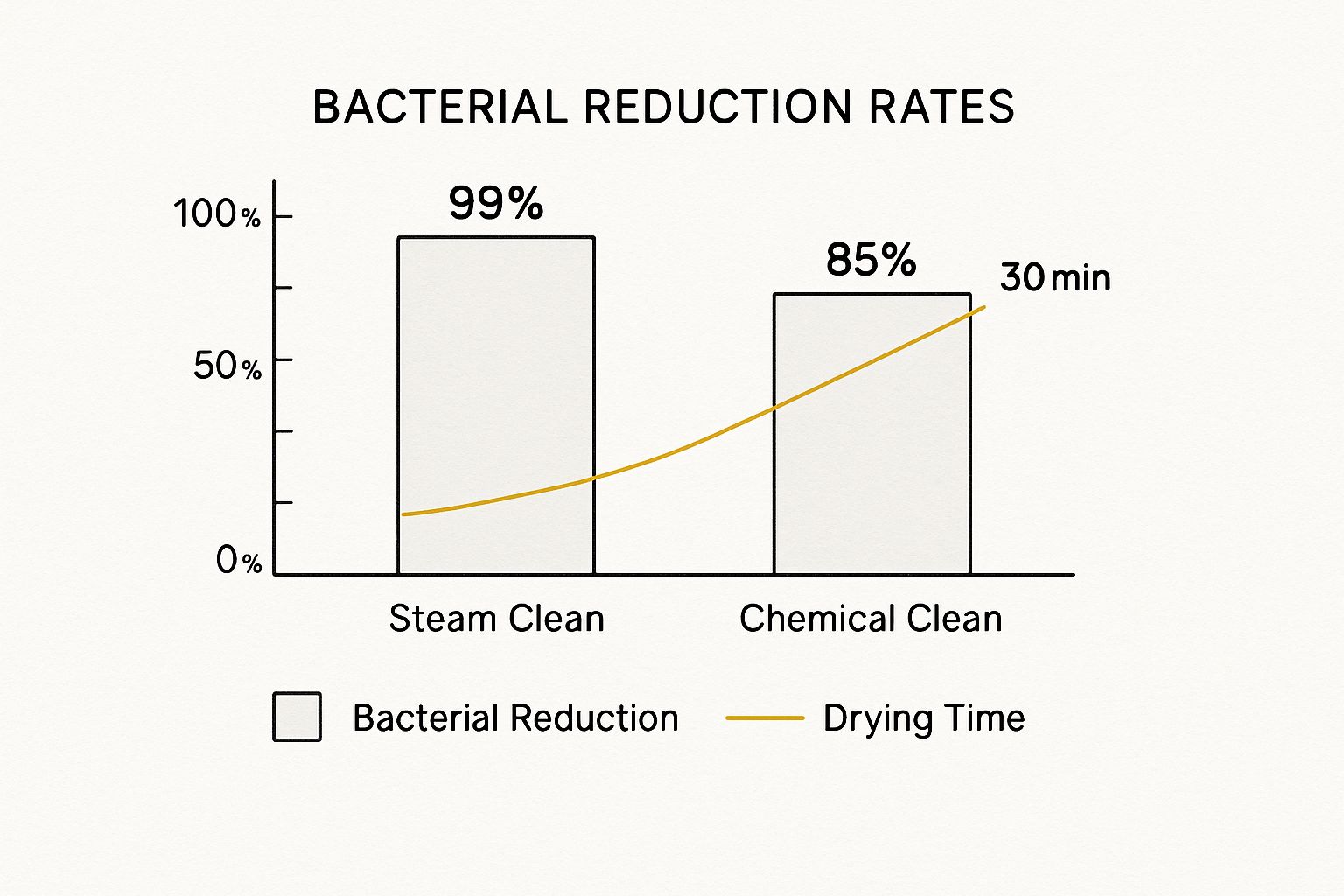
    This infographic breaks down just how effective steam cleaning is compared to traditional methods.
    Infographic about steam clean services

    As you can see, steam cleaning not only delivers a superior level of sanitisation but also drastically reduces drying times. This means less disruption and getting your home back to normal much, much faster.

    Steam Cleaning Suitability for Different Household Surfaces

    It's clear that steam is incredibly versatile, but how does it stack up against traditional methods for different materials? This table gives a quick overview.

    Surface Type Steam Cleaning Effectiveness Traditional Cleaning Method Key Considerations
    Upholstery (Fabric) Excellent. Deep cleans, sanitises, and removes allergens without residue. Chemical sprays & wet vacuuming. Steam is often gentler on delicate fabrics and dries faster, reducing the risk of mould.
    Mattresses Excellent. Kills dust mites and bacteria deep within the fibres. Vacuuming & spot treatments. Traditional methods only clean the surface. Steam offers a true hygienic deep clean.
    Tile & Grout Excellent. Blasts away grime and mould from porous grout lines. Bleach & harsh scrubbing. Steam avoids abrasive chemicals that can damage grout over time and is much more effective.
    Sealed Hard Floors Very Good. Sanitises and cleans without leaving chemical films. Mops & chemical floor cleaners. Steam leaves a streak-free, sanitised finish. Unsealed wood or laminate should be avoided.
    Kitchen Ovens Excellent. Melts baked-on grease and food without toxic fumes. Caustic chemical sprays. Steam cleaning is a fume-free, non-toxic alternative that is incredibly effective.

    Ultimately, professional steam cleaning provides a deeper, healthier, and often safer clean across a huge variety of surfaces compared to many older, chemical-heavy methods.

    How to Choose the Right Steam Clean Service in the UK

    Picking the right professional to come into your home is a pretty big decision. With the UK cleaning industry booming, you've got more choice than ever before. In fact, as of 2023, there were a staggering 75,565 cleaning businesses operating in the UK – a huge jump from the previous year, which really shows how much we're all relying on these specialised services. If you're curious, you can dive into the full report on UK cleaning industry statistics on Policybee.co.uk.

    While all that choice is great, it also means you need to be a bit savvy. A genuinely professional steam clean service can work wonders, but a poor one can be a real let-down. Knowing what to look for from the get-go is the key to getting the quality and peace of mind you're paying for.

    Your Essential Checklist for Finding a Pro

    Before you hit "book", it’s worth taking a few minutes to do some basic checks. These simple steps will help you weed out the amateurs and find a reliable, skilled company that will treat your home and belongings with the care they deserve.

    • Check for Industry Certifications: Keep an eye out for memberships with professional organisations like the National Carpet Cleaners Association (NCCA). This is a good sign that the company takes its work seriously and invests in proper training and high standards.
    • Read Genuine Customer Reviews: Don't just stick to the glowing testimonials on their own website. Head over to independent sites like Google or Trustpilot. That's where you'll get the real, unfiltered story about their quality of work and customer service.
    • Confirm They Are Insured: This is a non-negotiable. Any professional company worth its salt will have full public liability insurance. It’s there to protect your property in the very unlikely event that something gets accidentally damaged.

    Questions to Ask Before You Commit

    Once you've got a shortlist, a quick phone call or email exchange can tell you everything you need to know. A good company will be more than happy to answer your questions without any fuss.

    The goal is to ensure complete transparency from the start. A trustworthy provider will be upfront about their process and pricing, so you know exactly what you’re paying for without any hidden surprises.

    Make sure you ask how they structure their prices. Is it a flat fee for the job, or do they charge by the hour or square metre? It's also crucial to ask about potential extras. Will they charge more for pre-treating tough stains, shifting a bit of furniture, or dealing with particularly grubby patches? A simple question now can save you a nasty shock when the bill arrives.

    Finally, ask about their experience and the kind of equipment they use. There's a world of difference between a professional-grade steam cleaner and a machine you can rent yourself. Finding someone local and trusted is often your best bet; you can check if we cover your specific area on our services page. A little bit of homework upfront means you can book with confidence, knowing your home is about to be left looking and feeling absolutely spotless.

    Your Steam Cleaning Questions, Answered

    It makes perfect sense to have a few questions before you book a professional steam clean. Knowing what to expect helps you plan your day and feel good about the service you're getting. Let's walk through some of the most common things people ask.

    The big one is always about drying time. Nobody wants a soggy house for days on end. The good news is that professional steam cleaning leaves surfaces only slightly damp, never saturated. In most cases, you can expect everything to be completely dry within 3 to 6 hours, though this can vary a bit with the airflow and humidity in your home.

    Practicalities: Safety and How Often to Book

    If you've got little ones or furry family members, safety is naturally top of mind. Is it safe for them? Yes, completely. Since we're just using superheated water to do the heavy lifting, there are no nasty chemical residues left behind. It’s one of the cleanest, greenest ways to deep clean a family home.

    So, how often should you have it done? For the average home, a deep steam clean every 12 to 18 months is a great rule of thumb. It keeps your carpets and furniture looking their best and actually helps them last longer.

    That said, if your home sees a lot of action—think pets, young kids, or anyone with allergies—you’ll probably want to shorten that timeframe. Booking a clean every 6 to 9 months will do a much better job of keeping allergens and dirt under control.

    Think of it as essential maintenance for your home's soft furnishings. It's a powerful and safe way to get a clean that you can really feel.


    Ready for a spotless, healthy home? Book your professional cleaning with Signal Cleaning today and experience the difference for yourself. Visit us at https://signalcleaning.co.uk to get a free quote in minutes.
  • A Complete Guide to Steam Cleaning Solutions

    A Complete Guide to Steam Cleaning Solutions

    Fed up with stubborn grime and that sharp, chemical smell that lingers after cleaning? What if the best cleaning solution wasn't a cocktail of chemicals, but just plain water? That’s the simple-yet-powerful idea behind steam cleaning, which turns ordinary tap water into a superheated, sanitising force that deep cleans without any toxic aftermath.

    A Healthier Home, Unlocked by Steam

    Picture this: getting your home sparkling clean using nothing more than hot vapour. This is the magic of modern steam cleaning, a method that’s quickly winning over everyone from professional cleaners to busy homeowners. It's a way to ditch the cluttered cupboard of chemical sprays for one single, highly effective tool.

    The process itself is surprisingly simple. A steam cleaner heats water far beyond boiling, often pushing it to 120°C or even higher. This creates a very hot, low-moisture vapour. When you point this pressurised steam at a surface, it gets to work in two brilliant ways.

    Image

    How Steam Obliterates Grime and Germs

    First, that intense heat melts away grease and loosens dirt that’s been baked on for ages. It works by breaking down the very bonds that hold the muck to the surface. It’s a bit like running a hot knife through cold butter – the grime just gives way, making it effortless to wipe away messes that would normally need some serious elbow grease and harsh chemicals.

    Second, and this is where it gets really clever, the high temperature is a natural sanitiser.

    The heat from a quality steam cleaner can kill up to 99.9% of common household bacteria, viruses, and allergens like dust mites. This is thermal sanitation at its best, giving you a level of clean that chemicals often can't, all without leaving any nasty residue behind.

    This one-two punch of cleaning and sanitising is what really makes steam stand out. It tackles the dirt you can see and the germs you can't, making your home a genuinely healthier place to be. If you've got kids, pets, or anyone in the family with allergies or chemical sensitivities, this is a game-changer. You get total peace of mind, knowing your home is disinfected the natural way.

    How Steam Actually Gets Things So Clean

    To really get why steam cleaning works so well, you have to appreciate the simple science behind it. Forget thinking about traditional mops and sprays; this is more like giving your surfaces a deep-cleansing, high-pressure facial. It all starts with turning regular tap water into a powerful cleaning tool.

    A steam cleaner takes water way past its boiling point, often pushing it to 120°C or even higher. This creates a superheated, low-moisture vapour that we often call ‘dry steam’. When this pressurised steam hits a surface, the magic happens. The tiny water vapour molecules are minuscule compared to a droplet from a spray bottle, letting them get deep into microscopic pores and cracks that cloths and chemical cleaners just glide right over.

    Breaking Down Grime on a Molecular Level

    The real star of the show is the intense heat. It works by instantly shattering the bonds that make dirt, grease, and grime cling to surfaces. Think about trying to get stubborn grease off a pan with cold water versus hot water – the heat does all the heavy lifting. Steam just takes that idea to a whole new level, melting away tough messes without any need for harsh scrubbing or nasty chemicals.

    This molecular breakdown means dirt and other gunk can be wiped away with a simple microfibre cloth, leaving the surface looking brand new. It’s a game-changer for those notoriously tricky spots:

    • Tile Grout: Steam effortlessly blasts out the grime and mildew that collects in porous grout lines.
    • Oven Grease: Baked-on food and grease that would usually need a powerful chemical solvent just dissolve under the heat.
    • Upholstery Stains: The steam gets right into the fabric fibres, releasing trapped dirt and getting rid of lingering odours from pets or spills.

    The Power of Thermal Sanitising

    But steam cleaning goes beyond what you can see. It delivers a much deeper level of hygiene. The sheer temperature of the vapour is a powerful weapon against the invisible germs and allergens hiding around your home. We call this thermal sanitising.

    When you use it properly, the heat from a steam cleaner can kill up to 99.9% of common household bacteria, viruses, germs, and allergens like dust mites and mould spores.

    And the best part? It does all this without a single drop of chemical disinfectant. That’s a massive plus for anyone with children, pets, or sensitivities to harsh chemicals. The surface isn't just visibly clean; it's hygienically clean, which helps create a much healthier home. Because the steam has so little moisture, surfaces also dry in minutes, stopping mould and mildew from getting the damp environment they need to grow.

    Choosing the Right Steam Cleaner for Your Home

    Picking the right steam cleaner can feel a bit like choosing a new car; you've got different models, and each one is built for a specific purpose. Getting your head around the main types is the first real step to finding the perfect fit for your home and making sure your steam cleaning solutions really deliver.

    Broadly speaking, you're looking at three main players: canister steam cleaners, steam mops, and handheld steamers. Each has its own set of talents, making it better suited for certain jobs and spaces.

    Let's break down what each type does best to help you decide.

    The All-Rounder: Canister Steam Cleaners

    Think of a canister steam cleaner as the versatile estate car of the cleaning world. These machines have a separate, large water tank (usually on wheels) connected to a long hose, which lets you swap out various attachments. It’s this design that gives them their power and makes them brilliant for big, deep-cleaning missions.

    Their bigger tanks mean you can keep going for longer without needing to stop and refill, which is a massive plus when you’re tackling an entire room or several different surfaces at once.

    Image

    The Swift and Simple: Steam Mops

    If the canister cleaner is an estate car, then the steam mop is a nimble city runaround. It’s lightweight, compact, and designed for one main job: zipping across sealed hard floors. They look and feel a lot like a standard mop, but they pack the punch of hot steam to lift dirt and sanitise as they go.

    They heat up in a flash, making them your go-to for everyday spills and regular floor cleaning. For many, they're the ideal replacement for the old mop and bucket, giving you a far more hygienic clean without leaving any chemical residue behind.

    One of the best things about a steam mop is how quickly the floors dry. Because they use 'dry' steam with very little moisture, a freshly cleaned floor is often ready to walk on in minutes—a huge improvement on traditional mopping.

    The Precise and Portable: Handheld Steamers

    Handheld steam cleaners are the compact multitools of the steam world. They're small, portable, and easy to grab for those quick, targeted jobs where a bigger machine would just be a nuisance. They really shine when it comes to getting into tight spots and dealing with smaller, specific messes.

    These little gadgets are incredibly handy for tasks that need a bit more precision and a lot more convenience. You wouldn’t use one to clean a whole floor, but for spot-cleaning and tricky areas, they’re second to none.

    A Comparison of Steam Cleaner Types

    To make the choice even clearer, here’s a straightforward look at how the different types stack up against each other.

    Cleaner Type Best For Pros Cons
    Canister Steam Cleaner Large areas, deep cleaning multiple surfaces, heavy-duty jobs Powerful, versatile with attachments, long cleaning time Bulky, requires more storage space, longer heat-up time
    Steam Mop Regular cleaning of sealed hard floors (wood, tile, laminate) Lightweight, easy to store, heats up quickly, affordable Limited to floors, smaller water tank, less powerful
    Handheld Steamer Small, targeted tasks, tight spaces, upholstery, grout lines, sanitising Very portable, convenient for quick jobs, heats up instantly Very small tank, not for large areas, less overall power

    Ultimately, the best steam cleaner is the one that fits your lifestyle and the cleaning challenges you face most often.

    For those much larger, more demanding jobs, sometimes it’s worth calling in the professionals. If you're looking for expert help, you can find out more about booking professional cleaning services in Oxford to handle the heavy lifting. It's a great way to enjoy a pristine home without all the effort.

    Right then, let's talk about what really happens when you switch to steam cleaning. It’s about more than just getting things to sparkle; you're actually making a smart move for your family's health, your bank account, and the planet.

    For most people, the biggest win is creating a genuinely healthier home. Instead of just smearing chemicals around or covering up smells, steam gets right to the root of the problem and blasts it away. This is a massive relief for anyone with allergies, asthma, young children, or pets. The high-temperature vapour gives you a deep, sanitising clean with absolutely no chemical nasties left behind.

    A Healthier Home

    Think about the typical cleaning cupboard. It’s often full of harsh chemicals that can irritate lungs and release volatile organic compounds (VOCs) into the air you breathe. Steam cleaning is different. It's just superheated water doing all the hard work.

    By using nothing more than water, steam cleaning wipes out up to 99.9% of common germs, bacteria, and allergens like dust mites and mould spores. This is proper thermal sanitation, giving you real peace of mind that your home isn't just tidy, it's hygienically clean.

    This is a game-changer for families. You can let your toddler crawl around on a floor that's been disinfected by heat, not by a lingering chemical spray. If you're a pet owner, you can finally tackle those stubborn odours in the carpet without worrying about your furry friend licking up harmful residues.

    Big Savings in the Long Run

    I know what you're thinking – a steam cleaner costs a fair bit more than a bottle of all-purpose spray. And you're right, there's an initial outlay. But when you look at the bigger picture, the long-term savings are huge.

    Just take a peek under your sink. You’ve probably got a whole collection of different bottles for different jobs:

    • Floors: One cleaner for tiles, another for your sealed hardwood.
    • Kitchens: A heavy-duty degreaser for the hob and a separate spray for the worktops.
    • Bathrooms: Something for mould, a specific grout cleaner, and another for glass.
    • Fabrics: Upholstery shampoos and little spot treatments for spills.

    A good steam cleaner can replace almost all of them. Your only running costs are a tiny bit of electricity and a splash of tap water. Over the course of a year, the money you save by not buying all those specialised products really adds up. You’ll free up your budget and reclaim some serious cupboard space.

    Plus, you're doing your bit for the environment by cutting down on all that single-use plastic. It’s a choice that’s as kind to your wallet as it is to the planet.

    Mastering Your Steam Cleaning Technique

    So, you've got the right tool for the job. Now it's time to put it to work. Getting that professional-level finish isn't about brute force; it's all about technique and a little bit of prep. A bit of groundwork makes a world of difference, ensuring the steam can lift dirt and sanitise surfaces without a hitch.

    The most important first step? Clear the area. Think of it like painting a room—you need a clean canvas to start. Give the surface a good vacuum first to get rid of any loose hair, dust, and debris. If you try to steam a floor covered in crumbs, you’ll just end up with a soggy, smeared mess.

    Once you've prepped the surface, you can get to the main event. The real secret to success is picking the right attachment for the task at hand.

    Choosing the Right Tool for the Job

    Your steam cleaner probably came with an arsenal of attachments, and each one has a specific job. Using the right one doesn't just make the work easier; it makes it far more effective.

    • Jet Nozzle: This little powerhouse concentrates steam into a fine, powerful stream. It’s perfect for blasting grime out of tile grout, getting around taps, and cleaning other tight crevices.
    • Squeegee Attachment: Your best friend for windows, mirrors, and glass shower screens. It cleans and clears away the moisture in one smooth motion, leaving a brilliant, streak-free shine.
    • Floor Head with Microfibre Pad: This is your go-to for sealed hard floors. The wide head lets you cover ground quickly, while the pad mops up all the dislodged dirt.
    • Small Brushes: These usually clip onto the jet nozzle and are fantastic for scrubbing stubborn, stuck-on grime from oven hobs, BBQ grills, or tiles.

    Image

    Common Mistakes to Avoid

    Knowing what not to do is just as crucial as knowing what to do. A few simple errors can lead to disappointing results or, worse, damaged surfaces. Keep an eye out for these common pitfalls.

    The secret to great steam cleaning isn’t speed; it’s patience. By moving the cleaner slowly and steadily, you give the steam enough time to really break down the dirt and kill 99.9% of germs. Rushing just won't give the heat enough time to work its magic.

    Another classic mistake is forgetting about the microfibre pads. As you clean, these pads soak up an incredible amount of filth. If you don't swap them out when they get saturated, you're just spreading that grime right back onto the surface you’re trying to clean.

    And finally, always test a small, hidden spot first. This is especially true for sensitive materials like upholstery or certain types of flooring. Most importantly, never use a steam cleaner on unsealed surfaces like untreated hardwood, non-waterproof laminate, or porous stone. The high-pressure moisture can cause them to warp, swell, or suffer permanent damage. For really tough, set-in messes on fabrics, you might want to look into how to remove stubborn stains before you bring in the heat.

    This methodical, effective approach to cleaning is catching on. In 2023, there were 75,565 cleaning businesses in the UK, an increase from 73,655 the previous year. It’s clear that the demand for a proper, deep clean is on the rise. You can find more insights into the UK cleaning industry over on Policybee.

    Essential Safety Guidelines for Steam Cleaners

    When you’re wielding the power of high-temperature steam, a healthy dose of respect is non-negotiable. While steam cleaning solutions are brilliant at what they do, you've got to use them correctly to sidestep any accidents. The number one rule is just common sense: never, ever point the nozzle at a person, a pet, or even your favourite houseplant. That steam is hot enough to cause a nasty burn in an instant.

    It's also crucial to let the machine cool down completely before you even think about refilling the water tank or swapping out an attachment. Opening a pressurised system too early can unleash a dangerous blast of scalding water and steam. Trust me, taking a few extra minutes for it to cool is a small price to pay for your safety.

    Surfaces to Steer Clear Of

    Not every surface in your home is cut out for the intense heat and moisture that a steam cleaner delivers. To avoid that sinking feeling of having ruined something, keep your machine away from these materials.

    • Unsealed Porous Surfaces: Think unsealed wood, terracotta, and some natural stone. Steam can force moisture deep into the pores, leading to warping, swelling, or permanent water damage.
    • Delicate Fabrics: Silk, velour, and certain thin plastics just can't take the heat. You'll risk melting or permanently damaging them.
    • Freshly Painted or Papered Walls: The heat can make fresh paint bubble up and cause wallpaper glue to fail, completely ruining the finish.

    Following these essential guidelines ensures you can enjoy a sanitised home without any unintended consequences. It’s about working smart and respecting the power of the tool in your hands.

    This thoughtful approach to cleaning is catching on. As more people look for eco-friendly methods, the global steam cleaning service market is projected to hit an estimated $25,000 million by 2025. This shows a real shift towards safer, chemical-free options. You can find more insights about this growing market over on datainsightsmarket.com.

    Your Top Steam Cleaning Questions Answered

    It's completely normal to have a few questions before you dive into the world of steam cleaning. After all, you want to be sure you're getting it right and making the most of this chemical-free cleaning method. Let's walk through some of the queries we hear most often.

    A big one for many homeowners is, "Will steam cleaning damage my grout?" It’s a great question, but you can put your mind at ease. Far from causing harm, high-pressure steam is actually one of the kindest and most powerful ways to restore your grout lines. Unlike acidic chemicals that can literally eat away at grout over time, steam gets deep into the pores to blast out grime and kill mould, all without any abrasive damage.

    Water, Drying, and Getting the Best Results

    "Can I just use tap water in my machine?" is another common query. While you can, it's not always the best idea for the long-term health of your cleaner.

    We always recommend using distilled or demineralised water, particularly if you're in a hard water area. This simple step prevents limescale and other mineral deposits from building up inside your machine, which keeps it running efficiently and extends its life. For more practical advice like this, you'll find plenty of expert tips on our Signal Cleaning blog.

    Finally, what about drying times? This is where steam cleaning truly shines.

    Because the process uses superheated vapour with very little actual water, most surfaces are dry to the touch within a matter of minutes.

    It's a world away from traditional mopping, which can leave your floors out of action for ages. With steam, you can get back to enjoying your clean space almost immediately.


    Ready for a professional touch that leaves your home spotless without the hassle? Signal Cleaning offers expert services tailored to your needs. Book your next clean in just 60 seconds at https://signalcleaning.co.uk.

  • Your Guide to Nontoxic Carpet Cleaner Solutions

    Your Guide to Nontoxic Carpet Cleaner Solutions

    So, what exactly is a nontoxic carpet cleaner? Simply put, it’s a cleaning solution that gets the job done using safe, natural ingredients instead of the harsh chemicals you’ll often find in conventional products.

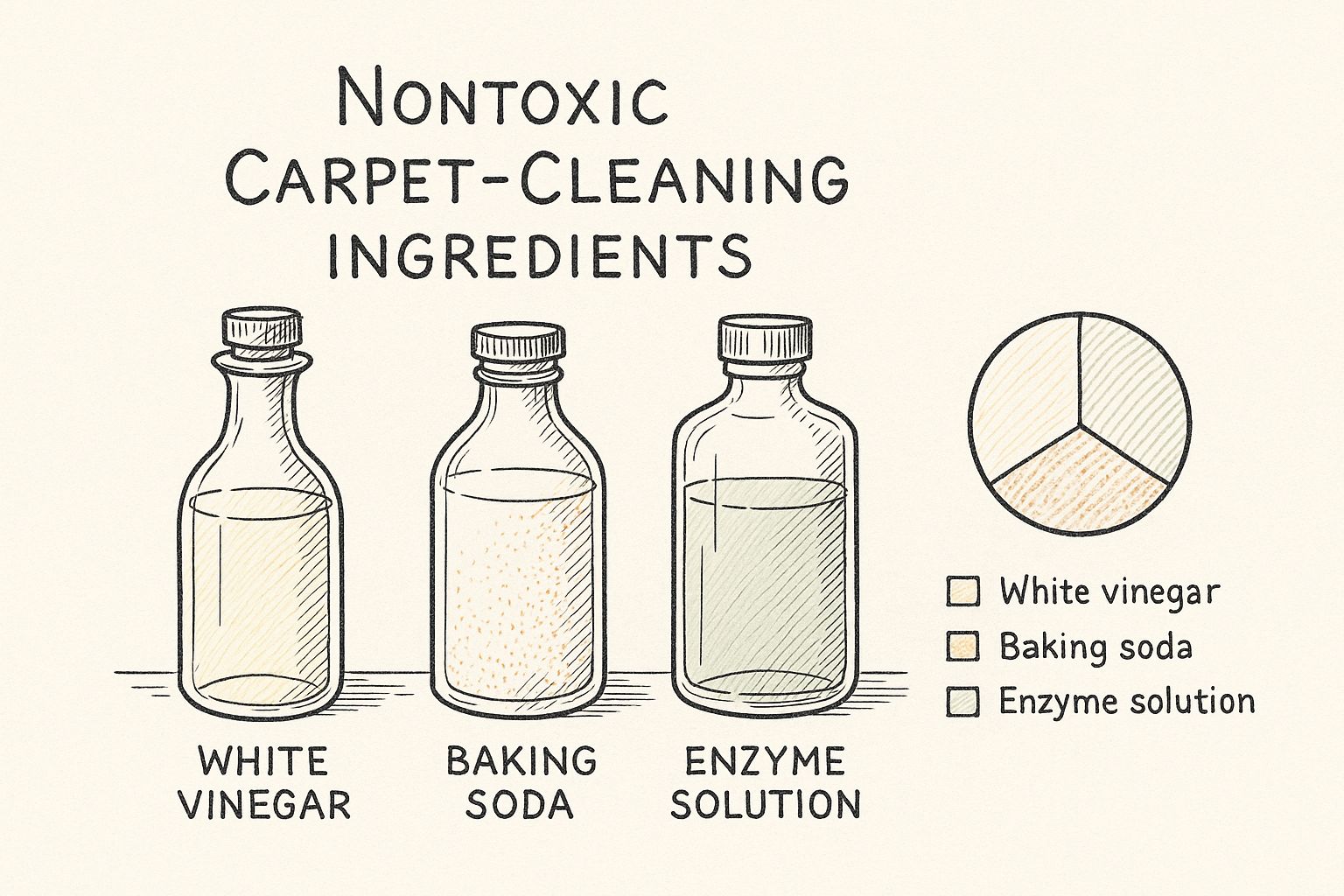
    These cleaners work their magic with plant-derived or mineral-based workhorses like vinegar, baking soda, and natural enzymes. They’re brilliant at lifting dirt and knocking out odours without leaving nasty residues behind. This makes them a fantastic choice for any home, but especially those with children, pets, or anyone sensitive to strong chemicals.

    Why Choose a Nontoxic Carpet Cleaner

    Choosing a nontoxic carpet cleaner is a bit like opting for whole, natural foods over heavily processed ones for your family. Both might solve an immediate problem, but one actively supports well-being, while the other can introduce unwanted, and potentially harmful, elements into your home.

    Many standard carpet cleaners rely on powerful synthetic chemicals for a quick fix, but that performance can come at a cost to your indoor air quality and your family’s health.

    Think of your carpet as the biggest filter in your house. It’s constantly trapping dust, pollen, pet dander, and, of course, any chemicals you spray on it. When you use traditional cleaners, substances known as volatile organic compounds (VOCs) can be released into the air long after the carpet feels dry, contributing to indoor air pollution.

    The Benefits for Your Home and Family

    Switching to a nontoxic carpet cleaner doesn’t mean you have to compromise on cleaning power. It’s about choosing a smarter, healthier way to look after your space. The advantages are clear and genuinely make a difference.

    • Better Indoor Air Quality: Nontoxic solutions don't pump harmful fumes into your home, which means a safer breathing environment for everyone, particularly those with asthma or allergies.
    • Safety for Kids and Pets: Little ones and furry friends spend a lot of their time on the floor. Using natural cleaners means they aren’t coming into direct contact with harsh chemical residues.
    • Kinder to Carpet Fibres: Abrasive chemicals can strip natural oils from carpet fibres (especially wool), making them brittle over time. Nontoxic options clean effectively while helping to maintain your carpet’s texture and lifespan.
    • Real Peace of Mind: There’s a genuine comfort in knowing you aren’t introducing potentially hazardous substances into your living space.

    This shift in awareness is starting to show in market trends. In fact, the UK carpet and upholstery cleaning services market was valued at around £3.3 billion in 2022 and is expected to hit nearly £4.9 billion by 2030, largely driven by a growing focus on indoor hygiene and safer cleaning.

    Choosing a nontoxic carpet cleaner is an active step toward creating a healthier sanctuary. You're consciously reducing your family’s daily chemical load, making sure your home isn’t just visibly clean, but fundamentally safe.

    Ultimately, it’s a choice that benefits everyone under your roof. Whether it’s hiring a professional service that champions green cleaning or mixing up a simple DIY recipe, there are plenty of ways to get a spotless home. For those looking for professional results without the fuss, exploring expert services is a great route. You can find more tips on keeping your home pristine in our comprehensive guides at https://signalcleaning.co.uk.

    The Hidden Dangers in Conventional Carpet Cleaners

    Ever take a moment to read the label on a standard carpet cleaner? It can be a real eye-opener. While they promise pristine, spotless floors, many of these products are packed with a cocktail of aggressive chemicals. They might get the stain out, sure, but they can introduce a whole host of less visible problems into your home's environment.

    It’s a bit like using a sledgehammer to crack a nut. Yes, the job gets done, but the collateral damage can be pretty significant. A conventional cleaner might lift that stubborn wine spill, but it can also release Volatile Organic Compounds (VOCs) into the air you breathe. These are gases that can have some nasty short- and long-term effects on your health.

    Your carpet is essentially a giant sponge. It soaks up not just dirt and dust, but also any chemicals you use on it. This means your family and pets are constantly exposed to these residues, either by walking on the carpet or simply by breathing the air in the room.

    Unmasking the Common Culprits

    Let’s pull back the curtain on some of these ingredients. Many of the chemicals found in household carpet cleaners are powerful enough for industrial use, which should tell you something about their strength. You wouldn't want to bring industrial solvents home, would you?

    Here are a few of the main offenders to watch out for:

    • Perchloroethylene (PERC): You’ll often find this in dry cleaning fluids. It's a fantastic solvent for grease, but it's also flagged as a probable carcinogen. Even short-term exposure can cause dizziness and irritate your respiratory system.
    • Naphthalene: This chemical comes from coal tar and is used to dissolve stains and mask odours – you might recognise its distinctive mothball smell. It's a registered toxic air pollutant and has been linked to potential damage to the central nervous system.
    • Ammonia: Known for its potent smell, ammonia is a common but harsh cleaning agent. It's a severe irritant that can trigger asthma attacks and cause burning sensations in the eyes, nose, and throat, particularly in rooms without good airflow.

    To give you a clearer picture of the difference between these harsh chemicals and their safer counterparts, have a look at this quick comparison.

    Common Chemicals in Traditional vs Nontoxic Cleaners

    Harmful Chemical (Traditional) Potential Health Risk Safe Alternative (Nontoxic)
    Perchloroethylene (PERC) Probable carcinogen, respiratory irritant Plant-based solvents (e.g., from corn or coconut)
    Naphthalene Toxic air pollutant, nervous system damage Essential oils (e.g., lemon, tea tree) for scent
    Ammonia Severe irritant to eyes, lungs, skin White vinegar (acetic acid) for deodorising
    Butoxyethanol Can cause liver and kidney damage Enzyme cleaners (break down organic stains)
    Phthalates (in "Fragrance") Endocrine disruptor, allergen Unscented formulas or natural scents

    This table really highlights the simple, effective swaps that nontoxic cleaners make to protect your health without compromising on cleaning power.

    Image

    As you can see, the building blocks of a great nontoxic cleaner are often things you already have in your pantry, like vinegar and baking soda.

    The Problem with "Fragrance"

    One of the most deceptive words you'll find on a cleaning product label is "fragrance". It sounds harmless, but this single term can conceal a mixture of dozens, or even hundreds, of undisclosed chemicals. These synthetic scents are designed to give you the impression of a clean home, but they often just cover up odours while pumping more pollutants into your air.

    Many of these fragrance chemicals are known allergens and endocrine disruptors. When you smell that powerful "clean" scent, you're often just inhaling a complex chemical blend that has no place in a healthy home.

    This is precisely why choosing a genuinely nontoxic carpet cleaner matters so much. It's not about avoiding one or two specific ingredients; it's about adopting a whole new approach to cleaning—one that puts your family’s health first without giving up on results. By knowing what to look out for, you can become an informed consumer who can confidently read a label and know exactly what you're bringing into your home.

    How to Choose a Truly Safe Commercial Cleaner

    Image

    Stepping into the cleaning aisle can feel a bit much. With bottle after bottle claiming to be "green," "natural," or "eco-friendly," it’s incredibly easy to fall for clever marketing. This tactic even has a name: "greenwashing." It’s when companies use fuzzy, feel-good terms to make their products seem much safer and more environmentally sound than they really are.

    But cutting through the noise isn't as daunting as it looks. The best way to think about it is like reading a food label—once you know what you’re looking for, you can quickly tell the healthy stuff from the junk food in disguise. A genuinely nontoxic carpet cleaner will be open and honest about its ingredients, not hide them behind confusing jargon.

    This shift in consumer awareness has really changed the game. The UK cleaning industry was valued at nearly £60 billion back in 2021, and the number of cleaning companies shot up to over 75,500 by 2023. This boom isn't just about general cleaning; it shows a real demand for specialised, safer services like nontoxic carpet care. You can find out more about the growth of the UK cleaning sector from policybee.co.uk.

    Decode the Ingredient Label

    Your first and most important move is to flip that bottle around and actually read the ingredients list. Think about it: manufacturers of truly safe products are proud of what's inside and want you to know about it.

    It's time to become an ingredient detective. You don’t need a chemistry degree, just a sharp eye for a few key terms—both the good and the bad.

    Here are some signs you’re looking at a genuinely good nontoxic carpet cleaner:

    • Plant-Derived Surfactants: These are the cleaning agents that do the heavy lifting, and they’re sourced from things like coconuts or corn. They create the suds that lift away dirt and are a brilliant alternative to harsh, petroleum-based chemicals.
    • Enzymatic Cleaners: These clever cleaners use natural enzymes to literally break down specific types of stains, like pet accidents or spilt food. They're incredibly effective and completely biodegradable.
    • Essential Oils for Scent: Look for products scented with pure oils like lemon, lavender, or tea tree instead of the vague, catch-all term "fragrance."

    On the other hand, here are the red flags to watch out for:

    • "Fragrance" or "Parfum": As we've mentioned, this one little word can hide a cocktail of hundreds of undisclosed chemicals, many of which are known irritants.
    • Vague Terms like "Cleaning Agents": This is a classic non-answer. It tells you absolutely nothing about what’s in the bottle. Transparency is everything.
    • Dyes or Optical Brighteners: These add zero cleaning power. Dyes are just for looks, and optical brighteners are even sneakier—they coat fibres to make them appear cleaner without actually removing any more dirt.

    Look for Trustworthy Certifications

    While reading labels is a powerful skill, third-party certifications are a fantastic shortcut. These seals of approval are given out by independent organisations that have rigorously tested a product to make sure it meets strict health and environmental standards.

    Think of them as a "seal of safety" from an unbiased expert. They've done all the detailed homework for you.

    When you see a credible certification on a bottle, it means the product has passed stringent tests for ingredient safety, performance, and eco-friendliness. It's one of the fastest ways to confirm you're choosing a genuinely nontoxic carpet cleaner.

    Some of the most reputable certifications to look for in the UK and Europe include:

    • EU Ecolabel: This is the official environmental label of the European Union. Products carrying this flower logo have a proven reduced environmental impact throughout their entire life cycle.
    • Ecocert: A globally recognised certification that guarantees products are made with ingredients from renewable resources and manufactured using environmentally friendly processes.
    • Leaping Bunny: While its main focus is on animal welfare, this logo also speaks volumes about a company's ethical commitment, which often goes hand-in-hand with using safer, more natural ingredients.

    Your Quick Shopping Checklist

    To make things even simpler, here is a mental checklist you can run through next time you're shopping for a nontoxic carpet cleaner. Just ask yourself these quick questions.

    1. Check for "Fragrance-Free": Is the product unscented, or is it scented only with pure essential oils?
    2. Scan for Plant-Based Ingredients: Does the label proudly mention plant-derived surfactants or enzymes?
    3. Look for a Certification Seal: Can you spot a trusted logo like the EU Ecolabel on the packaging?
    4. Read the Full Ingredients List: Are the ingredients clearly and specifically named, or are they vague?
    5. Avoid Dyes and Brighteners: Does the liquid have an artificial colour?

    By using these simple filters, you can easily get past the marketing hype and confidently choose a product that is genuinely safe and effective for your home, your family, and your pets.

    Powerful DIY Nontoxic Cleaner Recipes

    You don’t need a cupboard overflowing with harsh, expensive chemicals to get a truly deep clean. Believe it or not, some of the most powerful and safest cleaning agents are probably already in your kitchen pantry. Mixing your own nontoxic carpet cleaner is not just a great way to save money; it gives you total control over what you bring into your home.

    It’s a bit like cooking from scratch instead of ordering a takeaway. When you make your own meal, you know exactly what’s in it—fresh, healthy ingredients chosen by you. DIY cleaners work on the same principle. It’s a simple, back-to-basics approach that gets brilliant results without any hidden nasties.

    The science behind it is surprisingly straightforward. Ingredients like white vinegar, with its natural acidity, are fantastic at cutting through grime and neutralising odours. At the same time, baking soda acts as a gentle abrasive to lift dirt and is an absolute champion at absorbing nasty smells.

    Simple All-Purpose Carpet Cleaner Solution

    For a general, top-to-bottom clean with a carpet cleaning machine, this recipe is the perfect place to start. It combines gentle cleaning power with deodorising properties to give any room a new lease of life. Think of it as your go-to for routine maintenance and for perking up tired, well-trodden carpets.

    What You'll Need:

    • A large jug or bucket (at least 4 litres)
    • Hot water (or room temperature water if your machine heats it)
    • Distilled white vinegar
    • A gentle, natural dish soap

    Step-by-Step Instructions:

    1. Start with the Base: Pour about 3.5 litres of hot water into your jug, leaving a bit of space at the top.
    2. Add the Cleaners: Carefully pour in half a cup of distilled white vinegar and just one tablespoon of natural dish soap. It’s crucial not to overdo the soap, as too much can leave a sticky residue behind that attracts more dirt.
    3. Mix Gently: Give the jug a gentle swirl to combine everything. Try not to shake it, or you’ll end up with a bucket full of foam.
    4. Ready to Go: Pour the solution into your carpet cleaner’s tank and use it as you normally would, following the machine’s instructions.

    This simple mix does a brilliant job on everyday dirt and grime, leaving your carpets looking brighter and feeling fresher, all without that overpowering chemical smell.

    Potent Spot and Stain Remover

    When a sudden spill happens, you need something that acts fast. This DIY spot cleaner is perfect for tackling everything from muddy paw prints to a knocked-over glass of juice. Keeping a pre-mixed bottle ready to go means you can deal with accidents before they have a chance to set in.

    To make your own powerful stain remover, just mix one cup of distilled water with one cup of white vinegar and one teaspoon of natural dish soap in a spray bottle. Give it a gentle shake, and you're all set.

    Pro Tip: Always test your solution on a small, hidden patch of carpet first—think inside a wardrobe or under the sofa. This quick check ensures it won’t affect your carpet’s colour or texture before you tackle a more visible spot.

    When a stain strikes, spray the solution directly onto it and let it sit for about five minutes. Then, gently work at the spot with a soft brush or cloth until the stain lifts. For more expert tips on fighting really tough marks, check out our guide on how to remove stubborn stains.

    Natural Carpet Deodoriser with Baking Soda

    Carpets are brilliant at trapping odours from pets, food, and just day-to-day life. Instead of masking them with synthetic air fresheners, you can get rid of them at the source with one of the best natural deodorisers out there: baking soda. This method couldn’t be simpler, and it’s perfectly safe for homes with children and pets.

    Here’s how to completely refresh your carpets:

    1. Get a Clean Start: First, give your carpet a good vacuum to pick up any loose dirt, dust, and hair. A vacuum with a HEPA filter is even better for trapping tiny particles.
    2. Sprinkle Away: Lightly sprinkle an even layer of baking soda all over the carpet. Using a fine-mesh sieve can help you get a more controlled, even coating.
    3. Let It Work Its Magic: Leave the baking soda to sit for at least a few hours. For really stubborn smells, leaving it overnight will give you the best results.
    4. Vacuum It All Up: Finally, vacuum the carpet again thoroughly, making sure you suck up all the powder. As you lift the baking soda, you’ll be lifting the odours it has absorbed right along with it.

    This process leaves your carpet smelling genuinely clean and neutral, not just covered up with a fake fragrance. It's a fantastic example of how a simple, single-ingredient nontoxic carpet cleaner can often outperform a bottle full of complex chemicals.

    Effective Nontoxic Cleaning Techniques

    Choosing a brilliant nontoxic carpet cleaner is a great first step, but how you use it is what truly brings your floors back to life. The right technique makes all the difference, turning a simple clean-up into something that looks and feels professionally done. Knowing how to react to a sudden spill versus tackling an old, stubborn stain will get you the best possible results every single time.

    This isn't about needing complicated procedures or expensive gear. It’s simply about working smarter. By adopting a few key methods, you can easily avoid common cleaning mistakes, like accidentally making a stain worse or leaving behind a sticky residue that just attracts more dirt later.

    The First Rule: Blot, Never Rub

    When a spill happens, our first instinct is usually to grab a cloth and start scrubbing like mad. This is honestly one of the worst things you can do. Rubbing a fresh stain doesn't lift it out; it just grinds the particles deeper into the carpet fibres and spreads the mess outwards, creating an even bigger problem to solve.

    The correct approach is to blot.

    1. Act Fast: Gently place a clean, dry cloth or a bit of kitchen roll over the spill.
    2. Apply Pressure: Press down firmly to soak up as much of the liquid as you can.
    3. Lift and Repeat: Lift the cloth, find a clean, dry section, and press down again. Keep doing this until you’ve pulled out most of the moisture.

    This gentle blotting action lifts the stain upwards and out of the carpet, rather than pushing it further in. Once you've blotted up the excess, you can then treat what’s left with your chosen nontoxic spot cleaner.

    Think of it this way: rubbing a stain is like trying to erase a pencil mark with a dirty rubber—it just smudges the problem around. Blotting, on the other hand, is like carefully lifting the graphite off the page, leaving a much cleaner surface behind.

    Treating Different Types of Stains

    Not all stains are created equal, and knowing what you’re dealing with helps you choose the right game plan. While a good all-purpose nontoxic cleaner will handle most everyday spills, some tougher marks need a slightly different approach.

    • For Fresh Spills: After blotting, give the area a light spray with your DIY vinegar solution or commercial cleaner. Let it sit for 5-10 minutes to get to work, then blot again with a clean, damp cloth.
    • For Set-In Stains: Older, dried-on stains need a bit more persuasion. Start by gently scraping off any solid bits. Apply your cleaner and let it dwell for at least 15 minutes. Then, use a soft brush to gently agitate the fibres in different directions before blotting.
    • For Oily or Greasy Marks: For these tricky stains, sprinkle baking soda or cornflour over the spot first. Let it sit for a few hours to absorb the oil, then vacuum it all up. Now you can treat what’s left of the mark with your cleaner.

    This targeted approach means you’re always using the most effective method for the job, saving you time and a lot of elbow grease. For more in-depth advice on professional cleaning methods, our Signal Cleaning blog is packed with industry tips.

    Using Nontoxic Solutions in a Carpet Machine

    If you're gearing up for a deep clean with a carpet cleaning machine, getting the dilution right is absolutely crucial. Using too much of any solution—even a nontoxic one—can leave a sticky residue that makes your carpet feel stiff and attract dirt like a magnet. Always follow the recipe or the product instructions to the letter.

    A very common mistake is adding extra soap, thinking it’ll deliver more cleaning power. In reality, a little goes a long, long way.

    General Dilution Guideline:
    As a rule of thumb for homemade solutions, use no more than one tablespoon of natural dish soap for every 3.5 litres of water. The vinegar in your mix provides most of the cleaning muscle; the soap is just there to help break surface tension and lift grime. Sticking to this ensures a powerful clean without leaving anything behind in your carpet fibres.

    Long-Term Benefits of Nontoxic Carpet Care

    Image

    Choosing a nontoxic carpet cleaner isn’t just about getting a stain out today; it’s a genuine investment in the long-term health and feel of your home. The benefits ripple outwards, moving far beyond a clean floor to create positive changes that you’ll appreciate for years to come.

    Think of your carpet as the biggest fabric filter in your house. By consistently using gentle, nontoxic cleaners, you’re not just cleaning it—you're looking after your indoor air quality. This simple swap helps cut down on airborne irritants, creating a healthier breathing space for everyone, especially for family members with asthma or allergies.

    Extending Your Carpet’s Life and Quality

    It turns out that a gentle approach is also what’s best for your carpet’s lifespan. Many standard cleaners use aggressive chemicals that can strip the natural oils from fibres like wool, leaving them dry, brittle, and more susceptible to wear and tear. Nontoxic solutions clean just as effectively but without causing that kind of damage.

    • Preserves Fibre Integrity: Natural ingredients work in harmony with your carpet’s texture, not against it.
    • Maintains Softness: You get to keep that plush, soft feel for much longer because you’re not using harsh stripping agents.
    • Reduces Fading: Strong chemicals can bleach or dull carpet dyes over time, whereas gentler alternatives protect the vibrancy of your carpet’s colour.

    This kinder cleaning method means your carpet doesn't just look better; it physically lasts longer. That saves you from the hefty cost and hassle of replacing it prematurely. It’s a small change in your routine that protects a major investment in your home.

    Choosing a nontoxic carpet cleaner is a proactive step toward a healthier home and a more sustainable lifestyle. It is a powerful reminder that the small, conscious choices we make can have a profound and lasting positive impact on our daily lives.

    This shift isn't just happening in our homes, either. As more and more of us demand greener solutions, it's pushing the entire professional cleaning industry to evolve. The growing preference for nontoxic products is sparking real innovation in the UK carpet cleaning market, with more services adopting eco-friendly methods and sophisticated low-moisture equipment. You can read more about the evolution of the carpet cleaning service market from datahorizzonresearch.com.

    Your Top Nontoxic Cleaning Questions, Answered

    Deciding to switch to a nontoxic carpet cleaner is a brilliant move for your home, but it's completely normal to have a few questions. When you're used to those strong, chemical smells, shifting to something gentler can feel a bit uncertain. Let's clear up some of the most common queries so you can feel totally confident in your new cleaning routine.

    The biggest question we hear is about performance. Can natural solutions really stand up to the heavy-duty chemical cleaners? Absolutely. Think of it this way: harsh chemicals often rely on brute force, which can be tough on your carpet fibres. A good nontoxic carpet cleaner works much smarter, using things like plant-based surfactants and enzymes to gently break down stains and lift them away without causing any collateral damage.

    Worries About DIY Solutions

    Another common area of concern is homemade cleaners, especially when you’re dealing with certain types of carpet or a manufacturer's warranty. It’s smart to be a little cautious here, because not every natural ingredient is a good match for every material.

    Can I Safely Use Vinegar on Wool Carpets?
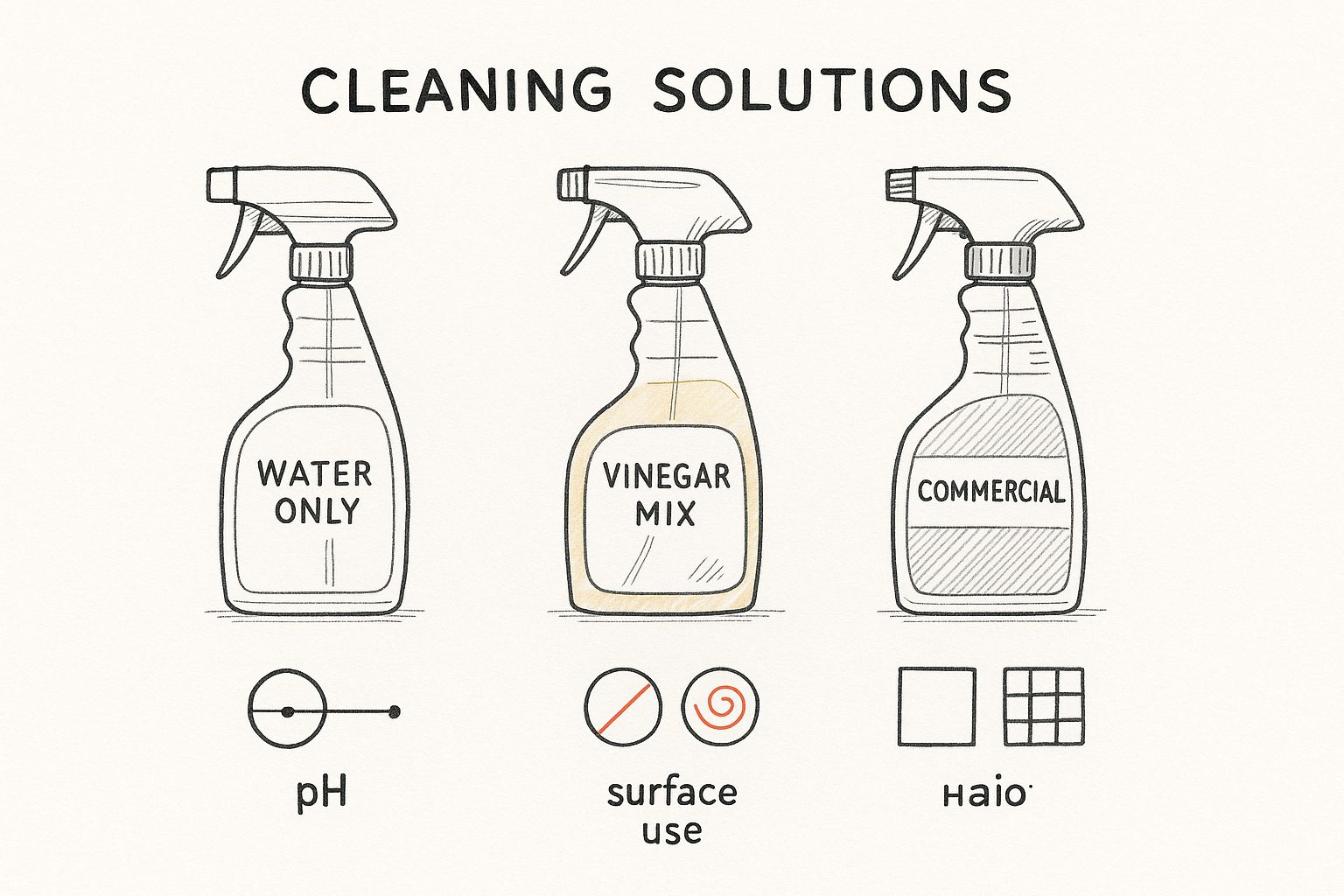
    This is a really important one. Vinegar is a fantastic all-round cleaner, but its acidity can be too much for delicate natural fibres like wool or silk. Using it could lead to damage or even discolouration. For these carpets, you’re much better off sticking with a pH-neutral cleaner or just plain water. And whatever you use, always, always do a little spot test on a hidden area first.

    Will a Homemade Solution Void My Carpet Warranty?
    That's a very valid point. A lot of carpet manufacturers have specific guidelines on approved cleaning solutions, and going off-piste with a DIY mixture could potentially void your warranty. If your carpet is still covered, it's always best to check the care guide or choose a certified nontoxic commercial cleaner that you know meets their standards.

    The whole point of nontoxic cleaning is to get fantastic results without risking your family’s health or the condition of your carpet. Knowing which ingredients work—and which to avoid—is the secret to getting it right.

    How Often Should I Clean?

    Finally, people often wonder if their cleaning schedule needs to change once they ditch the conventional products. The good news is that the core principles of great carpet care stay exactly the same, no matter what cleaner you’re using.

    For most households, a proper deep clean with a carpet machine once or twice a year is perfect. If you have busy hallways or a house full of kids and pets, you might want to do it every few months. For everything in between, weekly vacuuming and tackling spills the moment they happen are still the best ways to keep your floors looking fresh.


    Ready for a professional clean without the harsh chemicals? The expert team at Signal Cleaning uses safe and effective methods to restore your carpets. You can book your service online in minutes.

  • A Guide to Natural Carpet Cleaning for Your Home

    A Guide to Natural Carpet Cleaning for Your Home

    When you hear “natural carpet cleaning,” what comes to mind? For many, it’s about ditching harsh chemicals for simple, non-toxic household staples like baking soda and vinegar. It’s a brilliant way to refresh your carpets, lift out stubborn odours, and deal with everyday stains, all without filling your home with questionable fumes.

    Why Choose Natural Carpet Cleaning

    Image

    Making the move to natural carpet cleaning is about so much more than just getting the dirt out. It’s a conscious choice for a healthier, safer home. Think about it: traditional carpet cleaners are often packed with synthetic chemicals that can hang around long after you’ve finished, affecting your indoor air quality.

    This is a big deal, especially if you have young children or pets. They’re the ones spending the most time playing, crawling, and napping on the floor, putting them in direct contact with any chemical residues. Shifting to natural alternatives completely removes that worry.

    A Healthier Home Environment

    The single biggest win with natural ingredients is the noticeable improvement in your home’s air quality. Many off-the-shelf cleaners release volatile organic compounds (VOCs), which have been linked to everything from respiratory issues and headaches to skin irritation.

    By choosing natural methods, you’re taking a proactive step to shield your family from that unnecessary exposure. It’s a simple change that makes your living space not just look clean, but feel genuinely healthier. You can find more tips for creating a healthier home over on our Signal Cleaning blog.

    Protecting Our Planet

    The ripple effect of our cleaning choices goes far beyond our own four walls. Those chemicals in conventional products often get washed down the drain, making their way into our waterways and causing real harm to aquatic life.

    Natural ingredients, however, are biodegradable and much kinder to the environment. When you use things like vinegar, baking soda, and salt, you can be confident you’re not adding to water pollution. It’s a small way to help preserve our local wildlife and natural resources.

    This eco-conscious approach is part of a much bigger picture. The global demand for professional, green cleaning services is booming. The carpet cleaning market was valued at USD 7.5 billion in 2024 and is expected to more than double by 2033, with UK homeowners playing a huge part in driving this change.

    Cost-Effective and Accessible

    Let’s not forget the financial benefits. Natural carpet cleaning is incredibly kind to your wallet. The main ingredients are things you probably already have in your kitchen cupboards. A big bottle of white vinegar and a box of baking soda cost pennies compared to a single bottle of specialised carpet shampoo.

    This accessibility is empowering. It means you can stay on top of regular cleaning and tackle spills as they happen without having to think about the cost. You get to maintain a beautiful home without relying on expensive, chemical-laden products, making clean living something everyone can achieve.

    Gathering Your Eco-Friendly Cleaning Toolkit

    Image

    Before you can tackle any mess, you need the right supplies. Building an effective, all-natural cleaning arsenal is simpler and cheaper than you might think. In fact, most of the essentials for a proper natural carpet cleaning are probably already hiding in your kitchen cupboards.

    That’s the real beauty of this approach. You don’t need a dozen specialised, chemical-laden products. A few powerful, multi-purpose ingredients are all it takes to handle everything from a general freshen-up to a sudden, dreaded spill. This isn’t just about cleaning; it’s about being prepared for life’s little accidents in a way that’s safe for your family and surprisingly effective.

    Your Core Cleaning Ingredients

    At the heart of any DIY cleaning kit are a few key players. Knowing what each one does is the first step to using them like a pro.

    • Baking Soda (Bicarbonate of Soda): This is your ultimate deodoriser. Its alkaline nature is brilliant for neutralising acidic odours from things like pet urine or spilt milk, absorbing them directly from the carpet fibres.
    • White Vinegar: Don’t let the smell fool you (it disappears as it dries!). The acetic acid in vinegar is a fantastic cleaning agent. It effortlessly cuts through grease and grime and acts as a mild disinfectant, all without leaving nasty residues behind.
    • Table Salt: Never underestimate this humble seasoning. When you have a fresh spill—especially something like red wine—salt is your first line of defence. It works by drawing the liquid out of the carpet fibres before the stain has a chance to set.
    • Essential Oils (Optional): If you want to add a pleasant scent, a few drops of lavender, lemon, or tea tree oil can be mixed into your cleaning solutions. They also offer some extra antibacterial muscle.

    Before we move on to the tools, here’s a quick shopping list to help you get everything you need in one go.

    Your Natural Carpet Cleaning Shopping List

    This simple table breaks down the must-have items for your eco-friendly cleaning caddy.

    Item Primary Use Where to Find
    Baking Soda Deodorising, light scrubbing Baking aisle in any supermarket
    White Vinegar Stain removal, disinfecting Supermarket, usually with oils/condiments
    Table Salt Absorbing fresh liquid spills Supermarket
    Spray Bottles Applying homemade solutions Garden centre, hardware shop, or large supermarkets
    Microfibre Cloths Blotting and drying Cleaning aisle in any supermarket
    Stiff-bristled Brush Working solution into tough stains Hardware shop or cleaning aisle
    Essential Oils Adding fragrance, antibacterial boost Health food shops, pharmacies, or online

    With these items on hand, you’re well-equipped to handle most common carpet cleaning tasks without reaching for harsh chemicals.

    Essential Tools for the Job

    Having the right ingredients is only half the battle; the right tools make all the difference. They ensure your cleaning is not only effective but also safe for your carpet.

    One of the most common mistakes I see is people completely soaking their carpet with a cleaning solution. Remember, the goal is to clean the fibres, not the underlay. A good quality spray bottle that creates a fine, even mist is one of the most important tools you can own.

    Your basic toolkit should start with a sturdy vacuum cleaner that has good suction. You’ll also need a couple of spray bottles for your homemade solutions and a stack of clean, absorbent microfibre cloths for blotting up stains and moisture.

    A stiff-bristled brush can also be a lifesaver for working solutions into stubborn spots, but always be gentle! Scrubbing too hard can damage the carpet pile. I recommend keeping everything together in a caddy or bucket so it’s ready to grab the moment you need it.

    Your Guide to a Deep Natural Clean

    Right, let’s get our hands dirty. We’ve talked about the what and why of natural cleaning; now it’s time to put our simple, eco-friendly ingredients to work. Getting a truly deep clean is all about the right technique, not blasting your carpets with harsh chemicals.

    Forget complicated routines. I’ll walk you through a straightforward process that actually works, from the prep work right through to the final rinse. We’ll cover the little details that prevent common mistakes, like soaking your carpet or leaving behind a sticky film that just attracts more dirt.

    Laying the Groundwork with a Thorough Vacuum

    Before you even think about mixing a cleaning solution, your vacuum cleaner is your best friend. And I don’t mean a quick whizz around the room. You need to be methodical here to pull up all the dry soil, dust, and pet hair that gets trodden deep into the fibres.

    Think of that grit as tiny bits of sandpaper. Every time you walk on it, it grinds away at your carpet, dulling its colour and causing premature wear. For a really effective vacuum, slow right down. Go over the entire carpet in overlapping rows, first in one direction, and then do it all again at a 90-degree angle. This simple trick agitates the pile from all sides, lifting out stubborn debris that a single pass always misses.

    Mixing and Applying Your Homemade Solution

    With the loose dirt gone, it’s time for the cleaning solution. For a general, all-purpose clean, you can’t beat a simple mix of white vinegar and water. The acetic acid in the vinegar is fantastic at breaking down everyday grime without being harsh on your carpet.

    • For a standard clean: Mix one part white vinegar with ten parts warm water in a spray bottle. It’s a gentle dilution that’s perfect for a regular refresh.
    • For high-traffic areas: Up the concentration to one part white vinegar and five parts warm water. This gives you a bit more oomph for those well-trodden paths through the living room or down the hall.

    Now, when you start spraying, remember the golden rule: less is more. You want to lightly mist the carpet, working in small, manageable sections. The aim is to dampen the fibres, not to soak the backing and underlay. Getting it too wet is a recipe for mould and mildew problems.

    A classic mistake is drenching the carpet, thinking more solution equals a better clean. It doesn’t. It just makes it a nightmare to rinse and often leaves a residue that acts like a magnet for new dirt. A fine, even mist is all you need.

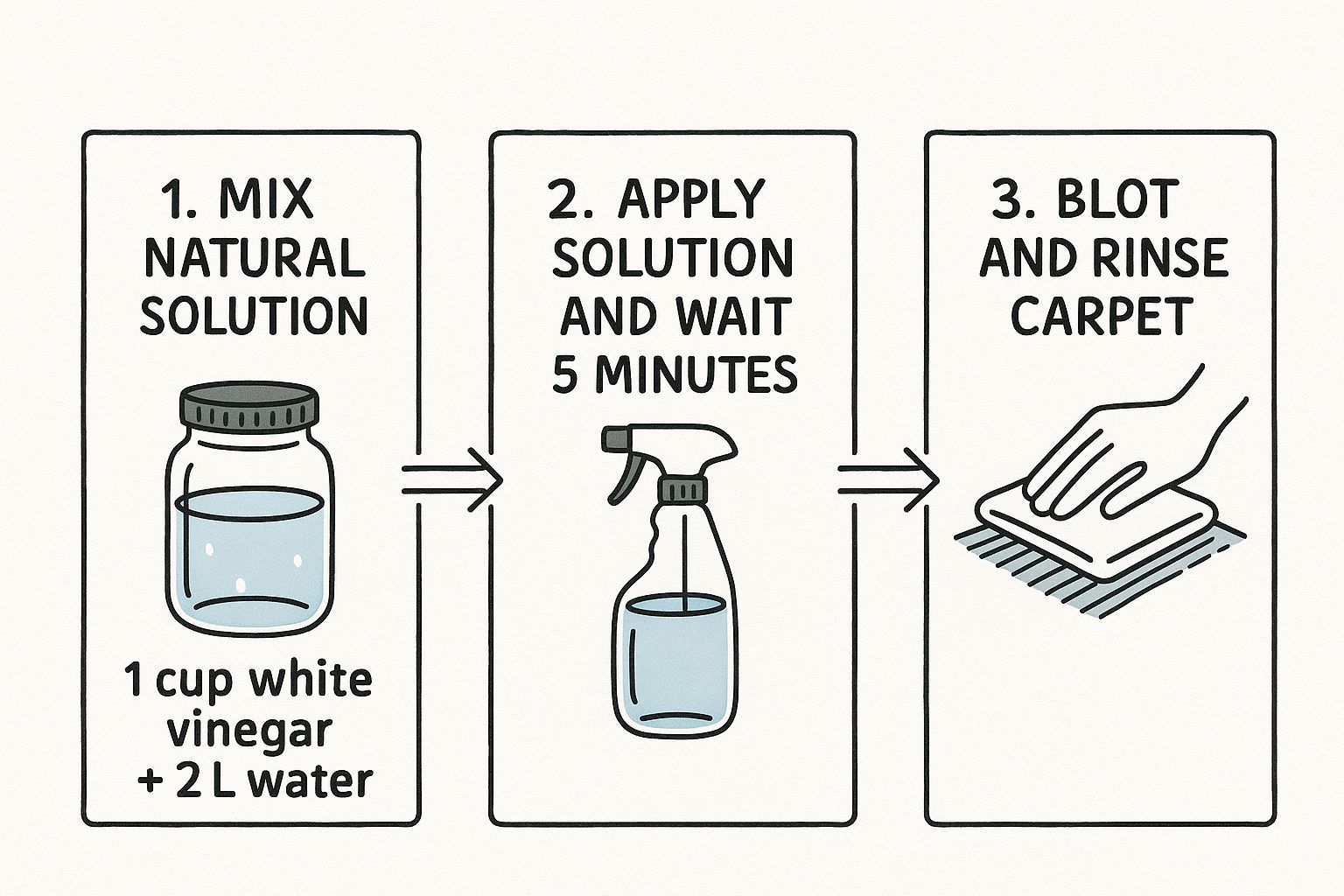
    This visual breaks down the basic process into three simple parts.

    Image

    As you can see, a great result comes from a simple mix, a short dwell time, and proper blotting—no fancy machines or aggressive chemicals required.

    The Art of Agitation and Rinsing

    Once you’ve misted a section, let the solution sit for about five to ten minutes. This “dwell time” is crucial. It gives the vinegar a chance to get to work, breaking down the oils and dirt clinging to the fibres.

    Next, you’ll want to gently agitate the area with a soft-bristled brush. I find small, circular motions work best. The key here is gentle—you’re not trying to scrub a stain off a patio. You’re just helping the solution work its way in and loosen the grime. Scrubbing too hard can fray the carpet pile.

    Finally, the rinse. This is the step that guarantees you won’t be left with a sticky residue. Grab a new spray bottle filled with plain, clean water and lightly mist the area you just cleaned. Straight away, take a clean, dry microfibre cloth and blot the area firmly. Press down hard to soak up the moisture and the dirt with it. Keep blotting with a fresh part of the cloth until it comes up clean, then you’re ready to move on to the next section.

    Tackling Tough Stains the Natural Way

    Let’s face it, spills happen. That heart-sinking moment when red wine splashes onto your cream carpet or muddy paws leave a trail doesn’t have to mean reaching for harsh chemicals. The good news is your kitchen cupboards are likely already stocked with everything you need to tackle almost any stain emergency.

    The trick to successful natural carpet cleaning is to act fast and tailor your approach to the type of spill. Above all, remember the golden rule of stain removal: always blot, never rub. Rubbing just grinds the stain deeper into the carpet fibres and can even damage them, making a bad situation much worse.

    Your Go-To Recipes for Common Stains

    Different messes call for different measures. You wouldn’t treat a greasy pizza mark the same way you’d tackle a coffee spill. Here are a few battle-tested recipes for some of the most common culprits I’ve seen over the years.

    • Red Wine and Coffee Spills: As soon as the spill happens, grab a clean cloth and blot up as much of the liquid as you can. Then, pour a generous amount of table salt or baking soda directly onto the stain to draw out the remaining moisture. Let it sit for a few hours, or until completely dry, then just vacuum it up.
    • Greasy Food Stains: For oily marks from things like butter, pizza, or salad dressing, your first step is to sprinkle cornflour or baking soda all over it. This works wonders to absorb the grease. Give it at least 15 minutes to work its magic before you vacuum it away.
    • Pet Accidents: To deal with both the stain and the lingering odour, start by blotting the area thoroughly. Next, spray it with a simple solution of equal parts white vinegar and water. While the spot is still damp, sprinkle a good layer of baking soda over the top. You’ll see it start to fizz – that’s the cleaning power in action! Let it dry completely, then vacuum.

    For those extra-tricky spots, our guide on how to remove stubborn stains has some more advanced tips.

    Before you go all-in on a visible stain, always do a quick patch test. Find a hidden spot, like under the sofa or in a corner, and apply a small amount of your cleaning mixture. This simple check ensures the solution won’t cause any discolouration on your carpet.

    The Science Behind the Simplicity

    These natural remedies aren’t just old wives’ tales; their effectiveness is rooted in simple chemistry. That fizzing you see when vinegar (an acid) meets baking soda (an alkali) is carbon dioxide gas being released. This reaction helps to lift dirt and neutralise odours from deep within the carpet pile. Salt, with its crystalline structure, is brilliant at absorbing liquids through osmosis.

    Understanding why these ingredients work makes you much more confident in tackling messes yourself. It’s this growing awareness of safer, effective cleaning that’s changing the professional industry, too. The UK’s carpet and upholstery cleaning market was valued at around £3.1 billion in 2022, and carpet services accounted for almost 73% of that.

    Experts predict this sector will grow to nearly £4.7 billion by 2030, driven largely by people wanting healthier, more hygienic homes. It’s clear that a fresh, clean living space is more important than ever.

    Keeping Your Carpets Fresh Between Cleans

    Image

    A deep, natural clean can work wonders, but the real secret to keeping that just-cleaned feeling is what you do in the days and weeks that follow. Consistent, simple habits make all the difference, preventing dirt and odours from getting a foothold in the first place.

    Think of it as proactive care. These small routines drastically cut down on how often you need to do a full-on deep clean, keeping your carpets looking and feeling fantastic for much longer. It’s a low-effort, high-reward strategy for maintaining your home.

    It’s no surprise that people value a pristine living space. The UK cleaning industry was valued at roughly £59.8 billion in 2021, and the number of cleaning businesses shot up to over 75,500 by 2023. These UK cleaning industry statistics show a clear trend: we’re all looking for ways to keep our homes beautifully clean, whether through our own efforts or with expert help.

    Smart Daily Habits for Fresher Carpets

    Often, the most effective defence is the simplest one. A good-quality doormat at every entrance is a must-have. It’s your front line, catching the worst of the mud, grit, and moisture before it even has a chance to get trampled into your carpets.

    Another game-changer is having a “shoes off at the door” rule. It might feel like a small thing, but it’s one of the best ways to protect your carpet fibres from the abrasive dirt and pollutants we bring in from outside.

    And, of course, there’s the vacuum cleaner. Regular vacuuming—at least twice a week for hallways and living rooms—is non-negotiable. It lifts all that surface-level dust and debris before it has time to get ground deep into the pile.

    A Simple DIY Carpet Deodoriser

    For a quick refresh that leaves your room smelling wonderful, you can whip up your own natural carpet deodoriser in minutes. It’s incredibly easy and a much healthier alternative to chemical-laden air fresheners.

    Here’s how you do it:

    • Get your supplies: Grab a clean jar, about 200g of bicarbonate of soda (baking soda), and 10-15 drops of your preferred essential oil. Lavender, lemon, and peppermint are all brilliant choices for a fresh scent.
    • Mix it all together: Pop the bicarb and essential oils into the jar, screw on the lid, and give it a really good shake to distribute the oil evenly.
    • Sprinkle and wait: Lightly scatter the scented powder over your carpets. You don’t need a thick layer. Leave it to work its magic for at least 15-30 minutes—this gives the bicarb time to absorb any musty smells.
    • Vacuum it up: Run the vacuum over the area thoroughly to suck up all the powder. You’ll be left with a lovely, subtle fragrance.

    This simple trick does more than just cover up smells. Bicarbonate of soda actively neutralises the acidic molecules that cause odours, leaving your carpet genuinely fresher.

    These little habits are perfect for day-to-day upkeep. But for those times when your carpets need a truly professional revival, you can always book a convenient cleaning service online to get them back to their absolute best.

    Got Questions About Natural Carpet Cleaning? Let’s Clear Things Up

    It’s only natural to have a few questions when you’re about to ditch the harsh chemical cleaners you’ve used for years. I get it. Making the switch to natural carpet cleaning is a fantastic decision, but it’s wise to go in with your eyes open. Let’s walk through some of the most common things people ask me.

    First up, the big one: “Will my house smell like a chip shop?” A very valid question! White vinegar definitely has a strong, sharp scent when you first apply it. But here’s the good news—that smell completely vanishes as it dries. Once your carpet is dry to the touch, all you’ll be left with is a fresh, neutral scent. If you want a bit of fragrance while you work, just add a few drops of your favourite essential oil, like lavender or lemon, to the mix.

    Another common worry is whether these homemade solutions are actually powerful enough to do the job. We’ve been conditioned to think that a strong chemical smell equals a deep clean. In reality, ingredients like vinegar and bicarbonate of soda are cleaning powerhouses. They work through simple but effective chemical reactions—the acid in vinegar breaks down dirt and stains, while the alkaline nature of bicarb is brilliant for neutralising stubborn odours. No harsh synthetics needed.

    Are These Methods Safe for All Carpet Types?

    This is a really important point, especially if you’ve invested in delicate wool rugs or natural fibre carpets. The gentle solutions we’ve covered are perfectly safe for most common synthetic carpets, like nylon and polyester. With natural fibres, however, you need to be a bit more careful.

    • Wool Carpets: Wool is sensitive to anything too alkaline (like bicarb) and doesn’t respond well to high heat. Using bicarbonate of soda can lead to yellowing over time. A heavily diluted white vinegar and water solution is generally okay, but you absolutely must test it first.
    • Sisal or Jute: These plant-based carpets are like sponges and can get water stains very easily. For these, it’s best to stick to dry cleaning methods. Using a powder like bicarbonate of soda to absorb dirt and odours is a much safer approach. Steer clear of wet cleaning entirely.

    Always, always do a patch test before you start. Find a hidden spot, maybe under the sofa or in a closet, apply a tiny amount of your cleaning mixture, and let it dry completely. This one simple check can prevent a whole lot of heartache.

    How Often Should I Be Deep Cleaning My Carpets?

    For the average home, giving your carpets a deep natural carpet cleaning every 12 to 18 months is a good rule of thumb. Of course, your home isn’t “average.” If you’ve got pets, small children, or anyone with allergies, you’ll probably want to do it more often, perhaps every six months.

    The real key to keeping your carpets looking great is consistent maintenance. Regular vacuuming and tackling spills the moment they happen will make the biggest difference. The deep clean is for getting rid of that deep-seated grime that a quick vacuum just can’t touch, ensuring your home stays healthy and your carpets last for years.


    When life gets too busy for DIY, Signal Cleaning offers professional, high-quality cleaning services to get your home looking its absolute best. Book your cleaning service online today