Tag: DIY cleaning

  • How to Clean Grout Between Tiles Like a Pro

    How to Clean Grout Between Tiles Like a Pro

    Cleaning grout isn't as daunting as it looks. At its core, it’s a simple process: apply a good cleaner, give it a proper scrub with a stiff brush, and rinse it all away. You can often get brilliant results with a homemade paste of bicarbonate of soda and water, though for really tough grime, a specialised commercial cleaner might be what you need.

    Why Your Grout Looks So Grimy
    Image

    If you're looking at your once-pristine grout lines and wondering how they got so discoloured, you’re definitely not the first. The problem is baked into what grout actually is: a porous, cement-based material that acts like a tiny, rigid sponge.

    Because it's so absorbent, it eagerly soaks up everything around it – moisture, dirt, oils, you name it. In a bathroom, this means a steady build-up of soap scum, body oils, and minerals from hard water. In the kitchen, it becomes a magnet for splattered cooking grease, food spills, and general grime from foot traffic. It doesn't take long for this accumulation to become a breeding ground for mould and mildew, which is where those ugly dark stains come from.

    The Real Culprits Behind Dirty Grout

    Figuring out what’s causing the staining is the key to picking the right cleaning tactic. It usually comes down to one of these common offenders:

    • Moisture and Mildew: In constantly damp places like showers, that persistent moisture allows mildew and mould to grow deep within the grout’s pores.
    • Soap Scum: That film left behind by soaps, shampoos, and conditioners builds up over time, trapping dirt and creating a stubborn, grimy layer.
    • Everyday Dirt: For floors in high-traffic spots like hallways or kitchens, simple dirt and mud get ground into the grout lines, causing them to darken and look worn.
    • Spills and Stains: Kitchen spills are notorious. A splash of coffee, a drop of wine, or a bit of pasta sauce can seep into the grout and leave what looks like a permanent stain if not tackled quickly.

    This is more than just a cosmetic problem. Dirty grout can harbour all sorts of bacteria. If you leave it, trapped moisture can even start to compromise the tiles themselves. The scale of this maintenance task is huge; floor care was the biggest slice of the UK's professional cleaning market in 2024, making up nearly 32% of the industry’s massive £15.4 billion revenue. It just goes to show how much work goes into keeping our surfaces clean, both in our homes and commercially. You can read more interesting UK cleaning industry statistics on policybee.co.uk.

    Gathering Your Grout Cleaning Toolkit

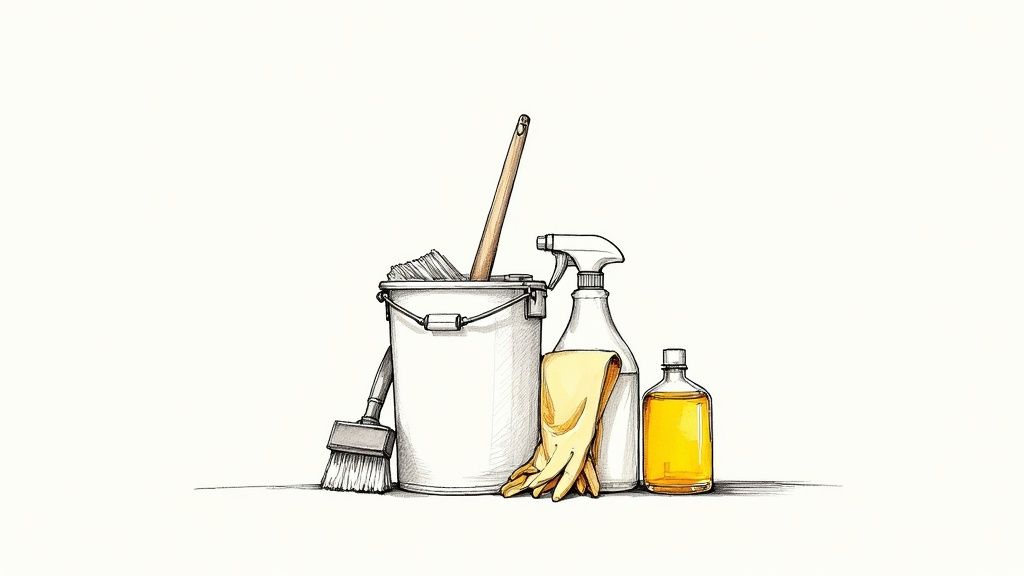
    Before we dive into how to clean grout between your tiles, let’s talk about getting your gear in order. Showing up to the job with the wrong equipment is like trying to paint a portrait with a roller—it’s just frustrating, and you won’t get the results you want. Having a well-stocked toolkit makes the entire process smoother, faster, and a whole lot more effective.

    The good news? You don’t need to break the bank. Many of the best tools for the job are simple, inexpensive items you might already have tucked away in a cupboard. This isn't just about grabbing any brush; it’s about having the right one for the task at hand.

    The Essential Grout Cleaning Supplies

    First things first, let's cover the basics. These are the non-negotiable items that are the foundation of any successful grout cleaning project. Think of this as your core arsenal for tackling everyday grime.

    • A Stiff-Bristled Grout Brush: This is your primary weapon. A proper grout brush has firm, narrow bristles that are specifically designed to get right into those grout lines. A common mistake I see is people using an old toothbrush, but its soft bristles are simply no match for stubborn, embedded dirt and will flatten out in no time.
    • Spray Bottles: It’s always handy to have a couple of these on hand, especially for applying homemade solutions like a simple vinegar and water mix. They give you an even spray without completely soaking the area.
    • Microfibre Cloths and Sponges: You’ll need these for wiping away the cleaning solution and all the grime you’ve just loosened. Microfibre is fantastic because it actually traps the dirt particles instead of just pushing them around.
    • A Bucket: A simple bucket filled with clean water for rinsing is an absolute must. It’s crucial for wiping down the tiles afterwards to make sure no chemical residue is left behind.

    You'll notice more specialised cleaning tools on the market these days, and it isn't just a trend. People are realising that properly maintained grout is key to preventing bacteria growth and keeping their floors looking great.

    Power Tools for Tougher Jobs

    Let's be honest, sometimes a bit of elbow grease just isn't enough. This is especially true for large tiled areas or grout that hasn't had a deep clean in years. When you're facing a serious challenge, it's time to bring in the heavy hitters. These tools can slash your scrubbing time and deliver results that look truly professional.

    An electric scrubber is an absolute game-changer. These are handheld devices that often come with different brush heads, including small, stiff ones that are perfect for getting into grout lines. They do the hard work for you, providing a continuous, high-speed scrubbing action that will save your arms and back.

    For a powerful, chemical-free deep clean, a steam cleaner is an exceptional choice. It works by blasting high-pressure hot steam into the grout, which dissolves grime and kills 99.9% of germs and bacteria without any harsh chemicals. This makes it a brilliant option for households with pets, children, or anyone with allergies. It's no surprise that these devices are becoming more popular; the global market for grout cleaning equipment was valued at a hefty USD 240 million back in 2022. Here in the UK, floor care makes up a significant 31.89% of the entire cleaning services market, which really shows how much we value effective cleaning solutions. You can discover more about the grout cleaning equipment market on arizton.com.


    Choosing Your Cleaning Solution

    Once you have your tools, you need to decide what you're going to clean with. You've got two main routes: whipping up a homemade solution or buying a commercial-grade product. There's no single right answer; it really depends on the state of your grout and your personal preferences.

    Let’s quickly compare the options to help you figure out what's best for your situation.

    Comparing Grout Cleaning Solutions

    Solution Type Best For Pros Cons
    Homemade Light to moderate everyday dirt, regular maintenance, and eco-conscious cleaning. Cost-effective, uses common household ingredients, and is generally gentler on surfaces. Can be less effective on deep-set stains or mould, and may require more scrubbing.
    Commercial Tough, neglected stains, mould, mildew, and large-scale cleaning projects. Highly effective and fast-acting, often formulated to tackle specific problems like mould or discolouration. Can be more expensive, may contain harsh chemicals, and requires good ventilation during use.

    Ultimately, the choice is yours. For a quick refresh, a homemade mix is often all you need. But if you’re facing years of built-up grime, a specialised commercial cleaner will likely save you a lot of time and effort.

    The Practical Guide to Cleaning Your Grout

    Right, with your tools laid out, it's time to get stuck in. This isn't just about slopping some cleaner on the floor and hoping for the best. A bit of method is needed if you want brilliant results without damaging your tiles or spending hours scrubbing for nothing. We’ll walk through the entire process, from the crucial prep work to the final rinse.

    Think of it like painting a room. You wouldn't just start slapping paint on the walls without putting down dust sheets and taping the edges, would you? The same principle applies here—a little preparation goes a long way.

    Setting the Stage for Success

    Before you even think about opening a bottle of cleaner, a couple of quick checks are essential. Don't be tempted to skip these; they can save you a real headache down the line.

    First, get some air moving. Open any windows and doors in the room, and if you have an extractor fan, switch it on. This is non-negotiable if you're using a commercial cleaner, as the fumes can be quite potent.

    Next, and this is the big one, always do a patch test. Find a small, inconspicuous spot – maybe behind a door or under a cabinet – and test your cleaning solution on a small bit of grout. Let it sit, give it a scrub, and rinse it just as you would on the main floor. This simple check makes sure the cleaner won't discolour your grout or harm your tiles.

    A quick test patch can prevent a disaster. Imagine discovering your powerful new cleaner is bleaching your beautiful, coloured grout after you’ve done half the room. It’s a five-minute check that could save you a costly replacement job.

    Applying Your Cleaner and Getting to Work

    Once you're prepped and confident in your cleaner, it's time for the main event. The key here is to work in small, manageable sections, say no larger than a metre square at a time. If you try to do the whole floor at once, the cleaner at the far end will have dried out before you ever get to it.

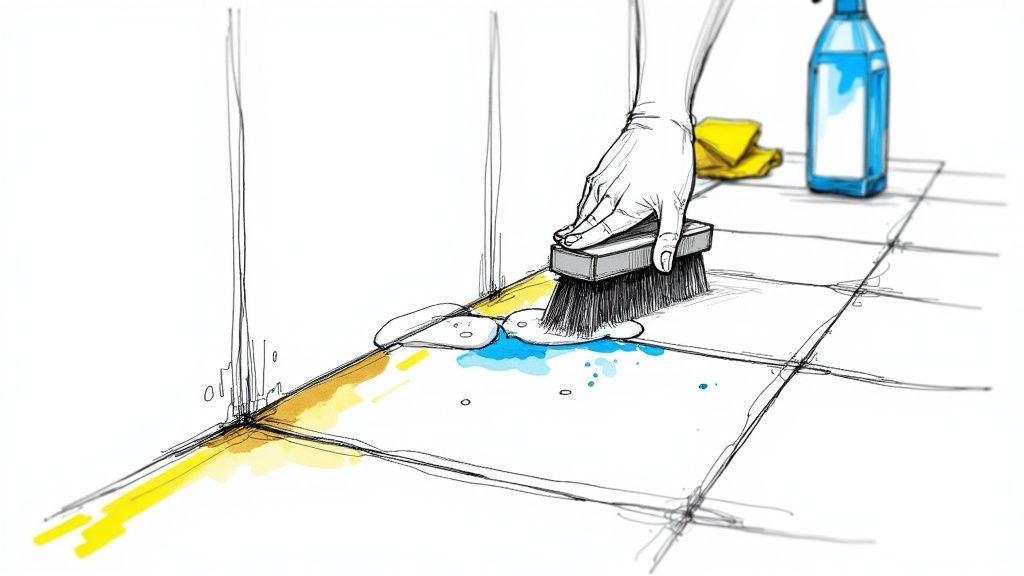
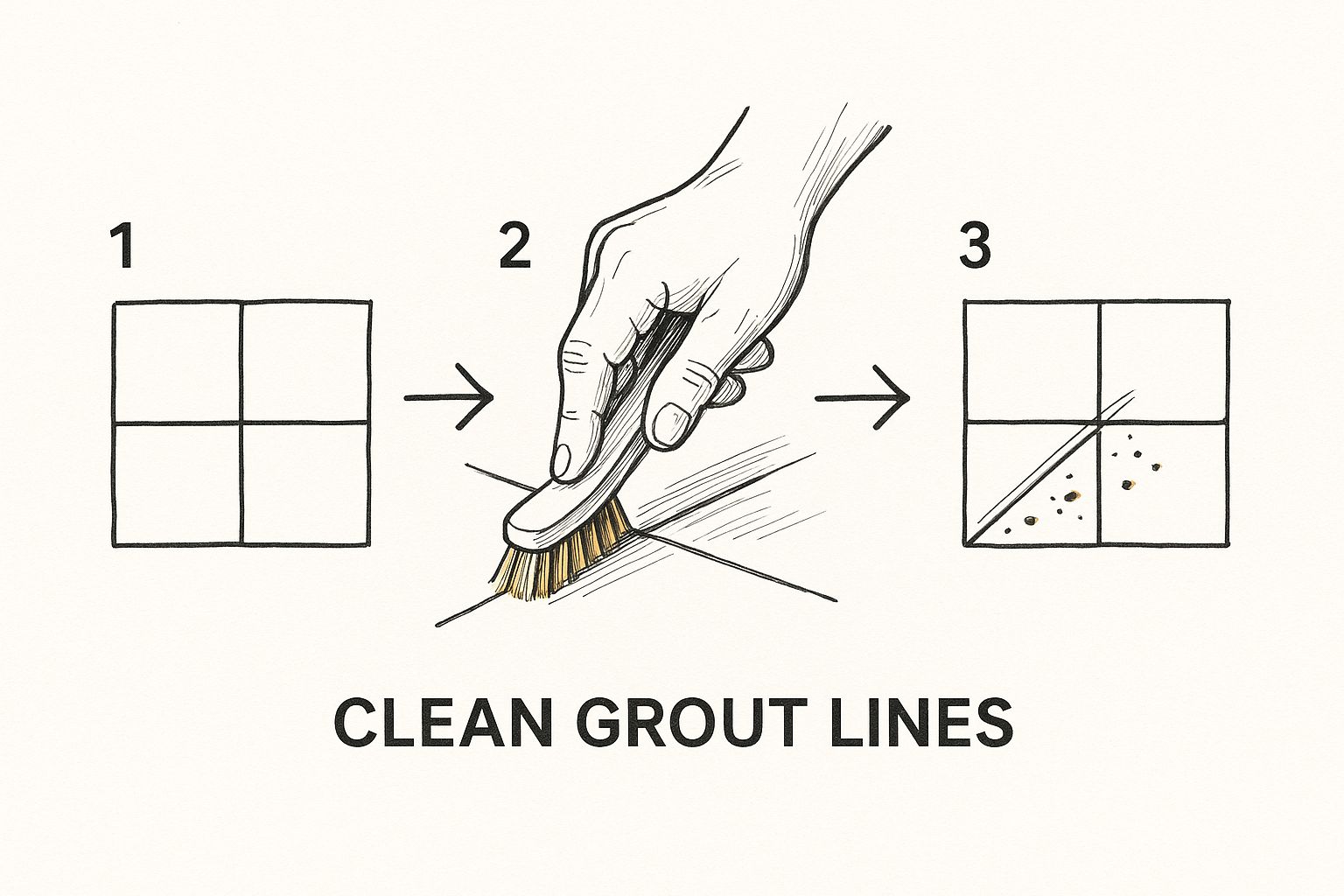
    This picture gives you a good idea of the focused action needed during the scrubbing phase.
    Image

    It really captures that methodical, repetitive motion required to lift the grime out of the grout lines without having to use brute force.

    Here’s the breakdown for applying most cleaners:

    • Apply generously: Whether it's a spray or a paste, get it directly onto the grout lines. Don't be shy – make sure they're thoroughly coated.
    • Let it dwell: Check the instructions on the bottle. Many solutions, especially homemade ones like a bicarbonate of soda paste, need to sit for 5-15 minutes. This gives the active ingredients time to get to work breaking down the dirt and grime.
    • Scrub with purpose: Now for the satisfying part. Grab your stiff-bristled grout brush and scrub the grout lines using firm, back-and-forth or circular motions. This technique is far better at lifting stubborn, embedded dirt than a lazy wipe.

    Rinsing and Finishing Up

    After you've scrubbed a section, the final task is to get rid of all that loosened gunk and leftover cleaning solution. If you leave any residue behind, it will just become a magnet for more dirt.

    Get a bucket of clean, warm water. Using a big sponge or a microfibre cloth, wipe down the entire section you've just cleaned. You’ll need to rinse your sponge out frequently in the bucket to avoid spreading dirty water around. You might need to go over the area two or three times to get it completely clean.

    Once rinsed, grab a dry cloth or an old towel and wipe the section dry. This simple step prevents water spots from forming and stops dirty water from settling back into your freshly cleaned grout lines.

    Now, just move on to the next square and repeat the process. It’s a bit repetitive, I know, but this methodical approach is the secret to a professional-looking finish.

    How to Beat Stubborn Stains and Mould

    https://www.youtube.com/embed/gRs3gslHz1Y

    Let's be honest, sometimes a general clean just doesn't cut it. You’ve scrubbed until your arms ache, but those deep-set stains and ugly patches of mould are still there, mocking you. It’s a classic problem, especially in bathrooms where the constant damp creates a perfect home for stubborn black mould.

    When your first attempt doesn't work, don't throw in the towel. It just means it's time to change your game plan and bring in the specialists. Think of it as escalating from a routine clean to a targeted deep treatment. Different stains need different weapons, and knowing which one to choose is the secret to getting your grout looking brand new again.

    Tackling Persistent Mould and Mildew

    For those nasty black spots that love to hang around in shower corners and on bathroom floors, your average cleaner isn't going to get to the root of the problem. You need something more specific, which is where a dedicated mould and mildew remover comes in. These aren't just surface cleaners; they contain fungicides designed to kill the mould spores right down to the source.

    Before you start, get some fresh air moving. Open a window, switch on the extractor fan – proper ventilation is non-negotiable. Apply the product directly onto the mouldy grout, let it sit for the time stated on the bottle (usually 10-15 minutes is about right), and then give it a firm scrub before rinsing it all away. This direct attack is so much more effective than simply scrubbing harder with an all-purpose spray.

    Lifting Discolouration and Organic Stains

    What about the kitchen? We're talking about those yellowish or brownish stains from coffee spills, curry splatters, or just years of built-up cooking grease. For this type of discolouration, a homemade paste of hydrogen peroxide and bicarbonate of soda can be your best friend. The peroxide provides a gentle bleaching action, while the bicarb gives you just enough grit to scrub the stain away.

    Mix them together until you have a thick paste, a bit like toothpaste. Slather it right onto the stained grout, let it fizz and work its magic for about 10 minutes, then get scrubbing. You’ll be surprised how often the stain lifts right off.

    If you're up against a whole host of different marks around the house, our detailed guide on how to remove stubborn stains has plenty more expert tips for all sorts of surfaces.

    Your Secret Weapon: The Steam Cleaner

    If you want a truly deep, sanitising clean without reaching for harsh chemicals, a steam cleaner is an absolute game-changer. It uses high-pressure, hot steam to literally blast grime out of the grout, killing bacteria and dissolving stains that manual scrubbing can't touch. I've found it’s brilliant on greasy kitchen grout and can bring back the original colour like nothing else.

    Just pop the small detail nozzle on the end and move it slowly along the grout lines. The steam does all the heavy lifting, loosening the dirt so you can just wipe it away with a microfibre cloth. It’s a powerful, chemical-free method that doesn't just clean—it properly sanitises your surfaces too.

    How to Keep Your Grout Looking Brand New for Longer

    Image

    After putting in all that elbow grease, the last thing you want is to see that grime creep back in a few weeks. The real secret isn't just knowing how to clean grout between tiles; it's about shifting your mindset from reactive deep cleans to smart, preventative care that makes your hard work last.

    The single best thing you can do for your freshly cleaned grout is to seal it. Grout is naturally porous, a bit like a sponge. A good sealer creates an invisible shield, stopping moisture, dirt, and soap scum from soaking in and staining it. It’s a simple step, but it can make a massive difference, turning what would have been a stubborn stain into a spill you can just wipe away.

    Finding the Right Grout Sealer and Applying It Properly

    You'll quickly notice that not all sealers are the same, and picking the right one is key to getting the protection you need. Generally, they fall into two camps:

    • Penetrating Sealers: As the name suggests, these soak deep into the grout's pores to create a barrier from the inside out. They're my top recommendation for high-moisture areas like bathrooms and kitchens because they won’t just wear away with foot traffic or cleaning.
    • Surface Sealers: These form a waterproof film over the top of the grout line. They do a good job, but they can wear down over time, especially on floors, which means you'll likely need to reapply them more often.

    Putting the sealer on is straightforward, but it does demand a bit of patience. First, and this is crucial, make sure your grout is 100% clean and completely dry. If you seal over even slightly damp or dirty grout, you're just trapping the problem underneath.

    Use a small brush or a dedicated applicator to carefully paint the sealer onto the grout lines. Be sure to wipe any excess off the tiles themselves before it has a chance to dry.

    You've got to let the sealer cure properly. Check the manufacturer's instructions, but expect to leave it for at least 24 hours. I know it's tempting to use the shower or walk on the floor, but rushing this will ruin the protective barrier you just worked so hard to create.

    Small Habits That Make a Big Difference

    Beyond sealing, it’s the little things you do every day that prevent that dreaded build-up. These simple actions take just seconds but will save you hours of future scrubbing.

    For starters, wipe up spills the moment they happen. That splash of coffee on the kitchen floor or a blob of shampoo on the shower wall can seep into unsealed grout surprisingly fast, leaving a stain that looks permanent. Just keeping a cloth handy for quick wipe-downs makes all the difference.

    In the bathroom, the main enemy is moisture.

    • Grab a squeegee: After every shower, take 30 seconds to squeegee water off the tiles and glass. This simple act drastically cuts down on the moisture that would otherwise sit in your grout lines and invite mould.
    • Get some air moving: Run your extractor fan during your shower and for at least 20 minutes afterwards. No fan? Crack a window open to let all that steam escape.
    • Keep floors dry: If water tends to pool on your bathroom floor, use an old towel to soak it up. Mould and mildew hate a dry environment.

    It’s also interesting to see how cleaning habits are changing. There’s a huge demand now for maintenance products that are both gentle and effective. In fact, a recent report found that 60% of UK consumers say they'd happily pay more for eco-friendly cleaning solutions. This shows a clear shift towards products that work well without being harsh. You can discover further insights into the UK professional cleaning products market at astuteanalytica.com to see the full trend.

    And for those times when the job feels too big or you'd just rather leave it to the professionals, you can always book an expert cleaning service in Oxford with us.

    Your Top Grout Cleaning Questions, Answered

    Getting stuck into a big cleaning project always throws up a few questions. Even when you think you have it all planned out, something unexpected will pop up. So, to help you feel like you've got this completely under control, here are the answers to the questions we get asked all the time about cleaning grout.

    How Often Should I Really Be Deep Cleaning My Grout?

    Honestly, it all comes down to where the tiles are and how much use they get.

    Think about the main family bathroom or the kitchen floor—these are high-traffic, high-moisture zones. For these areas, giving the grout a proper deep clean every two to three months is a smart move. It stops everyday grime from setting in for good and keeps mould from getting a foothold.

    Now, what about a guest bathroom that barely sees any action or a tiled wall in a utility room? You can probably get away with a deep scrub just once or twice a year. The real trick is the little-and-often approach. Wiping up spills as they happen is a world away from scrubbing a stain that’s been there for weeks.

    The goal here is ongoing maintenance, not a last-minute rescue mission. A bit of regular attention means grout cleaning never becomes a dreaded, day-long ordeal.

    Is It Okay to Use Bleach on Grout?

    This is a big one. While it’s tempting to reach for the bleach for its whitening magic, it can be a real problem for grout. Chlorine bleach is incredibly harsh stuff. Used repeatedly, it can literally break down the structure of your grout, making it brittle and crumbly. If your grout is coloured, bleach can also ruin it, leaving you with patchy, uneven shades.

    If you're facing a really stubborn patch of mould and feel bleach is your only option, please be careful:

    • Water it down: A mix of one part bleach to ten parts water is more than enough.
    • Get the air flowing: Open every window and door. Switch on the extractor fan.
    • Never, ever mix it: This is crucial. Mixing bleach with other cleaners, particularly anything containing ammonia, can produce dangerous toxic gases.

    A far safer alternative that still packs a punch is an oxygen-based bleach powder. It does a fantastic job without the same harsh side effects.

    What’s the Best Grout Cleaner I Can Make at Home?

    You don't need fancy chemicals for a great result. The best and simplest homemade cleaner is a paste made from bicarbonate of soda and a little water. It's brilliant.

    The bicarb acts as a very gentle abrasive, lifting dirt out of the porous grout surface without any risk of scratching your tiles. It’s cheap, non-toxic, and works wonders on most day-to-day grime.

    For an extra bit of oomph, especially on greasy grout behind the hob, add a bit of white vinegar. You'll get a satisfying fizzing reaction that helps break down and lift stubborn gunk. Just apply the paste while it's foaming, leave it to work its magic for 15 minutes or so, then give it a good scrub and rinse away. For more practical tips like this, feel free to explore our Signal Cleaning blog.


    At Signal Cleaning, we truly believe a clean home is a happy home. If you're in the Oxford area and would rather hand this job over to the professionals, we'd be delighted to help. Book your professional cleaning service online in just 60 seconds.
  • How to Remove Stubborn Stains Like a Pro

    How to Remove Stubborn Stains Like a Pro

    When it comes to shifting stubborn stains, it all comes down to two things: speed and substance. Getting to a spill before it has a chance to settle is half the battle, but knowing what you’re up against—whether it’s oil, protein, or something else entirely—is what really wins the war. This guide will walk you through the strategies I’ve learned over the years to tackle even the most daunting marks.

    Why Some Stains Just Won’t Budge

    Have you ever wondered why a splash of red wine seems to become one with your carpet, while a bit of mud can often be brushed off once it’s dry? It’s all down to a mix of chemistry and the type of fabric involved. No two stains are the same, and their staying power depends on their molecular makeup and the surface they’ve landed on.

    Think of fabric fibres as either being slick and resistant or porous and absorbent. Natural fibres like cotton and wool are full of tiny, microscopic pockets that are fantastic at trapping stain molecules. On the other hand, synthetics like polyester often have smoother fibres, which is why they tend to be more stain-resistant from the get-go.

    Getting to Grips with the Main Culprits

    Knowing your enemy is the first step to victory. Most household stains fall into one of a few categories, and each one needs a different game plan.

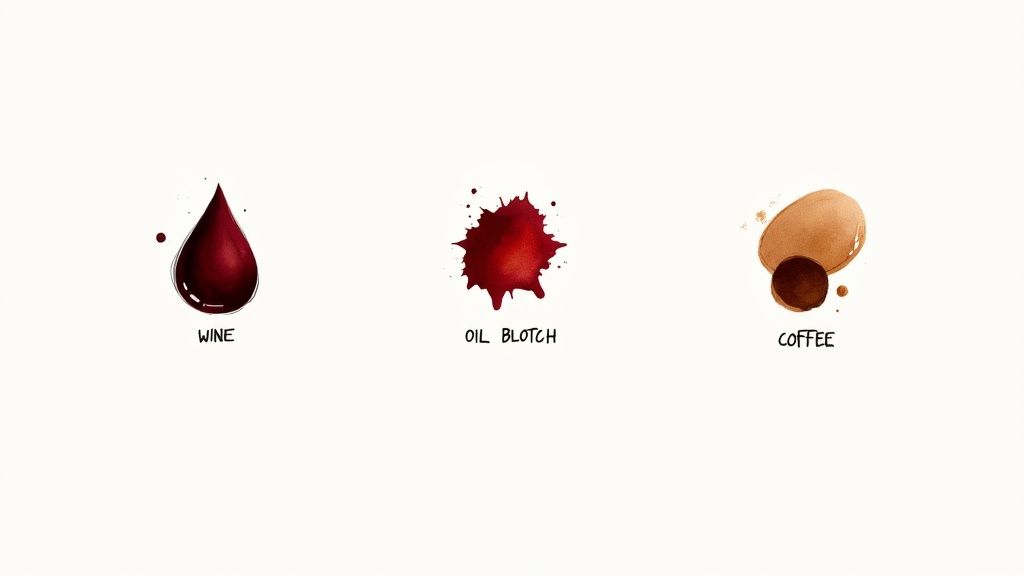
    • Tannin Stains: These come from plants. We’re talking coffee, tea, red wine, and fruit juice. They usually respond well to something acidic or a dedicated detergent.
    • Oil-Based Stains: This group includes grease, cooking oil, butter, and a lot of makeup. Since oil and water don’t mix, you need a solvent or a good washing-up liquid that can break down the grease.
    • Protein-Based Stains: Think blood, sweat, or a dropped egg. The golden rule here is to always use cold water. Hot water will literally cook the protein, bonding it to the fabric for good.

    The real secret to how to remove stubborn stains isn’t about scrubbing harder; it’s about working smarter. When you match the right cleaning agent to the right type of stain, you’re not just moving the mess around—you’re actually dissolving the chemical bonds holding it to the fabric.

    The Growing Demand for Better Solutions

    It’s hardly surprising that effective stain removal is a hot topic in UK homes. Our lives are busier than ever, which means spills and accidents are just a part of daily life. This has led to huge growth in the market for fabric stain removers; in Western Europe alone, it’s expected to jump from USD 1.8 billion in 2025 to USD 2.5 billion by 2035.

    This isn’t just about cleaning anymore. People want quick, reliable products that also sanitise fabrics and get rid of odours, showing a real shift towards better home hygiene overall. You can find more detailed insights on fabric care from various market analyses. While you don’t need a professional qualification to clean your own home, understanding the basics can make you feel just as capable. For those looking into professional credentials in different areas, you might find our guide on how to get Microsoft certified interesting.

    Building Your Stain-Fighting Toolkit

    When a glass of red wine tips over or a pen explodes, the last thing you want is to be scrambling for a solution. Being prepared can turn a full-blown panic into a minor inconvenience. Knowing how to remove stubborn stains really begins with having the right tools ready to go. The good news? You don’t need an entire cupboard full of products; a small, curated arsenal will tackle most emergencies.

    Interestingly, many of the most effective stain-busters are probably already in your kitchen. These household staples are often your first and best line of defence, saving you time, money, and a lot of stress.

    The Everyday Essentials

    For a huge number of common stains, you can get the job done with simple, everyday products. These are what I consider the absolute non-negotiables for any home cleaning kit.

    • White Vinegar: Its mild acidity is a secret weapon against tannin stains—think coffee, tea, and some fruit juices. It gently breaks them down.
    • Baking Soda: This is a brilliant natural abrasive and deodoriser. You can mix it into a paste to lift greasy marks or just sprinkle it on a carpet spill to absorb the moisture.
    • Washing-Up Liquid: A decent washing-up liquid is designed to cut through grease on your plates, and it does the exact same thing for oily food stains on clothes.
    • An Old Toothbrush: Perfect for gently working a cleaning solution into the fabric without causing damage. A soft-bristled one is best.
    • Microfibre Cloths: These are essential for blotting and dabbing. They’re incredibly absorbent and, unlike paper towels, won’t leave little bits of lint behind.

    Stepping Up to Commercial Cleaners

    While DIY remedies are fantastic, some stains just won’t budge without a bit more oomph. That’s when it’s time to reach for a specialised commercial product.

    The market for these is definitely growing. In fact, liquid stain removers are set to grow by 5.3% annually in the UK over the next decade. Their popularity is down to pure convenience and effectiveness, especially for renters or smaller households who just need a quick, reliable fix. Online shopping has made getting the right product easier than ever, which you can read more about in this analysis of consumer habits shaping the fabric care market.

    They come in all sorts of formats, like the spray bottle you see below, but also gels, sticks, and even pens for on-the-go treatment.

    Image

    This image shows a typical pre-wash stain remover, designed to be sprayed directly onto a mark before the item goes into the laundry.

    If you’re only going to buy one commercial product, make it an enzyme cleaner. These contain specific enzymes that are absolute masters at breaking down protein-based stains like blood, grass, or sweat—the kind that can be notoriously difficult to shift.

    My Top Tip: If you have pets or children, an enzyme-based cleaner is non-negotiable. It’s incredibly effective on all sorts of organic stains and the odours that come with them, making it a true lifesaver for life’s messiest moments.

    A Field Guide to Conquering Common Stains

    Right, let’s get down to the practical side of things. Knowing the theory is all well and good, but the real test comes when a fresh spill is threatening your favourite shirt or brand-new sofa. This is your battle plan for some of the most common and frustrating stains you’ll encounter at home.

    Every stain has a weakness. The secret to learning how to remove stubborn stains is hitting that weakness with the right tools and techniques. Whether it’s something from your kitchen cupboard or a specialised cleaner, matching the solution to the problem is what gets the job done. Let’s walk through a few everyday scenarios.

    The Dreaded Red Wine Spill

    It’s a classic for a reason. A splash of red wine on a light-coloured carpet can feel like a disaster, but if you act fast, it’s surprisingly manageable. The moment it happens, grab a clean, dry cloth and blot the area immediately. Whatever you do, don’t rub—that just pushes the wine deeper into the fibres.

    Once you’ve soaked up the excess, pile salt generously over the entire stain. The salt crystals will literally start to pull the wine out of the fabric. Give it a few minutes, or even an hour if you can spare it, then vacuum or scrape the salt away. For any faint colour that’s left, a gentle dab with some club soda can often lift the final traces.

    The real trick here is speed. A fresh tannin stain from red wine is far easier to lift before it has a chance to fully bond with the fabric. Procrastination is the stain’s best friend.

    Tackling Greasy Food Stains

    From a dropped slice of pizza to a splash of salad dressing, oil-based stains are a constant pain. Water on its own will just roll right off, which is why a good-quality washing-up liquid is your best bet. Its grease-cutting agents are literally designed to break down fats.

    Just apply a small amount directly onto the stain and gently work it in with your fingers or an old, soft toothbrush. You should see the greasy mark start to break up. Let it sit for 10-15 minutes to give the soap time to do its thing, then rinse the area with warm water before putting it through a normal wash.

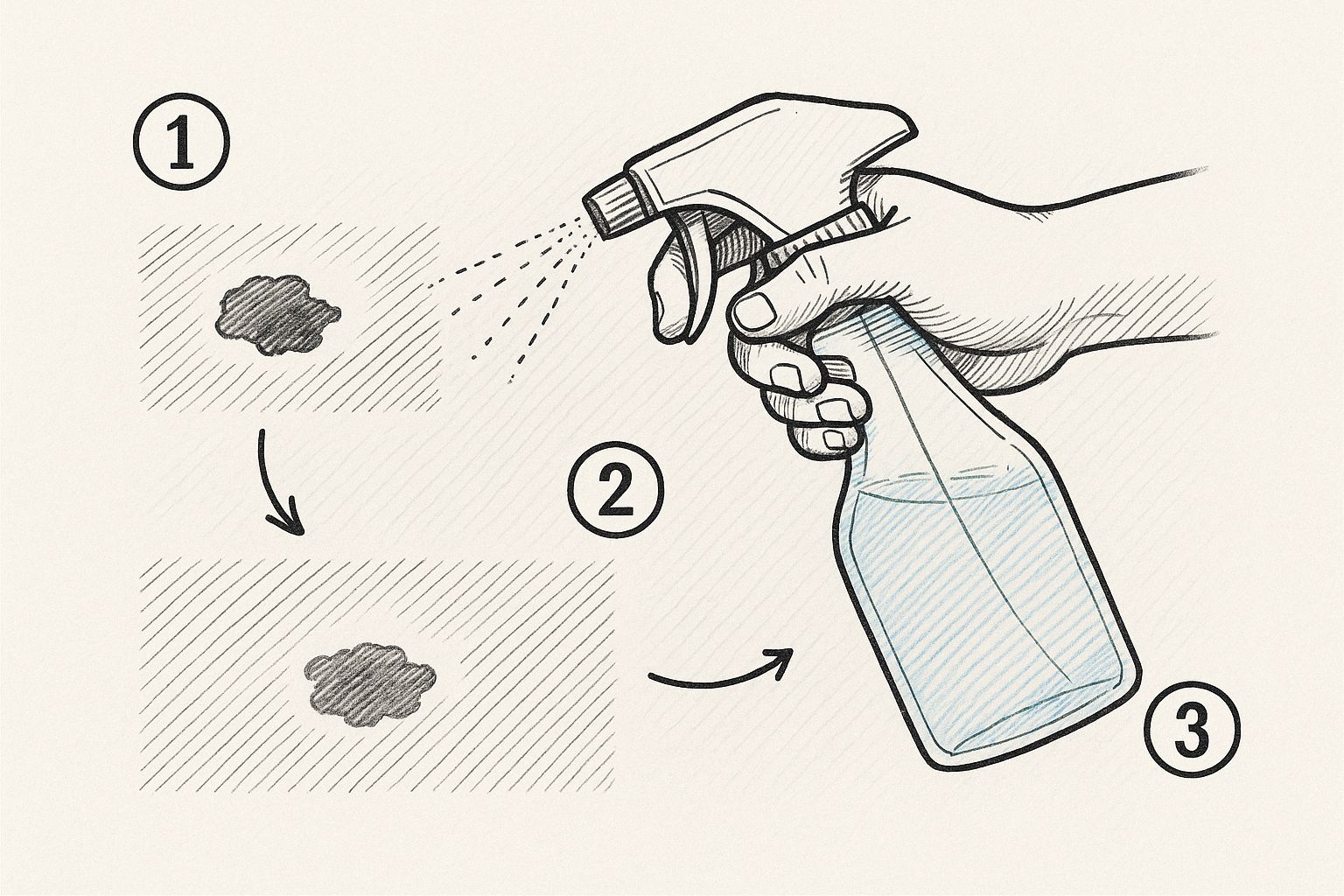
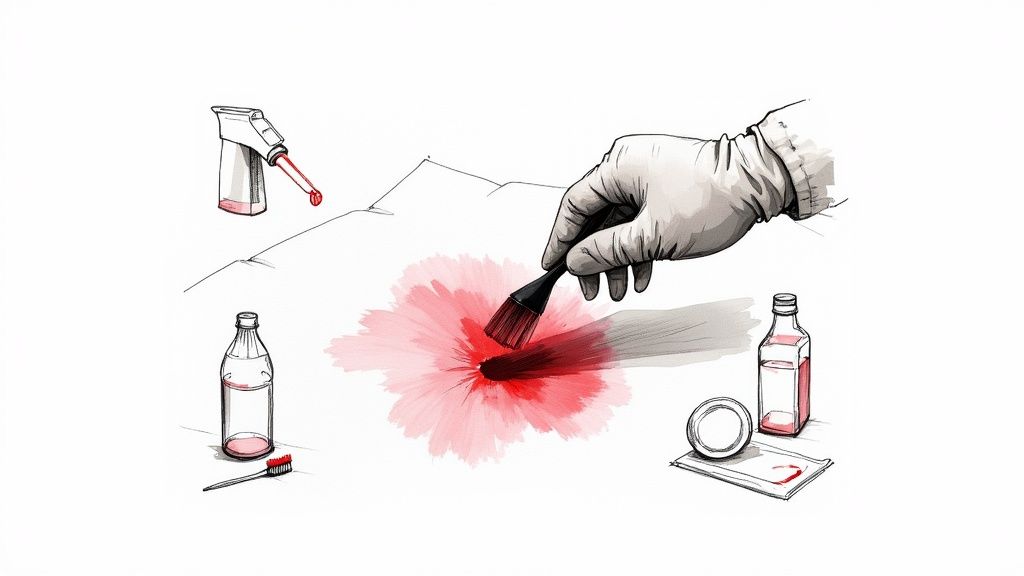
    The idea of pre-treating a stain is absolutely central to success, as this sketch shows.

    Image

    It’s a simple concept: applying a targeted solution right on the spot is the most efficient way to start breaking down the stain before it ever sees the washing machine.

    Defeating Coffee and Tea Marks

    Much like red wine, coffee and tea are tannin stains. If the spill is on your clothes, your first move should be to run cold water through the back of the stain. This helps to flush the pigment out of the fabric instead of pushing it deeper.

    After that, you can mix up a simple but powerful solution that’s safe for most fabrics.

    • Start by mixing equal parts white vinegar and cold water.
    • Gently sponge this mixture onto the stain. Always work from the outside in to stop the stain from spreading.
    • Let it soak for about 15 minutes before rinsing it out thoroughly.

    This works so well because the mild acid in the vinegar is fantastic at breaking down tannins without being harsh on the material. It just goes to show how a simple household item can often beat aggressive chemicals when you know how to use it. And it seems many people agree; a 2023 UK survey showed a huge portion of its 24,000 respondents regularly buy specialist laundry products for these exact spots. You can see the data on UK consumer preferences in stain removal products on Statista.com.

    For a quick reference, here’s a look at some go-to first responses for other common stains you might run into.

    Quick Guide to Common Stain Treatments

    Stain Type Recommended First Action Key Ingredient
    Ink (Ballpoint) Dab with rubbing alcohol or hand sanitiser on a cotton ball. Isopropyl Alcohol
    Grass Pre-treat with a mix of white vinegar and water before washing. White Vinegar
    Blood Soak immediately in cold salt water. Never use hot water. Cold Water & Salt
    Makeup (Foundation) Gently rub with washing-up liquid or micellar water. Surfactants
    Sweat (Yellowing) Make a paste of bicarbonate of soda and water; apply and let sit. Bicarbonate of Soda

    Think of this table as your emergency cheat sheet. While dedicated stain removers are great, knowing what you have in the cupboard that can work in a pinch is invaluable.

    Advanced Tactics for Set-In Stains

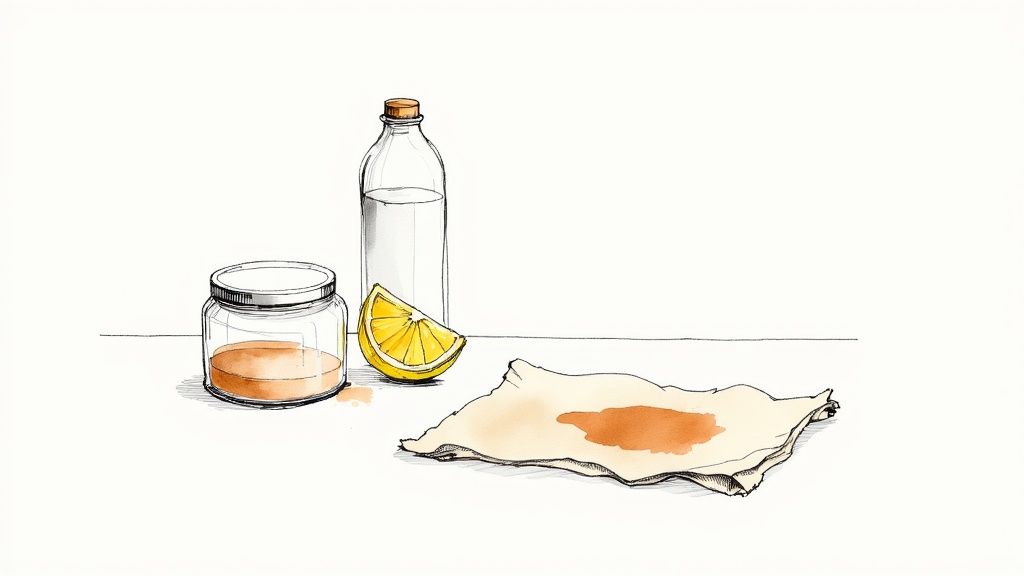
    Image

    We’ve all had that sinking feeling: discovering a mystery stain on a favourite blouse or pair of trousers days after it happened. These are the marks that have had time to dry, oxidise, and properly weave themselves into the fabric fibres. While speed is always your best friend in the fight against stains, a set-in one doesn’t automatically mean the garment is ruined. It just means you need to get a bit more strategic.

    Learning how to tackle stubborn stains that are old and set is more about patience than brute force. Frantic scrubbing is one of the worst things you can do, as it just damages the fibres. Instead, your goal is to coax the stain out, often using methods that work slowly to draw the staining particles up and away from the material.

    Drawing Out Old Oily Marks

    An old oil or grease stain is one of the most persistent culprits. Once it sets, it can look like a permanent part of the garment. This is where a baking soda poultice can be a real game-changer. A poultice is essentially a thick paste you apply to a stain, and as it dries, it pulls the deep-set grease right out of the fabric.

    It’s easy to make your own. Just mix bicarbonate of soda with a few drops of water until you have a thick, spreadable paste. Slather it generously over the entire oily mark, making sure it’s completely covered. Now, you wait. Let it sit for at least an hour, or even overnight for a really tough spot. As the paste dries and becomes cakey, it’s literally absorbing the oil. Once it’s fully dry, just scrape it off and wash the item as normal.

    Handling Delicate Fabrics with Care

    Your approach has to be even more careful when dealing with delicates like silk or wool. These fabrics simply can’t handle harsh chemicals or vigorous scrubbing. Get it wrong, and you could be left with faded colour, weakened fibres, or a permanent watermark.

    For these materials, less is definitely more.

    • For Silk: If you’re up against a non-oily stain, a diluted solution of white vinegar and water can work wonders. The key is to dab gently with a clean, white cloth – never, ever rub.
    • For Wool: A gentle, wool-safe detergent applied directly to the stain with a very light touch is your best bet. Avoid anything with bleach, as it can literally dissolve wool fibres.

    The golden rule for delicates is to always test your cleaning solution on a hidden area first, like an inside seam or hem. This simple five-second check can save you from a very costly mistake and is a true cornerstone of responsible stain removal.

    The Power of Solvents for Tough Cases

    Some set-in stains, like a dried-on ballpoint ink mark, won’t respond to detergents. For these, you need a solvent to actually dissolve the pigment. Rubbing alcohol (isopropyl alcohol) is a fantastic and readily available tool for this exact job.

    Just apply a small amount to a cotton ball or the corner of a clean cloth and start dabbing gently at the ink. You should see the ink start to lift from the fabric and transfer onto your cloth. Keep dabbing with a clean section of the cloth until the stain is gone, then give the area a thorough rinse with cold water before washing the whole garment. It’s a technique that requires a careful hand, but it’s remarkably effective on a stain that soap and water won’t even touch.

    Knowing When to Call a Professional

    There comes a point where even the most determined DIY effort isn’t enough. If you’re faced with a very old, unidentifiable stain on an expensive or cherished item, sometimes the smartest move is to just step away. Continuing to experiment with different home remedies can accidentally set the stain even further or cause irreversible damage.

    This is the time to call in a professional dry cleaner. They have access to specialised solvents and equipment that can safely deal with problems household remedies can’t. Knowing when to admit defeat and seek an expert’s help is just as important a skill as knowing how to treat a fresh spill.

    How to Prevent Stains from Happening in the First Place

    While it’s great to know how to tackle a stubborn stain, wouldn’t it be better if it never happened at all? Prevention is always the best cure. A few smart habits and choices can save you a world of scrubbing, blotting, and stress.

    Think of it as setting up a defence system for your home. On furniture, this could be as simple as using a quality fabric protector spray. These sprays create an invisible shield that makes liquids bead up on the surface instead of instantly soaking in. That gives you a crucial window to grab a cloth and sort it out before it becomes a real problem.

    Adopt Simple Daily Habits

    It’s the small, consistent actions that truly make a difference over time. You just need to build a few mindful routines until they become second nature. It’s a bit like building a strong memory—it all comes down to consistent practice. If you’re curious about that, our guide on how to improve memory retention has some brilliant tips.

    These habits don’t need a massive overhaul of your life, just a little bit of forethought.

    • Coasters and Placemats are Your Friends: This is the easiest win by far. Protecting your tables from drink rings and food spills keeps them looking new with almost no effort.
    • Create “Messy Zones”: If you’ve got kids, this is a game-changer. Designate a specific spot for messy activities like painting or eating snacks.
    • Act Fast: The moment a spill happens, blot it. Don’t rub! Even if you can’t treat it properly right away, getting the excess liquid up is half the battle.

    A simple rule I live by is “deal with it now.” Leaving a small spill for later is an open invitation for it to become a permanent, set-in stain that demands far more of your time and energy to fix.

    Make Strategic Fabric Choices

    The materials you choose can be your secret weapon against stains. When you’re buying new furniture, rugs, or even clothes, think about where and how they’ll be used.

    For instance, fabrics with a subtle pattern or a darker colour are fantastic for hiding minor marks. Synthetic fibres like polyester and nylon also tend to be more stain-resistant than natural ones like cotton because their fibres aren’t as porous.

    When shopping for a new sofa, keep an eye out for “performance fabrics,” which are designed to withstand spills and heavy use. A great tip for light-coloured clothing is to give it a quick spray with a stain guard before its first wear. It adds an extra layer of protection to keep it looking fresh for longer.

    Common Questions About Stain Removal

    When you’re trying to figure out how to get rid of a stubborn stain, you’ll find a mountain of advice online, and a lot of it clashes. It’s completely normal to feel hesitant, especially when you’re dealing with a favourite piece of clothing or a brand-new carpet. Let’s walk through some of the most common questions and get you some clear, reliable answers.

    Cutting through the noise and separating solid advice from old myths is the first step. Getting this wrong can turn a small spill into a permanent disaster.

    Can I Use Bleach on Any Type of Stain?

    This is a question I hear all the time, and the assumption can be a dangerous one. While chlorine bleach is a powerhouse for whitening, it’s really only safe for tough, white fabrics like cotton. If you use it on anything with colour, you’re not removing a stain – you’re stripping the dye right out, leaving a permanent white or yellowish patch.

    It’s even worse for delicate materials. On wool or silk, bleach doesn’t just discolour; it actually weakens and can dissolve the fibres themselves. If you need to brighten coloured fabrics or treat delicates, look for an oxygen-based bleach. It’s much gentler. But the golden rule is always this: check the care label and do a spot test on a hidden seam first.

    Does Hot Water Really Set Stains?

    For certain stains, absolutely. In fact, hot water can be your worst nightmare. It’s particularly bad for anything protein-based – think blood, egg, dairy, or grass stains. The heat essentially “cooks” the protein, causing it to bind tightly to the fabric’s fibres. Once that happens, the stain is practically locked in for good.

    That’s why you should always start with cold water for any unknown stain or one you know is protein-based. While warm water has its place, like helping to dissolve greasy or oily marks later in the wash, your first response should always be cool. Getting these details right is as important as any learning technique; if you’re interested in memory methods, our article on how to use flashcards for studying shares some great strategies.

    The single biggest mistake I see in laundry is throwing a still-stained item into the tumble dryer. The intense heat will permanently set just about any mark that’s left. If a stain is still there after a wash, let the item air-dry and have another go at treating it.

    What Is the Single Most Important Step?

    Without question, it’s acting fast. Time is your biggest enemy when a spill happens. The longer a substance sits, the deeper it soaks into the fibres and the stronger its bond becomes.

    Even if you don’t have time for a full treatment, just blotting the spill immediately with a clean, dry cloth can work wonders. This simple step soaks up the excess before it can spread, meaning there’s much less of a stain to deal with later. Whatever you do, don’t let a fresh spill dry. It’s the difference between a minor cleanup and a lost cause.


    At Signal Cleaning, we know that some stains are just too tough for DIY methods. If you’re in Oxford and staring down a cleaning challenge that seems impossible, our professional team is here to bring your home back to its sparkling best. You can book our services easily online at signalcleaning.co.uk and let us take care of the hard work.