Tag: cleaning hacks

  • How to Clean House Fast A Guide for Busy People

    How to Clean House Fast A Guide for Busy People

    Knowing how to clean your house fast isn't about rushing around like a whirlwind. It really boils down to two things: working smart and having a plan before you even pick up a cloth. The real secret isn't frantic scrubbing; it's using a methodical approach that cuts out wasted time and effort.

    Your Speed-Cleaning Game Plan

    What separates an exhausting, all-day cleaning slog from a quick, satisfying blitz? Strategy. Trust me, professional cleaners don’t just start wiping things at random. They follow a tried-and-tested system, and you can absolutely do the same to reclaim your weekends. Before you even think about sprays and sponges, just take a minute to map out your attack.

    This is where the magic happens. Instead of bouncing from one messy spot to another, you’ll move with purpose. It’s about creating a flow that stops you from having to clean the same spot twice.

    Always Work From Top to Bottom

    If you take only one tip away from this, make it this one. Always clean from top to bottom, and from left to right around a room. It's simple physics: dust and crumbs fall down.

    Think about it. You wouldn't vacuum the living room floor and then dust the ceiling fan and bookshelves, would you? All that dust would just settle on your nice, clean carpet, and you'd have to get the vacuum out all over again. Start high—with light fittings, the tops of cupboards, and curtain rails—and let gravity do the work for you. You'll only have to clean each surface once. There’s a reason the pros swear by this method: it just works.

    Batch Your Tasks for Maximum Efficiency

    Here’s another trick that will completely change your cleaning routine: task batching. Instead of cleaning one room completely before starting the next, you group all the similar jobs together and do them in one go across the whole house.

    • Do a Dusting Run: Grab your duster and go through every single room, wiping down all the surfaces from, you guessed it, top to bottom.
    • Tackle Glass and Mirrors: Next, arm yourself with glass cleaner and a good cloth and hit every mirror, interior window, and glass tabletop in the house.
    • Finish with the Floors: Finally, do all the vacuuming or mopping in one continuous session, moving from room to room until it's all done.

    Sticking to one task at a time helps you get into a rhythm. You're using the same tools and motions, which cuts down on the mental energy and time you'd waste stopping and starting. If you're consistently stretched for time, you could always look into professional cleaning packages that fit your schedule.

    Building Your Ultimate Speed Cleaning Toolkit

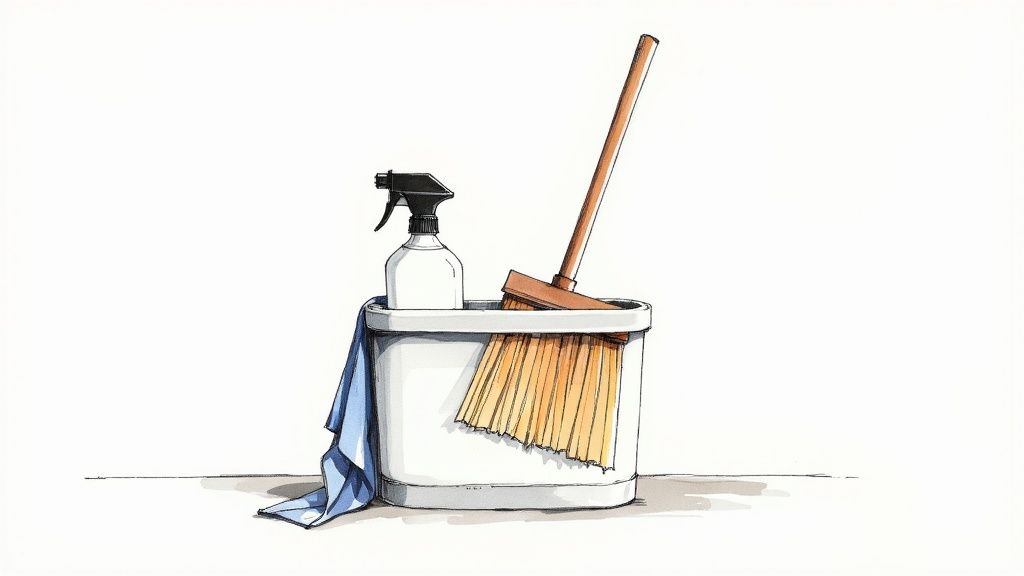
    To really clean your house fast, you need more than just a good plan; you need the right tools that work as hard as you do. Forget having an overflowing cupboard stuffed with single-use gadgets and a dozen different chemical sprays. A minimalist, high-impact toolkit is all it takes to move seamlessly from one job to the next without breaking your rhythm.
    Image

    The absolute foundation of any speed cleaning kit is a set of high-quality microfibre cloths. These aren't just any old rags; their unique fibres are brilliant at trapping dust and dirt instead of just pushing it around. I use them dry for dusting and then just slightly damp for wiping down surfaces to get a streak-free shine every time.

    The Essentials for Rapid Results

    Next up, grab a squeegee. Honestly, it’s not just for windows! A good squeegee makes short work of shower doors, mirrors, and even tiled walls, slashing your bathroom cleaning time. Pair it with a simple all-purpose cleaner that you can use on most surfaces, and you'll stop juggling different bottles.

    Your toolkit isn't complete without a powerful, lightweight vacuum cleaner. A cordless stick vacuum is a real game-changer, letting you move freely from room to room without being tethered to a socket. If you can, get one with versatile attachments that can quickly switch from hardwood floors to the sofa.

    My top tip? Keep your core supplies organised in a portable caddy. It’s a simple habit that means you can carry everything with you, which stops you from wasting time walking back and forth to the cupboard to grab another product.

    With a focused kit like this, you’re always prepared. While these tools tackle everyday grime with ease, some spots will inevitably need extra attention. For guidance on those tougher jobs, you can learn more about how to remove stubborn stains from our detailed article.

    The 60-Minute Full-House Blitz

    Right, this is where the magic happens. We're going to put your strategy and cleaning kit to the test with a high-energy, 60-minute cleaning blitz. Let's be clear: this isn't about deep cleaning every nook and cranny. It's about a focused, high-impact routine that makes your whole house feel fresh and organised in about an hour. Knowing how to clean your house fast is all about building momentum and hitting the tasks that give you the biggest visual payoff.

    The trick is to set a timer and actually stick to the schedule. You’ll be genuinely surprised at what you can get done when you work with real purpose. This routine hones in on the rooms guests see first and where your family spends most of their time.

    Kitchen: The 20-Minute Refresh

    The kitchen is the heart of the home, but it often becomes the epicentre of mess. Starting here makes a massive difference, fast.

    Your first job is to clear every single counter. Put away the toaster, stack dirty dishes by the sink (or even better, load them straight into the dishwasher), and get any rubbish in the bin. Once the surfaces are clear, grab your all-purpose spray and a microfibre cloth. Wipe everything down, including the hob and splashback.

    Finish with a quick sweep or vacuum of the floor to catch any crumbs. Don't even think about mopping right now—the goal is simply a visibly tidy space.

    Bathrooms: The 15-Minute Tidy

    You can get a bathroom looking great in no time if you focus on the right spots. Give the toilet a quick scrub with a brush and some cleaner. While that’s working its magic, use a cloth to wipe down the outside of the toilet, the cistern, the sink, and the taps.

    Next, spray and wipe the mirror until it’s streak-free. A clean mirror instantly makes a bathroom feel brighter and much cleaner. A final, quick sweep of the floor and you’re done.

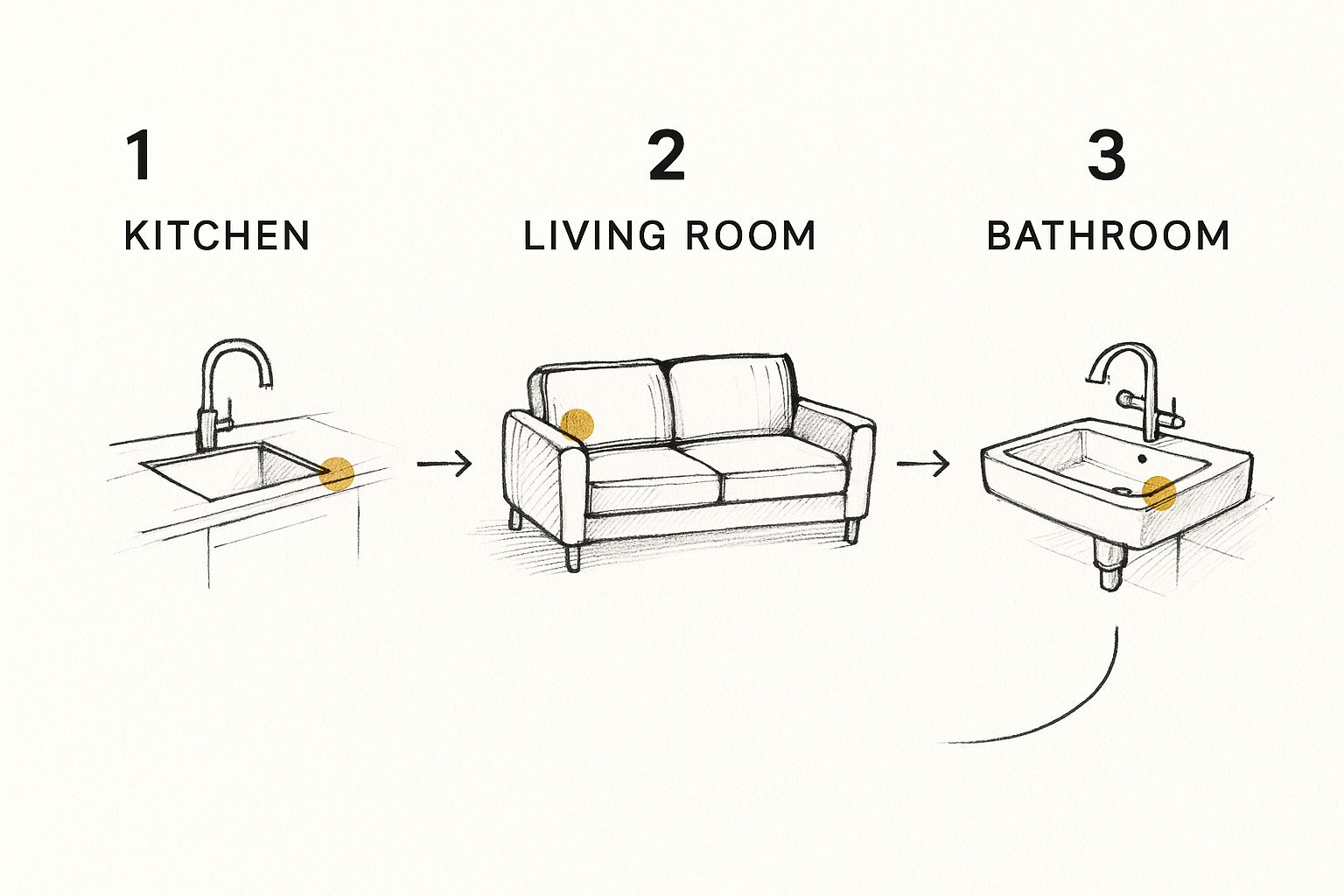
    My Pro Tip: For a rapid bathroom clean, I always focus on the 'big three'—the toilet, the sink, and the mirror. These are the areas that make the most immediate impression and give you that satisfying feeling of a truly clean room.

    Here’s a quick visual guide to the key focus points for your rapid cleaning routine.
    Image

    The illustration highlights the high-impact zones that deliver the biggest visual reward for the effort you put in.

    Living Areas and Bedrooms: The 25-Minute Reset

    With the remaining time, it’s time to fly through your main living spaces and bedrooms with a clear plan.

    • Tackle the Surfaces: Quickly tidy coffee tables, bedside tables, and any other flat surfaces. Straighten books and stack magazines in a neat pile.
    • Plump and Straighten: Fluff up sofa cushions and neatly fold any throws or blankets. This small action makes a huge difference to how a room feels.
    • Dust and Vacuum: Give the main furniture a quick once-over with a duster, then run the vacuum over all the floors. Pay special attention to the areas where people walk the most.

    The demand for efficient home cleaning is growing right across the UK. It’s no surprise that floor care commands a whopping 31.89% of the cleaning services market revenue, which just shows how much clean floors matter to us. You can learn more about trends in the UK's residential cleaning market and see how professional techniques are constantly adapting.


    To help you visualise this, here’s a simple timetable for your 60-minute blitz.

    The 60-Minute Blitz Timetable

    This table breaks down how to allocate your precious 60 minutes for the best results.

    Room/Area Allocated Time (Mins) Priority Tasks
    Kitchen 20 Clear all counters, wipe down surfaces/hob, sweep or vacuum the floor.
    Bathroom(s) 15 Clean the toilet, wipe the sink and taps, shine the mirror, sweep the floor.
    Living Room & Bedrooms 25 Declutter surfaces, plump cushions/throws, quick dust, vacuum all floors.

    Sticking to a plan like this is the secret to getting a huge amount done in a short space of time. It keeps you moving and prevents you from getting bogged down in one area.

    Daily Habits That Keep Your Home Cleaner for Longer

    While a big weekend clean has its place, the real trick to cleaning your house fast is doing less, more often. It’s all about stopping the mess from piling up in the first place. By weaving a few simple habits into your daily routine, you can slash your overall cleaning time and make those bigger jobs feel a lot less daunting. Think of it as shifting from a weekend cleaning marathon to a series of quick daily sprints.

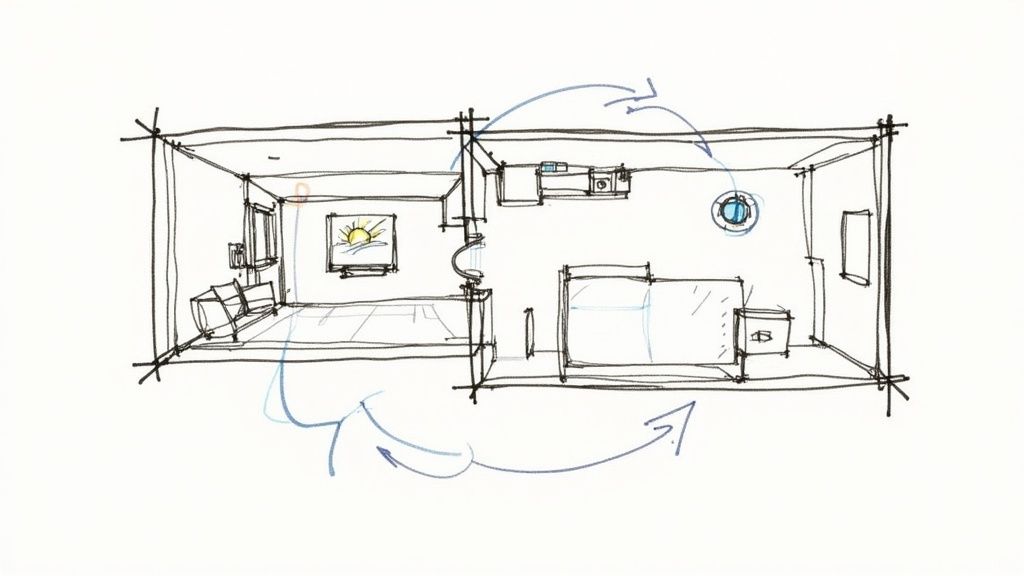
    The most effective habit I’ve ever adopted is the "one-minute rule." It’s simple: if a task takes less than a minute, just do it then and there. Wipe the kitchen counter after you make a sandwich. Hang your coat up as soon as you get home. Put your shoes back on the rack. These tiny actions prevent small messes from turning into an overwhelming weekend project.
    Image

    The 15-Minute Nightly Reset

    Another brilliant strategy is what I call the "15-minute nightly reset." Before you settle down for the evening or head to bed, just set a timer for 15 minutes and have a quick whip-round of the main living areas. This isn’t about deep cleaning; it’s a surface-level tidy to reset the space for the morning.

    • Living Room: Plump up the sofa cushions, fold any throws, and clear mugs or magazines off the coffee table.
    • Kitchen: Pop the last few dishes in the dishwasher, give the counters a quick wipe, and sweep up any obvious crumbs.
    • Hallway: Tidy away the shoes, bags, and post that always seem to gather by the front door.

    Waking up to a reasonably tidy house really does set a better tone for the entire day. It’s a small investment of time that pays off handsomely by stopping yesterday's clutter from becoming today's problem.

    The goal is to maintain a baseline level of tidiness. That way, your proper cleaning time is spent actually cleaning—tackling dust and grime—not just fighting through clutter before you can even begin.

    It's clear that people are looking for smarter ways to manage their homes. The UK's cleaning and hygiene industry soared to nearly £66.9 billion in 2025, with over 77,535 businesses meeting this demand. This boom shows a collective desire for faster, more effective methods to keep our living spaces in order. You can discover more about the expanding UK cleaning industry and its shift towards efficiency.

    Common Speed Cleaning Blunders to Sidestep

    Even with the best intentions, a few common habits can completely derail your mission to clean the house fast. Nailing down these missteps is the secret to unlocking genuine efficiency. One of the biggest time-sinks I see is when people try to clean *around* their clutter instead of clearing surfaces first.

    Just picture it: you're trying to wipe down a coffee table piled high with magazines, remote controls, and half-empty mugs. You'll spend more time shuffling things around than you will actually cleaning. The same goes for floors. A quick five-minute tidy-up before you start can honestly save you twenty minutes of frustration later on.

    Not Letting Your Products Do the Hard Graft

    Another classic mistake is impatience. It's so tempting to spray a cleaner and immediately start scrubbing for all you're worth. The thing is, most cleaning products need a few minutes to get to work breaking down grime and soap scum. This is often called "dwell time."

    Just let your bathroom or kitchen spray sit for 5-10 minutes while you go and do something else, like emptying the bins. When you come back, a gentle wipe is often all that’s needed, saving you a surprising amount of time and elbow grease.

    Key Takeaway: The goal of speed cleaning isn't just about moving faster—it's about cutting out wasted energy. Letting your products work for you is the perfect example of cleaning smarter, not harder.

    The demand for efficient, specialised home maintenance is really taking off. In fact, the UK cleaning industry now contributes around £59 billion in annual turnover, a figure that shows just how much we all want cleaner homes without spending ages on them. You can discover more insights about UK cleaning statistics and see for yourself how the sector is changing.

    Your Fast Cleaning Questions Answered

    Even the best-laid cleaning plans can leave you with a few lingering questions. When you're up against the clock, knowing how to handle those common "what if" scenarios is key. Let's tackle some of the most frequent queries I hear from homeowners trying to master a quick clean.

    Think of this as your rapid-fire troubleshooting guide.

    What Can I Realistically Do in Just 15 Minutes?

    Right, guests are on their way and you've got 15 minutes. Forget deep cleaning; this is all about high-impact triage. The aim is to create an immediate impression of tidiness.

    Here's my go-to emergency plan:

    • In the kitchen, get everything off the worktops. Stack dirty dishes in the dishwasher and give the surfaces a quick wipe.
    • For the living room, plump the cushions, fold any blankets or throws, and clear away obvious clutter like mugs or magazines.
    • Head to the bathroom for a quick sink and mirror wipe-down. A quick swish of the toilet brush is a must.

    These tiny actions pack a visual punch, making your home feel instantly more put-together.

    Should I Clean One Room at a Time, or One Task at a Time?

    For pure speed, task batching wins every time. It’s far more efficient to stick to one job and do it everywhere. Think about it – grabbing the duster and hitting every surface in the house means you're in that specific mindset. You're not constantly stopping to put away one tool and grab another.

    My advice is to think like a production line. Do all your dusting first. Then all the glass and mirrors. Finally, tackle all the floors at once. It streamlines the whole process and seriously cuts down on wasted time and energy.

    Which Jobs Can I Get Away With Skipping?

    Let's be realistic – when you're really pushed for time, you can't do it all. The trick is knowing what to let slide.

    Focus on what people actually see and notice. You can absolutely get away with skipping tasks like dusting the skirting boards, wiping down individual light switches, or cleaning the inside of the microwave. Prioritise the things that make your home feel clean and fresh, like clutter-free surfaces, a gleaming kitchen sink, and a tidy bathroom.

    For more practical advice on keeping your home looking its best with less effort, feel free to browse the other articles on our Signal Cleaning blog.


    Ready to reclaim your weekends for good? Let the professionals at Signal Cleaning handle the hard work. Book your professional home clean in Oxford today and enjoy a spotless home without lifting a finger.

  • How to Clean Mirrors Without Streaks for a Perfect Shine

    How to Clean Mirrors Without Streaks for a Perfect Shine

    The real secret to a perfectly clean, streak-free mirror is surprisingly simple. You just need a solution of equal parts distilled water and white vinegar, along with two microfibre cloths. One cloth is for applying the solution, and the second is your secret weapon for buffing the mirror completely dry. This two-cloth method is what prevents mineral deposits and leftover moisture from creating those annoying smudges.

    Why Your Mirrors Get Streaky and How to Stop It

    Have you ever finished cleaning a mirror, stepped back to admire your work, only to see it looks even worse than before? That frustrating, streaky finish is a common battle, but it's not you—it's your technique and your tools. Figuring out what causes those streaks is the first step to getting a flawless shine every time.

    Image

    It’s no surprise this is such a common source of frustration. A recent survey revealed that 51% of UK adults experience stress related to home cleanliness. And since window washing—a very similar job—is one of the most disliked household chores, it's clear that achieving a perfect, streak-free shine is a major pain point for many. You can discover more insights into UK cleaning habits on litmag.co.uk.

    The Real Reasons for a Streaky Finish

    So, what's actually going on when you see those streaks? The culprit is usually one of these common mistakes:

    • Using Tap Water: The water from your tap is full of minerals like calcium and magnesium. When it evaporates, these minerals get left behind as faint, chalky deposits on the glass.
    • Residue from Commercial Cleaners: Many shop-bought glass cleaners contain soaps, waxes, or fragrances. Instead of evaporating cleanly, these additives leave a thin film that you end up just smearing around.
    • The Wrong Type of Cloth: Paper towels and old cotton rags are the worst offenders for leaving tiny fibres behind. This lint gets trapped on the surface and ruins all your hard work.

    The key takeaway is this: streaks are caused by residue. Whether it's minerals from tap water, additives from a cleaning product, or lint from a cloth, anything left on the surface will spoil the finish.

    Think about cleaning a mirror in direct sunlight. The cleaning solution evaporates almost instantly, which doesn't give you nearly enough time to wipe it away properly. This practically guarantees a smudged result. By getting to the root of these issues, you can finally stop fighting with your reflection.

    Getting Your Streak-Free Cleaning Kit Together

    The secret to a mirror so clean it looks invisible isn't some expensive, shop-bought spray. It all comes down to a few simple tools, most of which are probably hiding in your cupboards right now. Before you even think about tackling those smudges, let's get your kit in order.

    Image

    Trust me, a little prep work makes all the difference. We’re not after fancy chemicals here; we’re aiming for a professional finish using the basics.

    Your Go-To Cleaning Solution

    Put down that bottle of blue stuff. The most powerful mirror cleaner I've ever used is one you can whip up yourself in under a minute. It cuts through grime brilliantly and, most importantly, doesn't leave behind the residue that causes those frustrating streaks.

    All you need is two simple ingredients:

    • Distilled Water: This is the game-changer. Tap water is full of minerals that leave behind chalky spots when they dry. Distilled water is pure, so it evaporates without a trace.
    • White Vinegar: The gentle acetic acid in vinegar is a natural powerhouse, dissolving everything from greasy fingerprints to dried-on toothpaste splatters with ease.

    Just mix equal parts distilled water and white vinegar in a clean spray bottle. That’s the entire recipe. This DIY solution often works better than commercial cleaners because it has no soaps or fragrances—the very things that usually cause a streaky finish.

    Your Essential Tools

    Here’s a quick look at the simple supplies that will guarantee a flawless result every time.

    Essential Tools for a Streak-Free Shine

    Tool Why It's Essential Top Tip
    Two Microfibre Cloths One cloth cleans, the other buffs. This two-step process is crucial for lifting all moisture and preventing streaks from forming as the surface dries. Always use a completely dry cloth for the final buffing stage. Even a slightly damp cloth can leave marks.
    DIY Vinegar Solution The 50/50 mix of distilled water and white vinegar cleans effectively without leaving behind the soapy, filmy residue that commercial cleaners often do. Label your spray bottle so you don't mix it up with other cleaners. It’s also great for windows!
    Clean Spray Bottle A dedicated, clean bottle prevents contamination from old cleaning products, which could sabotage your streak-free efforts from the start. Rinse the bottle thoroughly with hot water before mixing your solution to ensure it's completely clean.

    Having these specific items ready to go is the first real step towards that perfect, invisible-glass look.

    The Non-Negotiable Wiping Tools

    What you wipe with matters just as much as what you spray with. It’s tempting to grab a paper towel, but they just disintegrate and leave a blanket of linty fluff all over your freshly cleaned mirror. A standard cotton cloth? It often just smears the dirt around.

    For a truly professional finish, the only tool for the job is a high-quality microfibre cloth. The magic is in its incredibly dense weave, which is designed to grab and hold onto dirt, dust, and moisture, lifting it cleanly off the surface.

    You’ll want two clean, dry microfibre cloths at the ready. You'll use the first one to apply your solution and wipe away the initial layer of grime. The second, completely dry cloth is for the final buff. This is where you polish the mirror, erasing every last bit of moisture and revealing that perfect, streak-free shine. This two-cloth method is the secret I swear by.

    The Pro Method for a Flawless Mirror Finish

    Forget everything you’ve been told about cleaning mirrors. The real secret to getting that perfect, streak-free shine isn't about harsh chemicals or endless scrubbing. It’s all about technique. Professional cleaners have a simple, repeatable process that gets flawless results every time, and it’s surprisingly easy to learn.

    This method transforms a frustrating chore into a quick, satisfying task. The goal is to work smarter, not harder, by controlling the amount of cleaning solution and getting it off the glass before it can dry and leave those annoying streaks. Get this right, and you'll nail it on the first try.

    Master the Two-Cloth System

    The heart of this professional technique is the two-cloth system. One cloth is for applying the cleaner, and the second is solely for drying and buffing. If you're serious about a streak-free finish, this separation is non-negotiable.

    Your first microfibre cloth will be slightly damp with your cleaning solution. The second cloth needs to be completely clean and bone-dry. Think of this dry cloth as your secret weapon—it whisks away every last bit of moisture, leaving nothing but a crystal-clear reflection.

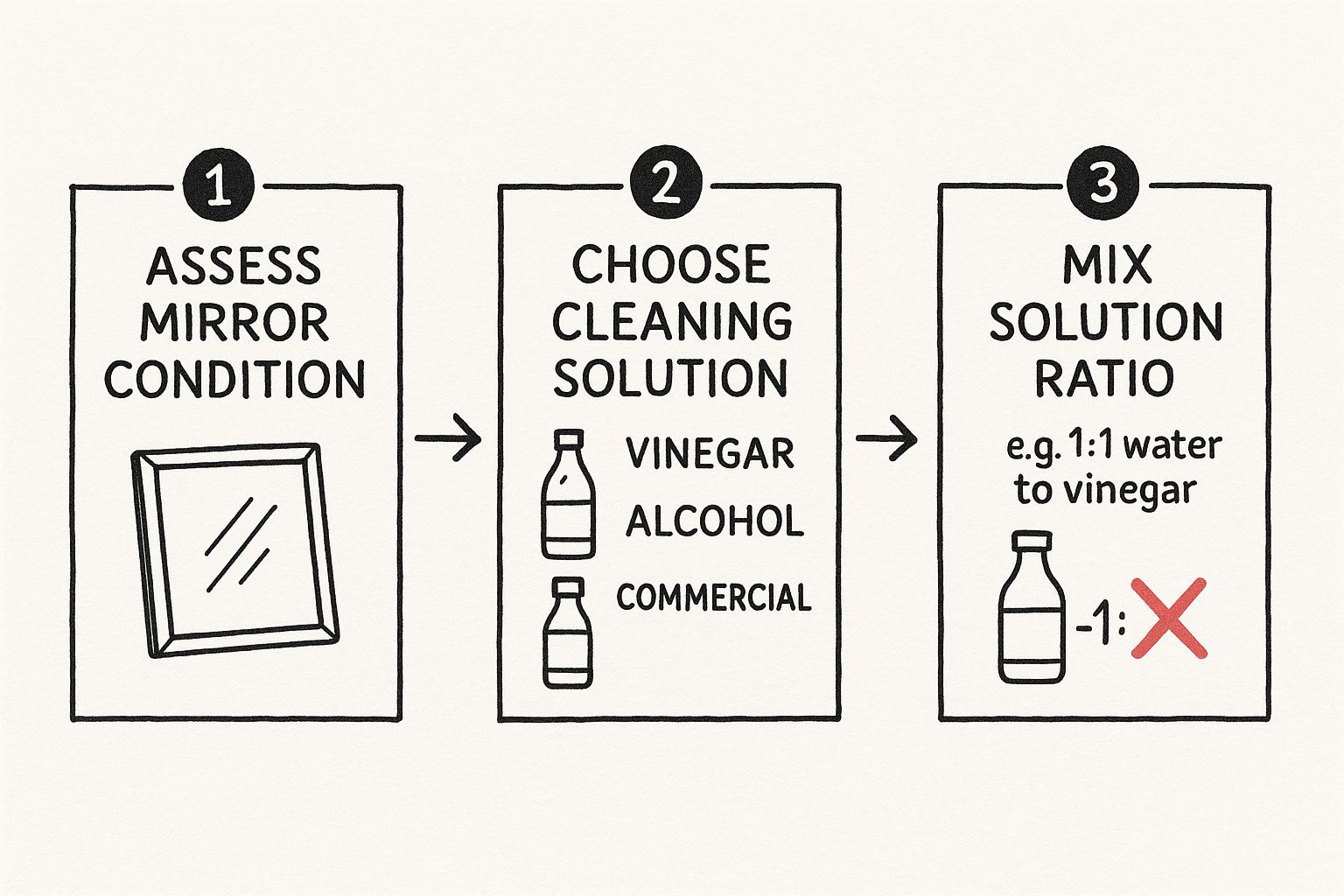
    This visual guide breaks down the essential prep work to get you started on the right foot.

    Image

    It's all about checking what you’re up against and grabbing the right supplies before you even touch the glass.

    One of the most common mistakes people make is spraying cleaner directly onto the mirror. This not only leads to drips that can seep behind the glass and damage the silvering or the frame, but it also puts way too much liquid on the surface. That excess moisture is the number one cause of streaks.

    Always lightly mist your cleaning cloth, not the mirror. Just a few spritzes are plenty. This gives you total control over the moisture, which is the absolute key to preventing streaks.

    Execute the S-Pattern Wipe-Down

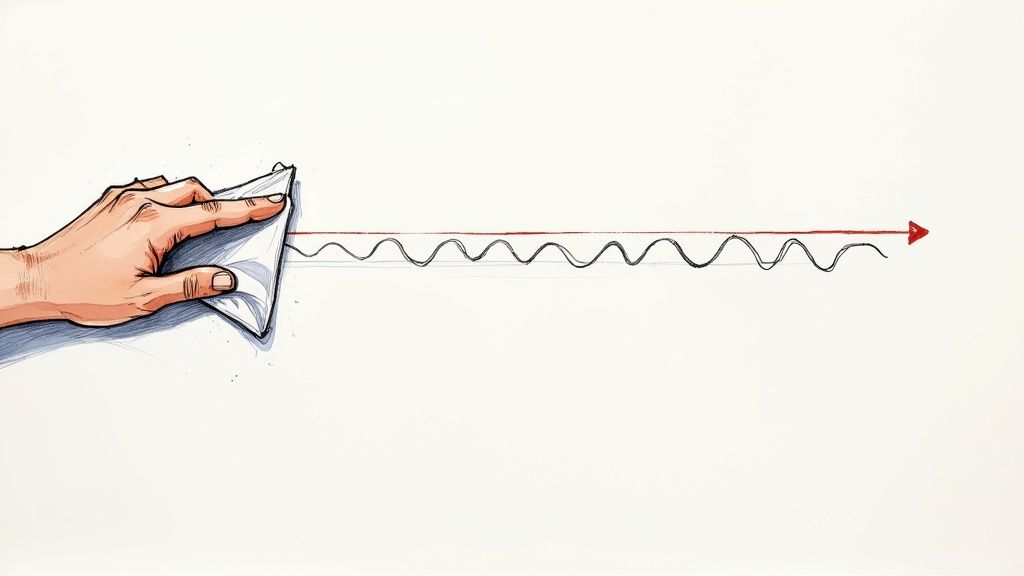
    Now for the action. To avoid just smearing dirt around, you need a methodical approach. Random circles are out. Professionals use a specific technique called the ‘S-Pattern’ to ensure every square inch is covered efficiently.

    Start in one of the top corners and wipe your damp cloth straight across to the opposite corner. Drop down just enough to overlap your last stroke and wipe back across. Continue this back-and-forth, S-shaped motion all the way down to the bottom of the mirror.

    It’s a simple but brilliant pattern that systematically moves dirt down and off the surface, instead of just pushing it into areas you’ve already cleaned.

    The moment you finish with the damp cloth, grab your second, dry microfibre cloth. Don't hesitate! Following the same top-to-bottom S-pattern, immediately buff the entire surface. This final pass polishes the glass and removes any lingering moisture before it can evaporate into a streak. The result? A perfectly clear mirror, every single time.

    How To Remove Hairspray And Other Stubborn Spots

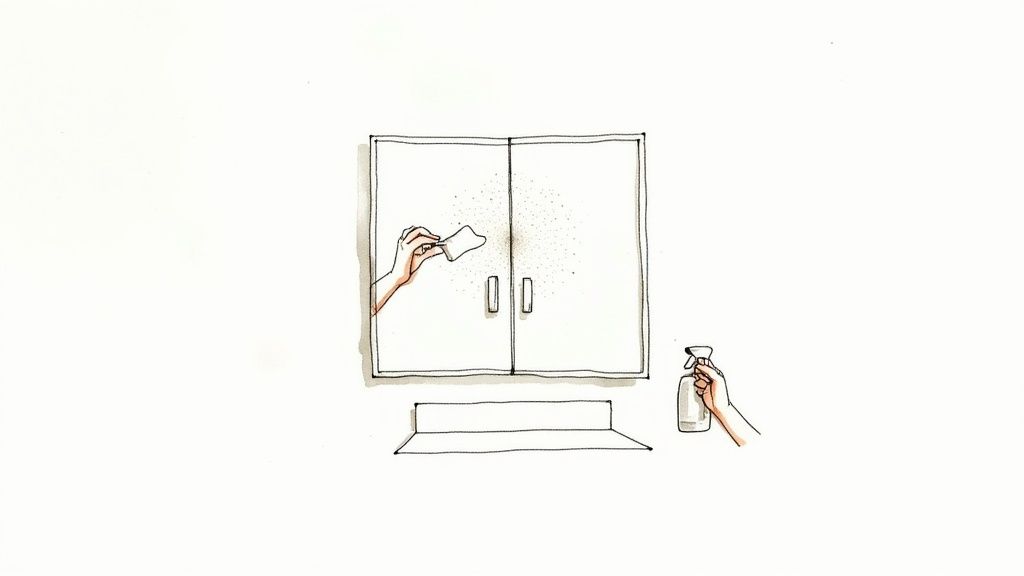
    Let's be honest, sometimes a quick spray and wipe just won't cut it. Bathroom mirrors, in particular, face a daily assault from dried toothpaste flecks, greasy fingerprints, and that notoriously stubborn, sticky film from hairspray. If you don't deal with these first, you're just going to smear them around.

    Tackling these problem areas before you do your main clean is the secret to getting that perfect, streak-free finish.

    Image

    A little pre-treatment makes a world of difference. It stops you from turning a small spot into a giant, greasy smear across the entire mirror.

    Spot-Treating Sticky Residues

    For anything sticky or greasy, your best friend is rubbing alcohol (also known as isopropyl alcohol). It’s brilliant at cutting through residues that normal cleaners just can't handle, and it evaporates in a flash without leaving any film behind.

    I've found this works wonders on hairspray build-up and those waxy smudges from fingerprints.

    • Just pop a small amount of rubbing alcohol onto a cotton pad or ball.
    • Gently work on the spot using small, circular motions.
    • You'll see the alcohol dissolve the gunk, making it easy to wipe away completely.

    This targeted trick isolates the problem right at the source, saving you a massive headache later on.

    By pre-treating sticky spots with rubbing alcohol, you're not just cleaning; you're preventing streaks before they even have a chance to form. It’s the key to a flawless final wipe-down.

    Dealing With Dried-On Splatters

    We’ve all seen it: those rock-hard splatters of toothpaste that seem almost fused to the glass. Whatever you do, don't reach for an abrasive scourer—you'll end up with permanent scratches.

    Instead, take your alcohol-dampened cotton pad and hold it against the mark for a few seconds. This helps soften it up. Then, a gentle rub should be enough to lift it away without any force.

    Pre-treating these little annoyances ensures they won't get dragged across the mirror when you do your final clean, which is a classic rookie error that causes ghosting and streaks. For more tips on tackling tough marks, you can find extra advice in our guide on how to remove stubborn stains.

    Right, your mirror is gleaming. The last thing you want is for it to get grubby again straight away. The secret isn't more elbow grease; it's about a few clever habits to stop the build-up in its tracks.

    The simplest trick I've learned is to just keep a dry microfibre cloth hanging near the mirror. Give it a quick once-over each day to catch any fresh water splashes or fingerprints before they dry into stubborn marks. It takes seconds, but it makes a world of difference and pushes your next proper clean way down the line.

    Good ventilation is another game-changer, especially in the bathroom. Pop the extractor fan on when you’re showering and leave it running for a bit afterwards. This pulls the steam out of the air before it can settle on the glass and create that annoying cloudy film.

    Small Tweaks, Big Results

    Often, it’s the little things that keep a mirror looking its best. Think about the products you're using around it.

    • Watch Out for Aerosols: When you’re using hairspray or dry shampoo, just turn away from the mirror. A fine mist can leave a sticky residue that’s a magnet for dust.
    • Tackle Splatters Instantly: Toothpaste and soap splashes happen. The key is to wipe them off with your dedicated cloth while they’re still wet, before they have a chance to set.

    It's really about shifting your mindset from doing a big cleaning chore to just simple, daily maintenance. These tiny actions save you so much time in the long run.

    This idea of using gentler, more thoughtful methods is catching on. In fact, about 60% of UK consumers now say they'd pay more for eco-friendly cleaning supplies, partly because they want to avoid the harsh chemical residues that often cause streaks. You can dive into the details by checking out the full YouGov survey findings.

    Frequently Asked Questions About Cleaning Mirrors

    Even with the best approach, you might still have a few nagging questions when you're chasing that perfect, streak-free finish. Let's tackle some of the most common ones we hear, so you can get your mirrors looking flawless.

    Is It a Good Idea to Use Newspaper?

    This is a classic tip that many of us heard growing up, but it’s a bit outdated now. Years ago, it worked reasonably well, but modern newspapers often use soy-based inks. These can leave behind a faint, oily residue on the glass – the very thing you're trying to remove.

    On top of that, the paper itself can shed tiny fibres, leaving your mirror covered in lint. A good quality microfibre cloth is a much better bet for a truly clean and streak-free shine every time.

    Why does a simple mix of distilled water and white vinegar work so well? It's because it cuts through grease and grime and then evaporates completely, leaving nothing behind. Many commercial cleaners, on the other hand, contain soaps and additives that leave a film, which is a major cause of streaks.

    Why Are There Streaks After My Mirror Dries?

    Ah, the classic post-cleaning frustration. This almost always comes down to one of two things. Either there was some leftover residue on the mirror that your cloth just spread around, or your cloth was simply too wet. Any excess moisture left on the surface will just create new marks as it dries.

    The solution is all in the finish. Immediately after you've wiped the mirror clean, grab a second, completely dry microfibre cloth and buff the entire surface. This crucial step removes every last bit of moisture before it has a chance to evaporate and form new streaks.

    How Often Should I Be Cleaning My Bathroom Mirror?

    For a mirror that sees a lot of action, like the one in the main bathroom, giving it a quick wipe-down with a dry cloth each day can work wonders. This little bit of upkeep stops water spots and toothpaste splatters from building up.

    A proper, deep clean using the methods we've covered is really only needed about once every week or two. It all depends on how quickly it gets splashed. For more handy cleaning tips for every room in your house, feel free to have a look at our Signal Cleaning blog.