Tag: carpet stain removal

  • DIY Natural Carpet Cleaner Recipes That Really Work

    DIY Natural Carpet Cleaner Recipes That Really Work

    Many people reach for natural carpet cleaners to avoid that overpowering chemical scent found in shop-bought sprays. Mixing baking soda with white vinegar not only cuts costs but removes residues you’d rather not leave behind.

    Why Choose A Natural Approach

    Ditching synthetic formulas goes beyond fresh scents—it’s about creating a healthier living space. Store-bought solutions often hide an array of chemicals that can settle into the fibres and hang in the air, irritating little ones or curious pets.

    Switching to homemade cleaners means you:

    • Have complete control over ingredients
    • Reduce exposure to harsh irritants
    • Save money by using everyday kitchen staples

    You’re not alone in this choice. Across the UK, homeowners are steering towards organic cleaning options to boost indoor air quality. Market growth in Europe shows a clear preference for greener products. For deeper insights, check out Expert Market Research.

    The Power Of Pantry Staples

    It’s surprising how effective items from the back of your cupboard can be. Baking soda (sodium bicarbonate) neutralises acidic odours from spills and pet accidents.
    Image

    Its fine, gentle abrasive texture lifts trapped grime without harming fibres. When you sprinkle it on a patch, let it sit, then vacuum, the results speak for themselves.

    Then add white vinegar, a mild disinfectant that breaks down stains and banishes musty smells. Together, they form a dynamic duo that cleans deeply, keeps costs low and protects your family from harsh chemical exposure.

    “Swapping harsh chemicals for simple kitchen staples has been a game-changer in my home. It’s not just about clean carpets; it’s about peace of mind.”

    The Natural Ingredients You'll Need
    Image

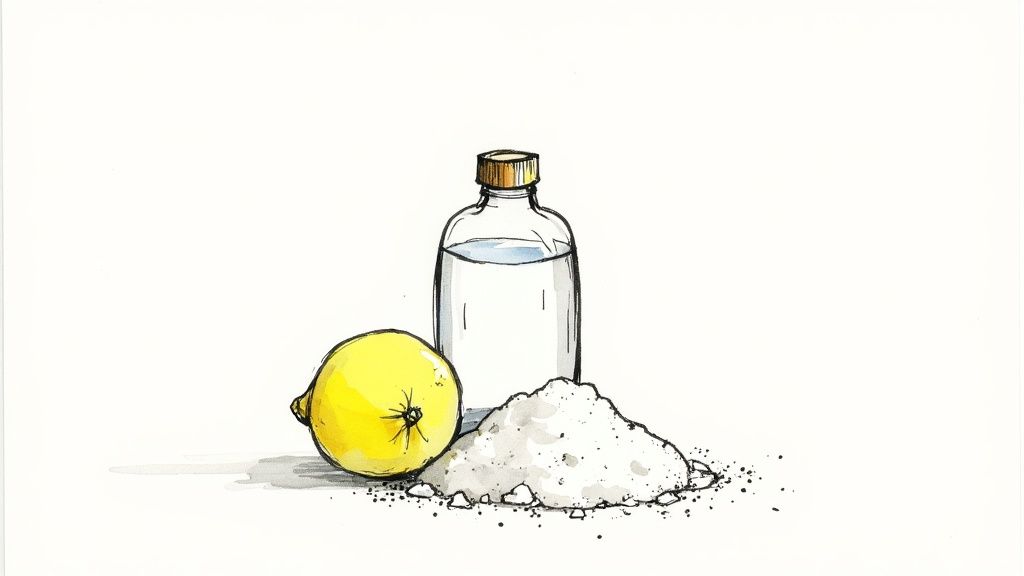
    The brilliant thing about deep-cleaning your carpets naturally is that you don't need a specialist shop. A quick look in your kitchen cupboards will probably uncover everything required. The real secret isn't in finding exotic ingredients, but in understanding how these everyday items work their magic.

    Let’s start with distilled white vinegar. Its gentle acidity is a powerhouse, effortlessly cutting through grime and neutralising those stubborn alkaline odours – think pet smells or spilt milk. Just be sure to grab the clear white vinegar; the darker apple cider or malt varieties can leave a stain.

    Then, there's baking soda (or bicarbonate of soda). This is your go-to deodoriser. The fine particles are incredibly effective at latching onto and absorbing bad smells, pulling them right out of the fibres. For best results, always use a fresh box. The one that's been sitting in your fridge has already been working hard absorbing food smells and won't be nearly as effective on your carpet.

    The Right Tools for the Job

    Of course, having the right ingredients is only half the battle. A few simple tools will make the entire process smoother and much more effective. No need for expensive gadgets here.

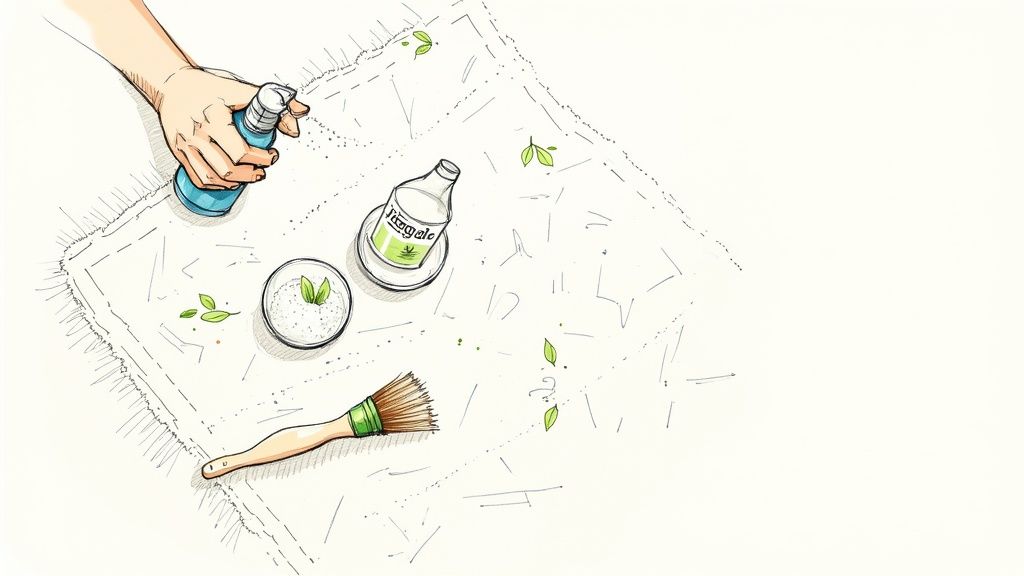
    • A decent spray bottle: This is key for applying your cleaning solution evenly. You want to dampen the carpet, not soak it, as too much moisture can lead to mildew problems.
    • A stiff-bristled brush: You'll need this to work the cleaning solution deep into the pile, getting right down to the base where dirt hides. A bit of elbow grease here goes a long way.
    • Clean, white microfibre cloths: Always use white cloths for blotting. Coloured ones can sometimes bleed dye onto your carpet when wet, which is the last thing you want.

    And for a finishing touch? A few drops of essential oil can make a real difference. Tea tree oil has fantastic natural antibacterial properties, while something like lavender or lemon leaves a beautiful, clean fragrance behind, without any of the harsh chemicals found in commercial air fresheners.

    Here's a quick-reference table to help you gather your supplies. Think of this as your recipe for a cleaner, fresher carpet.

    Your Natural Carpet Cleaning Shopping List

    Ingredient/Tool Primary Use Pro Tip
    Baking Soda Deodorising and lifting dirt Use a fresh, unopened box for maximum odour absorption.
    White Vinegar Stain removal and odour neutralising Dilute 50/50 with water in your spray bottle for a general-purpose cleaner.
    Spray Bottle Even application of liquid solutions Look for one with an adjustable nozzle to switch between a mist and a stream.
    Stiff-Bristled Brush Agitating carpet fibres A small, handheld brush gives you better control for working on specific stains.
    Microfibre Cloths Blotting and drying Always use white cloths to avoid any risk of colour transfer.
    Essential Oils Adding fragrance and antibacterial properties Just 5-10 drops of tea tree or lavender oil per spray bottle is plenty.

    With these items at the ready, you’re all set to tackle even the most stubborn carpet grime.

    My Top Tip: Before you go all-in on your living room carpet, always do a quick spot test. Find a hidden area – under the sofa or inside a cupboard – and apply a small amount of your cleaner. Let it dry to make sure it doesn’t affect the colour. Better safe than sorry

    Deep Cleaning Your Carpets Naturally

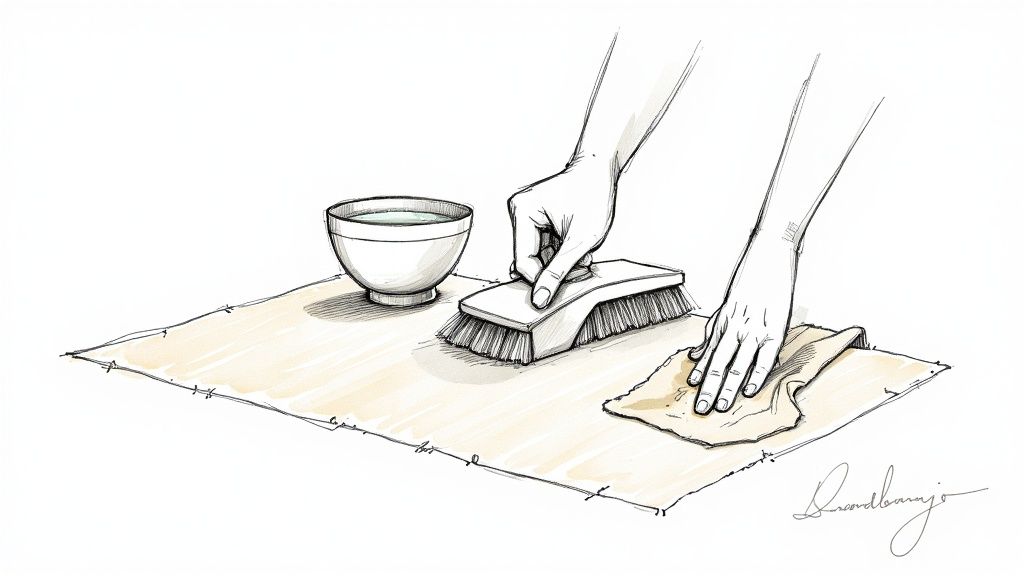
    Right, let's get those carpets looking their best. Before you even think about mixing up a cleaning solution, the single most important thing you can do is give the carpet a really thorough vacuum. I can't stress this enough. If you skip this, you're just going to turn all that loose dust and grit into a muddy mess.
    Image

    Go over the entire carpet slowly, making several passes. And here’s a pro tip: change direction. Vacuum north-to-south, then east-to-west. This lifts the pile from different angles and pulls out so much more hidden dirt. Honestly, this prep work is what separates a good result from a great one.

    It's no surprise that people are looking for greener cleaning methods. We're all more aware of indoor air quality, and carpets can be magnets for allergens. This shift has boosted the UK cleaning industry, which contributed a massive £59.8 billion to the economy back in 2021. If you're curious about the numbers, you can discover more UK cleaning industry statistics on policybee.co.uk and see just how big this trend is.

    Mixing And Applying Your Solution

    Now for the magic potion. This is my go-to recipe for a general-purpose deep clean that won’t leave behind any sticky, dirt-attracting residue.

    Your All-Purpose Cleaning Mix:

    • Grab a spray bottle and mix one part distilled white vinegar with one part warm water.
    • Add about half a teaspoon of a simple, natural, unscented washing-up liquid.
    • For a lovely fresh scent, throw in 5-10 drops of lavender or tea tree essential oil.

    Give the bottle a gentle swirl to mix everything together. The trick now is in the application. Work in small, manageable sections and lightly mist the carpet. You're aiming to make the fibres damp, not soak the padding underneath. This is a classic mistake that can lead to musty smells or even mildew.

    One of the biggest errors I see is people drenching their carpets, thinking more solution equals a better clean. It doesn't. A light, even mist is far more effective and stops moisture from getting trapped deep down in the underlay.

    Letting It Work And Finishing Up

    Once you’ve sprayed an area, walk away. Let the solution sit for at least 15-20 minutes. This ‘dwell time’ is where the real work happens. It gives the vinegar the time it needs to break down the grime and loosen it from the carpet fibres.

    After it's had a chance to work, grab a clean, dry, white microfibre cloth. Don’t rub! Just press it firmly into the carpet to blot up the moisture, which will pull the dissolved dirt out with it. Keep moving to a clean part of the cloth (or grab a fresh one) as you work your way across the area.

    Finally, the carpet needs to air dry completely. This can take a few hours, so be patient. You can speed things up by opening a few windows or setting up a fan. The result is a genuinely clean carpet that feels fresh and is free from harsh chemical residue. Of course, if this all sounds like too much elbow grease, you can always explore professional cleaning services for your home.

    How to Tackle Tough Stains Naturally

    A good deep clean is brilliant for keeping your carpets fresh, but let's be realistic – spills happen. That heart-stopping moment when a glass of red wine topples over or the dog tracks in mud can feel like a disaster. But before you reach for a harsh chemical cleaner, take a look in your kitchen cupboards.

    The trick is to act fast and use the right natural remedy for the job. Different messes need different solutions. What works for a greasy food stain won't necessarily touch a coffee spill, so a little know-how goes a long way.

    Specific Recipes for Common Spills

    For oily or greasy marks from things like pizza or salad dressing, water is your enemy; it will just make the stain spread. Instead, your first line of defence is cornstarch or baking soda.

    Cover the greasy spot generously with the powder and leave it to work its magic for at least 15-20 minutes. You'll see it start to absorb the oil right out of the fibres. Once it's had time to sit, just vacuum it all up. It's amazing how much of the grease it lifts out.

    For that classic red wine emergency, the key is salt. First, carefully blot the spill with a clean, dry cloth – don't rub! Your goal is to soak up as much of the wine as you can. Then, mix up a thick paste with regular table salt and a little cool water. Slather this paste over the stain and let it dry completely. As it hardens, the salt pulls the wine pigment out of the carpet. Once it's fully dry, you can break up the crust and vacuum it away.

    If you're still left with a faint mark after trying these methods, our guide on how to remove stubborn stains has a few more tricks up its sleeve.
    Image

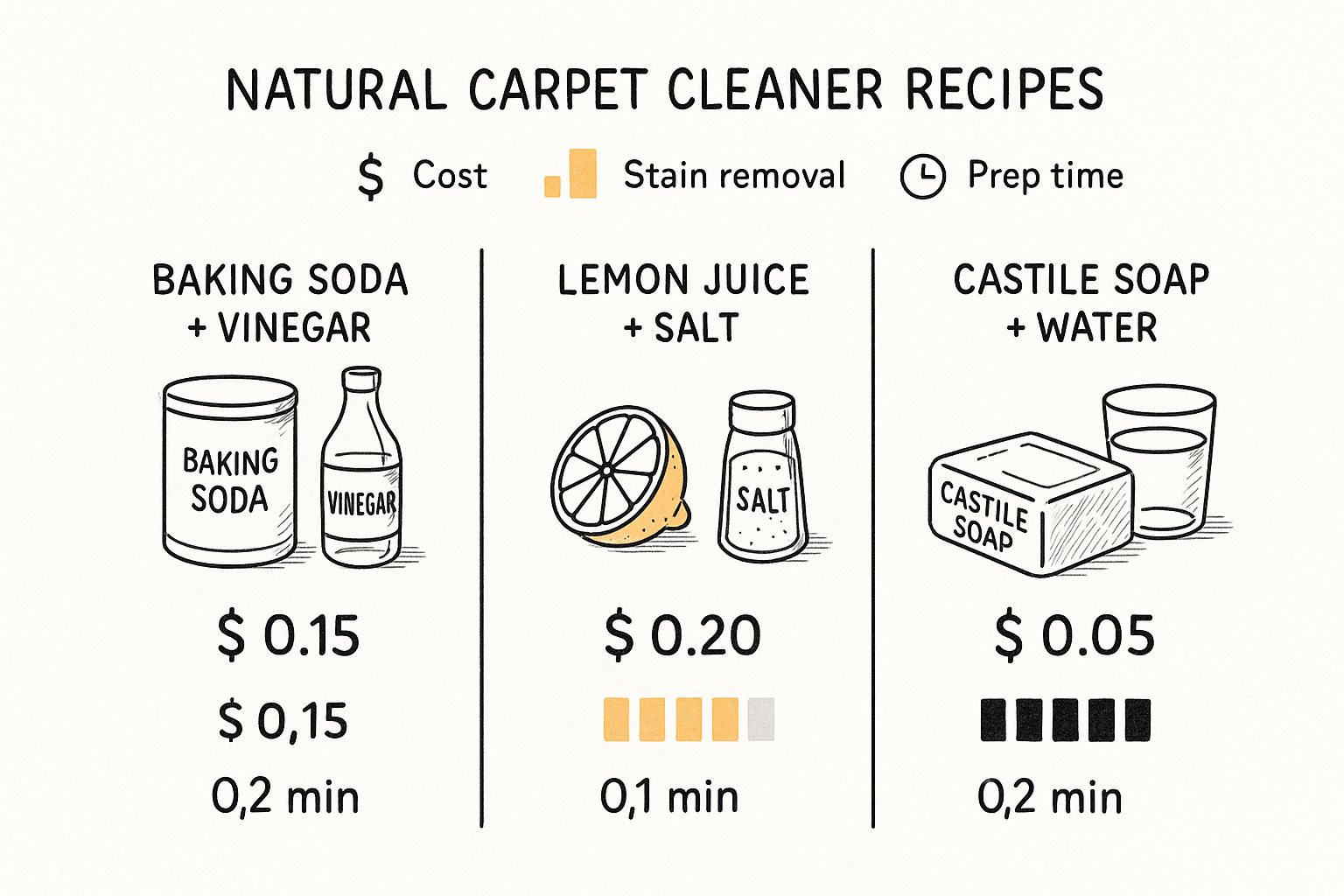
    As you can see, a simple solution like baking soda and vinegar often provides the best mix of low cost and high effectiveness for everyday cleaning jobs.

    Why These Natural Methods Actually Work

    It's not just old wives' tales; there's real science behind these remedies. Cornstarch is incredibly absorbent, which is why it's so good at soaking up oily liquids from porous materials like carpet fibres. The salt paste works through osmosis, essentially drawing the liquid (and the red wine pigment with it) up and out of the carpet.

    Knowing the 'why' makes it easier to tackle stains with confidence.

    The Golden Rule of Stain Removal: Always blot, never rub. Rubbing only grinds the stain deeper into the carpet and can damage the fibres, leaving a fuzzy, worn-out patch. Gentle blotting is always the right move.

    Natural Solutions for Common Carpet Stains

    To make things even easier, here's a quick reference table for some of the most common household spills and the best natural approach for each one.

    Stain Type Recommended Natural Recipe Application Method
    Coffee or Tea Equal parts white vinegar and water Lightly spritz the solution onto the stain, let it sit for 15 minutes, then blot with a clean, damp cloth until the stain lifts.
    Mud Let it dry completely! Once the mud is hard, break up the large pieces and vacuum thoroughly. Treat any remaining discolouration with a mild vinegar and water solution.
    Pet Urine 1 cup water, 1 cup white vinegar, 2 tsp baking soda Blot up as much liquid as possible. Spray the solution, let it fizz and sit for 10-15 minutes, then blot dry. The vinegar neutralises the ammonia.
    Grease or Oil Cornstarch or baking soda Liberally sprinkle powder on the stain, let it absorb the grease for at least 20 minutes, then vacuum it all up.
    Red Wine A thick paste of salt and cool water After blotting the spill, apply the salt paste, let it dry completely, then break it up and vacuum away the residue.

    These simple, targeted approaches prove you don't always need a cupboard full of expensive, specialised cleaners to keep your carpets looking their best.

    Keeping Your Carpet Fresh and Clean

    Giving your carpet a really good deep clean is satisfying, but the real secret to a lovely home is keeping it that way. It all comes down to building a few simple habits that stop your carpets from looking tired between those big cleaning days.

    A quick weekly refresh can work wonders. I often recommend mixing a cup of bicarbonate of soda with 10-15 drops of an essential oil you love – lavender or lemon are always great choices. Just give it a light sprinkle over the carpet, leave it for 15 minutes to soak up any musty smells, and then vacuum it all up. Simple.

    Little Habits, Big Impact

    Honestly, preventing the dirt from getting onto your carpet in the first place is half the battle won. Placing a decent doormat at every entrance makes a massive difference to the amount of mud and grit that gets tracked through the house.

    If you can get everyone on board, a "no shoes inside" rule is another game-changer. It protects the carpet fibres from getting ground down and just keeps everything so much cleaner.

    This focus on proactive home care is definitely growing. It’s no surprise that the UK's carpet cleaner market was valued at an estimated USD 968.40 million in 2024. People are clearly looking for practical, effective ways to keep their homes hygienic, and using natural methods for day-to-day upkeep fits right in. You can see a full breakdown of the carpet cleaner market trends on cognitivemarketresearch.com.

    Remember, a little and often is far better than a massive effort every few months. A five-minute refresh each week will do more for your carpet's look and feel than a huge clean twice a year. It's about finding a routine that works for you.

    Got Questions About Natural Carpet Cleaning? We’ve Got Answers

    It's only natural to have a few questions before you start scrubbing your floors with ingredients from your kitchen cupboard. People often wonder if these natural solutions are genuinely up to the job or if they might accidentally damage their beloved carpet. Let's clear up some of those common worries.

    Is Vinegar Really Safe for My Carpet?

    For most synthetic carpets—think nylon or polyester—white vinegar is a brilliant, streak-free cleaner. But, and this is a big but, it's not a one-size-fits-all solution. Its acidic nature can be a real problem for natural fibres like wool or silk, leading to permanent damage or faded colour.

    I can't stress this enough: always do a patch test. Find an out-of-the-way spot, maybe in a wardrobe or under the sofa, dab on a little of your diluted vinegar solution, and wait for it to dry completely. It’s a simple step that can save you a world of heartache.

    How Long Until I Can Walk on It Again?

    Drying time can be anywhere from 4 to 12 hours. It all comes down to a few key things: the pile depth of your carpet, the humidity in your home, and how much air you can get moving through the room.

    Want to speed things up?

    • Go easy on the cleaning solution; a light, even application is all you need.
    • Crack open some windows to get a good cross-breeze going.
    • Point a fan at the damp area or switch on a dehumidifier to pull the moisture right out of the air.

    Can I Put My Homemade Cleaner in a Rental Machine?

    This is where you need to be careful. While a simple baking soda and water mix is usually okay, vinegar is a different story. The acidity can eat away at the metal components inside some cleaning machines over the years.

    Before you even think about it, read the machine’s user manual. Using a homemade natural carpet cleaner might not just cause damage; it could also void the warranty. For more professional tips and tricks, feel free to browse the other articles on the Signal Cleaning blog.

    When in doubt, a little caution goes a long way. Taking a minute to do a quick patch test or check your machine’s manual is the best way to avoid costly mistakes and get the fresh, clean carpets you're after.
  • Choosing Carpet Cleaning Solutions for Machines

    Choosing Carpet Cleaning Solutions for Machines

    Picking the right cleaning solution for your carpet machine is about more than just lifting stains—it’s about protecting the machine itself. The best carpet cleaning solutions for machines are always low-foaming formulas, ideally the ones recommended by your machine's manufacturer. Why? Because they're engineered to clean deeply without harming the sensitive internal parts, like motors and pumps.

    Pouring the wrong stuff in, especially a homemade concoction, can create a mountain of suds, leave a sticky residue on your carpets, and might even void your warranty.

    Navigating Your Carpet Cleaning Solution Choices

    Image

    Think of your carpet cleaner like a car engine. You wouldn't put diesel in a petrol car, and for the same reason, you shouldn't pour just any old soap into your machine. The wrong formula can set off a chain reaction of problems, turning a simple cleaning day into a weekend-ruining, expensive repair. Getting your head around the basics is the first step to getting that professional-level clean while keeping your machine in good nick.

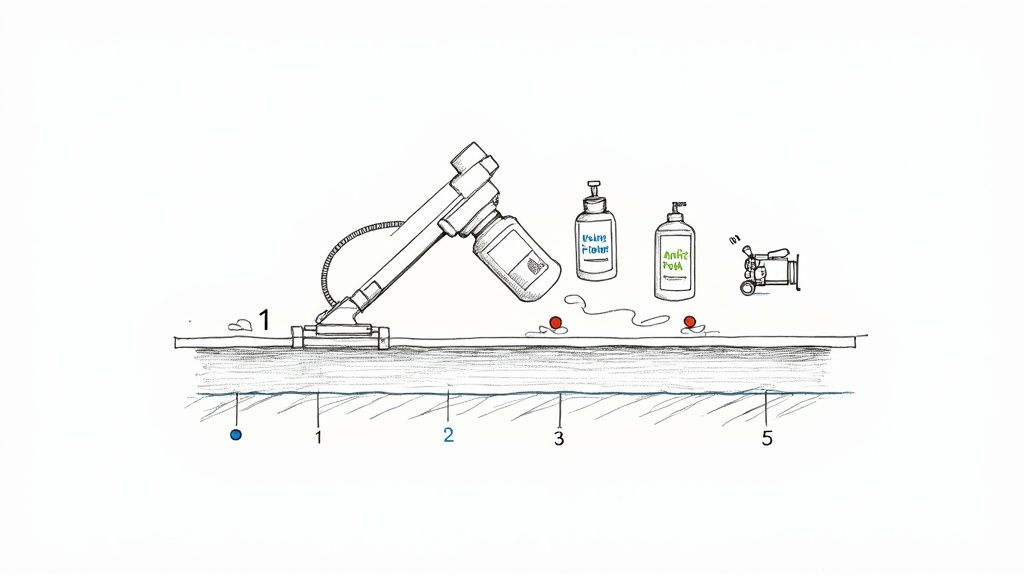
    The whole setup—the machine, the solution, and your carpet—is a system designed to work together. The right liquid is formulated to work with the machine's specific water pressure, heat output, and suction power. It's this teamwork that really gets down into the carpet fibres and pulls out all that ground-in dirt.

    The Myth of "Any Soap Will Do"

    It’s a common mistake to think that regular household soaps, like washing-up liquid or laundry detergent, are a good substitute. They might produce a lot of impressive-looking foam, but that’s exactly where the trouble starts. Carpet cleaning machines simply aren’t designed to cope with that many suds.

    All that foam can easily overwhelm the recovery tank and get sucked straight into the vacuum motor. Once moisture gets into those delicate electrical components, it's game over. You're looking at motor failure, which is almost always a costly fix not covered by the warranty.

    Using a non-approved, high-foaming detergent is one of the fastest ways to kill a carpet cleaning machine. The suds can cause irreversible damage to the motor, and the sticky residue they leave behind acts like a magnet for fresh dirt, making your carpets look grubby again in no time.

    Key Factors for Selecting the Right Solution

    Before you grab any bottle off the shelf, think about these three crucial points. Getting this right ensures you get a great clean without causing any damage.

    • Your Machine's Model: First things first, check what the manufacturer recommends. Brands like Vax, Bissell, and Rug Doctor spend a lot of time developing their own formulas that are guaranteed to work safely and effectively in their machines. Your user manual is the best place to start.
    • Your Carpet's Material: Not all carpets are created equal. Tough synthetic fibres can take a fair bit of punishment, but natural materials like wool are much more delicate. Wool is particularly sensitive to cleaners that are too alkaline or acidic, which can cause permanent damage or discolouration.
    • The Type of Mess: A standard shampoo is fine for general, everyday dirt. But for specific stains, you need a specific tool for the job. If you’ve got pets, for example, an enzymatic cleaner is your best bet. It doesn't just clean the stain; it uses enzymes to break down the organic proteins causing the smell, eliminating it for good.

    Making a smart choice here will keep both your carpet and your machine happy for years to come. For more expert advice on keeping your home looking its best, you can find a whole host of articles on our Signal Cleaning blog.

    Why Machine-Specific Formulas Are Essential

    Image

    Think of your carpet cleaner as a high-performance engine. You wouldn't pour just any old fluid into a finely tuned car and expect it to run smoothly, and the same logic applies here. If you want a genuinely deep clean and want to protect your investment, using a formula specifically engineered for your machine isn't just a good idea—it’s essential.

    Reaching for a generic or homemade solution might feel like a clever way to save a few quid, but it's often a false economy. It’s a bit like putting diesel into a petrol car; any short-term savings can be completely wiped out by long-term damage. The chemistry inside a bottle of proper carpet cleaning solution is a precise science, blended to work in perfect harmony with your machine's mechanics.

    The Science of Synergy

    A machine-specific formula is so much more than just fancy soap. Every single ingredient has been chosen to interact perfectly with your machine’s heat, water pressure, and suction power. This teamwork between the chemical and the machine creates a cleaning action that standard detergents just can't touch.

    The result is a far deeper, more effective clean that lifts grime right from the base of the carpet fibres without leaving behind any gunk or residue. It’s a beautifully coordinated effort between chemistry and mechanics.

    Let's break down what makes these formulas so crucial:

    • Precise pH Balance: This is key to preventing damage to delicate carpet fibres. A solution that’s too acidic or alkaline can cause discolouration, weaken the fibres, or even dissolve the latex backing holding your carpet together.
    • Low-Foaming Agents: This might be the most critical point of all. Too many suds can get sucked into the machine's motor, causing catastrophic failure and almost certainly voiding your warranty.
    • Anti-Resoiling Polymers: These clever ingredients leave an invisible shield on your carpet fibres, which helps to repel future dirt. It means your carpets stay looking fresh for much, much longer.

    "The true value of a machine-specific solution lies in its ability to clean effectively while protecting the intricate components of the cleaner. It’s an engineered partnership between the liquid and the machine, ensuring both longevity and superior results."

    Avoiding Damage and Getting the Best Results

    Using an unapproved cleaner is asking for trouble. The most common problem is the sticky residue that high-foaming detergents leave behind. This tacky film acts like a magnet for new dirt, which means your freshly cleaned carpets get grubby again in a fraction of the time.

    Beyond that, the wrong chemicals can react badly with your machine's internal plastic and rubber parts, like the seals and hoses. Over time, they can become brittle and crack, leading to leaks and a loss of suction power that makes the machine pretty useless.

    More and more of us are looking for professional-grade cleaning results at home. In the UK, the wider cleaning services market was valued at nearly £60 billion in 2021, and carpet cleaning is a huge part of that. Global revenues are projected to climb from around USD 3.99 billion in 2022 to nearly USD 5.98 billion by 2030, showing just how much we've all embraced effective, machine-based cleaning. You can discover more about the UK cleaning industry's growth and see what it means for homeowners.

    Why Manufacturer Formulas Matter

    Brands like Bissell, Vax, and Rug Doctor spend a fortune on research and development, creating formulas that are perfectly calibrated for their machines. When you use their recommended solution, you're not just buying a cleaner; you're using a product that has been tested again and again to deliver the best possible performance.

    This gives you a few key benefits:

    1. Guaranteed Compatibility: You have peace of mind that the solution won't harm any of the machine's internal parts.
    2. Maximum Cleaning Power: The formula is designed to get the absolute most out of your machine's specific features, tackling stains and dirt effectively.
    3. Warranty Protection: Using the approved formula means you won't accidentally do something to void your manufacturer's warranty.

    At the end of the day, sticking to machine-specific formulas is the smartest move for anyone serious about looking after their carpets and their cleaning equipment. It's the only way to guarantee a safe, deep, and long-lasting clean every time.

    Breaking Down Common Cleaning Solution Types

    Staring at an aisle full of carpet cleaning formulas can feel overwhelming. It’s easy to just grab the first bottle you see, but taking a moment to understand what's inside can be the difference between a so-so clean and a fantastic one. Think of these solutions like a specialist’s toolkit – you need the right tool for the right job.

    Each type of carpet cleaning solution for machines is engineered to tackle a specific kind of mess. Using a general cleaner on a stubborn pet stain is like using a butter knife to chop an onion; it might work eventually, but it’s not the most effective way. Matching the formula to the problem saves you time, effort, and delivers a much deeper, more satisfying clean.

    Enzymatic Cleaners: The Stain Demolition Crew

    If you’ve got pets or kids, enzymatic cleaners are nothing short of a lifesaver. These aren't your typical soaps. Instead, they’re packed with beneficial enzymes—think of them as a microscopic demolition crew that gets to work on organic messes.

    When you use an enzymatic solution on a stain from pet urine, spilt milk, or food, the enzymes target and break down the specific proteins, starches, and fats making up the mess. They don't just lift the visible part; they completely dismantle the stain at a molecular level. This is absolutely crucial for getting rid of nasty odours for good.

    Here's why they're so effective:

    • Targeted Action: The enzymes are programmed to go after organic stuff, breaking it into tiny, water-soluble bits your machine can easily suck up.
    • Odour Elimination: By destroying the source of the smell, they stop those lingering odours that have a nasty habit of reappearing on damp days.
    • Gentle on Fibres: Most are pH-neutral, making them a safe bet for a huge range of carpet types, including delicate natural fibres.

    Oxygen-Based Cleaners: The Brightening Powerhouses

    Ever spilt a glass of red wine or a mug of black coffee and felt that sense of dread? This is where oxygen-based cleaners come to the rescue. These formulas harness the power of active oxygen to break down and lift away those vibrant, dye-based stains.

    When the solution mixes with water, it releases a flurry of tiny oxygen bubbles. This reaction, known as oxidation, attacks the chemical bonds of the stain, effectively bleaching out the colour without harming your carpet’s original dye. It’s a brilliant way to deal with colourful disasters.

    Think of it as a gentle, colour-safe bleach for your carpet. It doesn't just remove the stain; it actually brightens the fibres, leaving your carpet looking refreshed and vibrant, not faded.

    This type of cleaner should be your go-to for any intensely coloured spill. It works wonders on fruit juice, tea, and all those other common household accidents that leave a glaring mark.

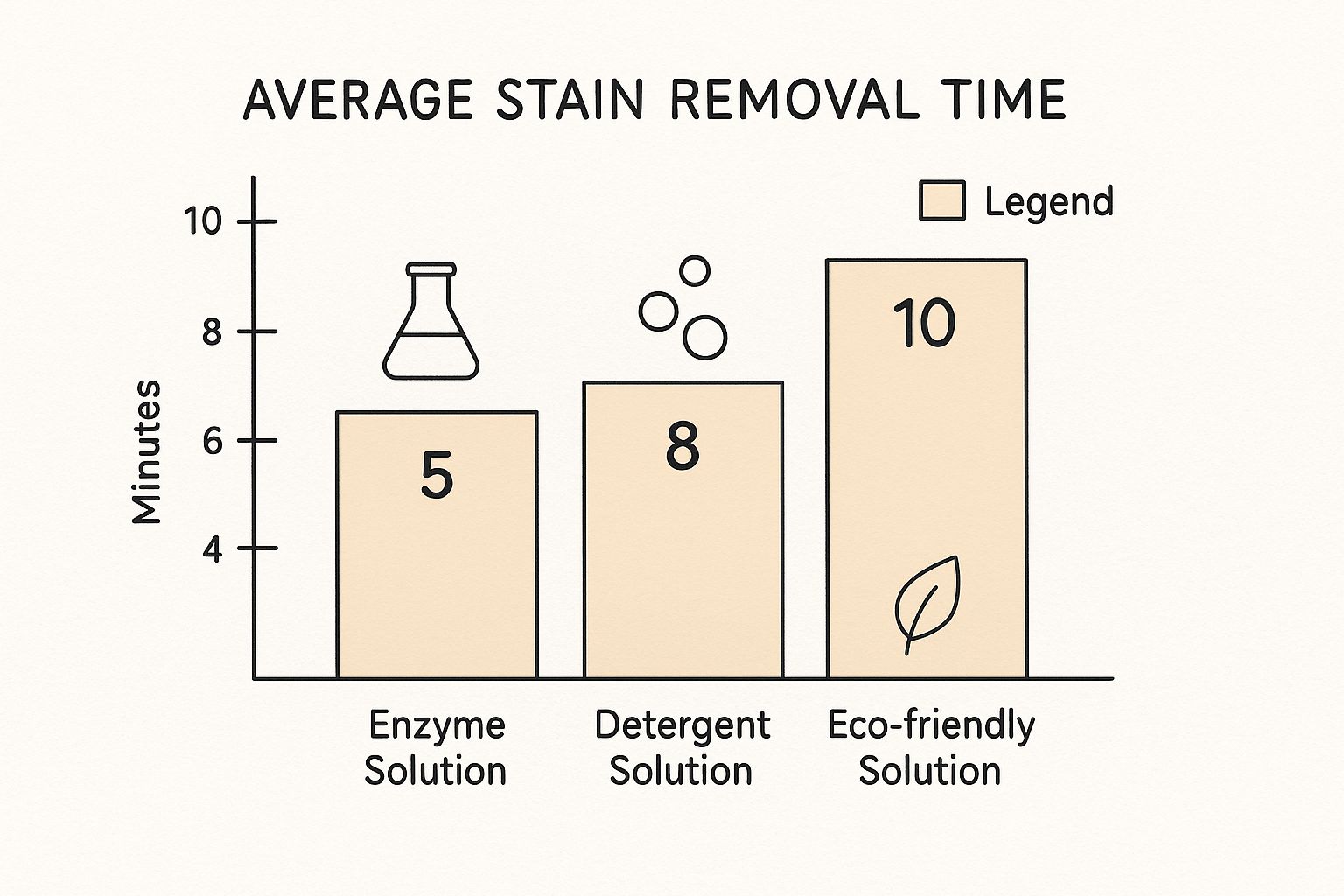
    The image below gives a great visual of how choosing the right solution can make a real difference in how quickly you see results.

    Image

    As you can see, specialised formulas like enzymatic solutions often cut down the cleaning time significantly when used on the right kind of stain, compared to just a standard detergent.

    At-a-Glance Guide to Carpet Cleaner Solutions

    To make choosing a little easier, this table breaks down the main types of cleaning solutions, what they do best, and which carpets they're suited for.

    Solution Type Primary Function Best For Tackling Carpet Compatibility
    Enzymatic Cleaner Breaks down organic matter Pet urine, food spills, vomit, blood Excellent for most synthetic and natural fibres (always patch test)
    Oxygen-Based Cleaner Lifts and decolourises stains Red wine, coffee, tea, fruit juice Best for synthetic carpets; use with caution on wool/natural fibres
    Pre-Treatment Spray Loosens deep-set dirt High-traffic areas, ground-in grime Generally safe for all machine-washable carpets
    Rinse Aid / Neutraliser Removes detergent residue Post-cleaning stiffness, dullness Highly recommended for all carpet types to restore softness

    Using this as a quick reference can help you confidently pick the perfect product for your specific cleaning needs.

    Pre-Treatments and Rinse Aids: The Finishing Touches

    To get a truly professional-level result, you need to think beyond just the main cleaning formula. Two other products can make a huge difference: pre-treatment sprays and rinse aids.

    A pre-treatment spray is your first line of attack against those really tough spots. You spray it directly onto high-traffic lanes or set-in stains about 5-10 minutes before you start cleaning. This gives the concentrated formula time to work its way deep into the carpet fibres, loosening the dirt and making it much easier for your machine to lift away.

    A rinse aid (sometimes called a neutralising rinse) is the final, crucial step for getting that soft, fresh-from-the-shop feel. Some cleaning detergents can leave a slightly sticky residue behind, which makes the carpet feel stiff and actually attracts new dirt faster. A rinse aid is a mild, acidic solution you add to the final rinse water. It neutralises any alkaline soap residue left in the fibres.

    This simple step leaves your carpets feeling noticeably softer and helps them stay cleaner for longer. It’s an optional touch, but one I always recommend for the best possible finish.

    Understanding What's Inside Your Cleaning Solution

    Image

    Have you ever found yourself in the cleaning aisle, staring at a bottle of carpet cleaner and feeling like you need a degree in chemistry to figure out what's on the label? You're definitely not alone. The list of ingredients can be pretty baffling, but getting to know what’s actually in the formula is the secret to getting a fantastic clean without accidentally damaging your carpet.

    Think of it like a good recipe. Each ingredient has a very specific job to do, and they all have to work in harmony to break down dirt, lift out stains, and leave your carpets feeling genuinely fresh. Once you know the main players, you can pick out carpet cleaning solutions for machines like a pro.

    The Power Players: Surfactants and Solvents

    At the heart of any decent cleaning solution, you'll find two heavy lifters: surfactants and solvents. They're a dynamic duo, each tackling different kinds of grime to make sure you get a deep clean, right from the base of the fibres to the very tips.

    Surfactants are the real workhorses here. Picture a tiny molecule that’s a bit like a magnet – one end loves water, and the other end loves oil and dirt. When you're cleaning, these little guys grab onto the dirt particles, pulling them away from the carpet fibres so the machine's water can easily wash them away.

    Solvents, on the other hand, are the specialists. They're designed to dissolve all the greasy, oily messes that water simply can't handle on its own. They’re essential for getting rid of things like food spills, greasy footprints, or oily residues that get trodden in from outside.

    Ingredients to Approach with Caution

    Just as it's important to know what you want in a solution, it's crucial to know what you want to avoid. Certain chemicals can end up doing more harm than good, leading to permanent damage or odd discolouration over time. Being a savvy buyer means keeping an eye out for a few red flags on that ingredients list.

    Here are a few ingredients you should be wary of:

    • Optical Brighteners: These don't actually clean anything. Instead, they coat the carpet fibres with a substance that reflects blue light, making the carpet look brighter. The problem is, this coating builds up over time and can eventually cause a distinct yellowing effect that's a nightmare to get rid of.
    • High-Alkaline Agents (High pH): While these can be effective on tough synthetic carpets, highly alkaline solutions are a disaster for natural fibres like wool. Wool is very sensitive to pH levels, and a harsh, alkaline formula can strip its natural lanolin, leaving it brittle, dull, and prone to damage.
    • Perchloroethylene ("Perc"): This is a powerful solvent you might find in some heavy-duty spot removers. It’s a pretty harsh chemical that can release strong fumes, so it’s best left to the professionals and avoided for general cleaning around the house.

    Always double-check the label for compatibility with your carpet type, especially if you have wool or wool-blend carpets. Using the wrong pH level is one of the most common and, unfortunately, irreversible cleaning mistakes people make.

    The Rise of Eco-Friendly Formulas

    Over the last few years, the demand for cleaning options that are both effective and kind to the planet has really taken off. Modern eco-friendly carpet cleaning solutions for machines are miles ahead of the weak, ineffective formulas of the past. Today's plant-based solutions pack a serious cleaning punch without relying on harsh chemicals.

    These formulas generally use natural enzymes and plant-derived solvents to break down dirt and tackle stains. Better yet, they are often biodegradable and free from the synthetic fragrances, dyes, and other irritants found in traditional cleaners.

    Choosing an eco-friendly option is a brilliant move for any home, but it's particularly important if you have small children or pets. Little ones and four-legged friends spend a lot of their time on the floor, so using a solution free from harsh chemical residues gives you real peace of mind. They prove you don't need aggressive chemicals to get fantastic results.

    How to Match Solution to Carpet and Machine

    Knowing the theory is one thing, but putting it into practice is where you’ll see the real results. Making sure your chosen carpet cleaning solution for machines is a perfect match for your carpet and your machine isn’t just a good idea—it’s the secret to a successful clean that protects both of your investments. Get this combination right, and you'll achieve that professional-level finish every single time.

    This is more important than ever, especially when you consider how far carpet cleaning machines have come. The global market was valued at around USD 776.62 million in 2024 and is expected to hit USD 1.32 billion by 2033. That growth is fuelled by increasingly sophisticated machines with complex pumps, heaters, and vacuums designed to lift out the most stubborn dirt—a trend we're definitely seeing here in the UK. You can read more on the tech behind these machines and discover the full carpet cleaner market research.

    Consider Your Machine Brand

    Big names like Vax, Bissell, and Rug Doctor don't just sell machines; they pour a lot of time and money into developing their own cleaning formulas. Using their recommended solution is almost always the safest bet. It's been perfectly calibrated to work with that specific machine’s water pressure, temperature, and suction power. Go off-piste with an unapproved product, and you might not only get a poor result but could also end up voiding your warranty.

    • Vax Machines: These generally work best with low-foaming solutions that are designed to complement their patented cleaning technologies.
    • Bissell Cleaners: Bissell offers a huge range of formulas, including special pet and pro-level solutions, all created to work seamlessly with their Heatwave Technology.
    • Rug Doctor Machines: Known for their powerful brushes, Rug Doctor solutions are made to handle vigorous scrubbing without turning your living room into a bubble bath.

    Identify Your Carpet Material

    Before you even think about pouring a cleaning solution, you need to know what your carpet is made of. Different fibres have wildly different needs and tolerances. A quick check now can save you from a complete cleaning disaster later.

    Most carpets have a label on the back, but if that’s missing, a simple burn test on a few spare fibres can reveal a lot. Synthetics like nylon or polyester tend to melt and form a hard little bead. Natural fibres like wool, on the other hand, will char and give off a smell like burning hair.

    Wool is probably the most sensitive carpet material you'll come across. It’s easily damaged by high-alkaline (high pH) cleaners, which can strip its natural oils, leaving the fibres brittle and dull. For wool, you must stick to a pH-neutral, wool-safe formula.

    Perform a Crucial Spot Test

    Whatever you do, don't skip this step. I don't care how confident you are in the product—a spot test is your final, critical safety check to prevent widespread discolouration or fibre damage. It takes five minutes but can save you from an expensive, irreversible mistake.

    Here’s the right way to do it:

    1. Choose a Hidden Area: Find a spot that’s usually covered, like under the sofa, inside a wardrobe, or in a far corner of the room.
    2. Mix a Small Amount: Prepare a tiny bit of the cleaning solution, following the dilution instructions on the bottle.
    3. Apply and Blot: Using a clean, white cloth, apply a small amount to the carpet. Gently blot the area; don’t scrub it.
    4. Wait and Check: Let it dry completely. Once it’s dry, check for any colour bleeding, fading, or changes in the carpet’s texture. If everything looks exactly as it did before, you're good to go.

    Concentrated vs Ready-To-Use Formulas

    Your final choice is between concentrated and ready-to-use solutions. Concentrated formulas are often better for your wallet and the environment, as they use less packaging. The catch? You have to be precise with the dilution. Get the ratio wrong, and you could be left with a weak clean or a sticky residue that attracts more dirt.

    Ready-to-use formulas offer pure convenience. You just pour them straight into the machine with no measuring or mixing, which is brilliant for quick jobs or small spills. The trade-off, of course, is a higher cost per clean. If you want to get a head start on specific blemishes before the main event, have a look at our guide on how to remove stubborn stains.

    Frequently Asked Questions

    When you're dealing with carpet cleaning machines and the various solutions that go with them, a few questions always seem to pop up. You want the best results, of course, but you also want to avoid accidentally damaging your machine or your carpet. Let's walk through some of the most common queries to help you clean with total confidence.

    Think of this as a quick-reference guide to reinforce everything we've covered, making sure you're ready for whatever your carpets throw at you.

    Can I Use a DIY Vinegar Solution in My Carpet Cleaner?

    It's tempting to reach for household staples like vinegar for a quick, cheap clean, but I'd strongly advise against using it in your carpet cleaning machine. While vinegar is a great natural cleaner for certain things, its acidic nature is bad news for the internal components of your machine. Over time, it can eat away at the rubber seals and delicate plastic parts, leading to leaks, poor suction, and a hefty repair bill.

    On top of that, DIY solutions just don't perform as well. They don't have the low-foaming agents that professional formulas do, and they lack the anti-resoiling technology that stops dirt from sticking to the fibres later. You'll likely end up with a less effective clean and a sticky residue that makes your carpets get dirty even faster.

    A quick heads-up: always check your machine’s warranty before you even think about using an unapproved cleaner. Using a homemade mix like vinegar is one of the most common ways people void their warranty, leaving them on the hook for any resulting damage.

    How Much Solution Should I Actually Use?

    This is one area where you absolutely need to follow the instructions to the letter. It’s a common myth that adding a bit of extra solution will give you a super-powered clean. In reality, it does the exact opposite. Using too much concentrate is the fastest way to leave a sticky, soapy film all over your carpet fibres.

    This tacky residue not only makes your carpet feel stiff and look dull, but it also acts like a dirt magnet. You'll find your freshly cleaned carpet looks grubby again in no time. On the flip side, using too little solution just won't have the muscle to lift out that deep-down grime.

    Always check two things:

    1. The dilution instructions printed on the solution bottle.
    2. The fill lines clearly marked on your machine’s water tank.

    These guides are there for a reason—they're precisely calculated to give you the perfect water-to-solution ratio for maximum cleaning power without any sticky aftermath.

    What Is a Pre-Treatment Spray and When Do I Need It?

    Think of a pre-treatment spray as your secret weapon for targeted stain removal. The main shampoo that goes into your machine is for general, all-over cleaning. A pre-treatment, however, is a more potent, concentrated formula that you apply directly onto tough spots before you begin the main cleaning process.

    You'll want to use it on specific problem areas like coffee spills, muddy paw prints, or that bit of dropped food. Just spray it directly onto the stain, let it work its magic for about 5-10 minutes, and then clean the area as normal with your machine. That 'dwell time' gives the powerful ingredients a chance to penetrate deep into the fibres and start breaking the stain down, making it far easier for your machine to lift it away for good. It's a non-negotiable step for a truly spotless finish.

    Are Eco-Friendly Solutions as Powerful as Chemical Ones?

    They certainly are. Modern eco-friendly formulas have advanced so much that they now give traditional chemical-based cleaners a serious run for their money. Instead of relying on harsh synthetic chemicals, they use powerful, plant-derived enzymes and solvents that are brilliant at breaking down dirt and stains naturally.

    For the vast majority of household spills and organic stains you’ll encounter, a high-quality, plant-based formula will perform just as well as its chemical counterpart. The trick is to choose a reputable brand that has specifically formulated its eco-friendly carpet cleaning solutions for machines. They're a much safer choice, especially for homes with children, pets, or anyone with allergies.

    When you decide it's time for a professional touch that guarantees incredible results, why not schedule a service with the experts? You can explore our services and get a quote on our professional carpet cleaning booking page.